An #IDFA Luminous word premiere, Andra MacMasters’ debut, Bright Future, is an evocative peer into a lesser-documented but consequential moment in #Cold War# history: the 13th World Festival of Youth and Students, held in #Pyongyang during the sweltering summer of 1989. This archive-laden documentary examines the ideological fervour and human encounters that unfolded against a geopolitical landscape on the brink of monumental transformation.
Months before revolution
Just five months before the #Romanian Revolution# swept Nicolae Ceaușescu’s regime into infamy, its socialist promises supplanted by the tumultuous arrival of #capitalism, Romania served as the guest of honour at this internationally attended gathering. This recognition was a result of Ceaușescu’s long-standing camaraderie with North Korea’s despot patriarch Kim Il-sung—one rooted in a mutual admiration for their respective cults of personality and isolationist policies. Within this context, the Romanian delegation exists inside the broader tableau of socialist solidarity, and a nuanced portrait of a bloc in terminal decline emerges.
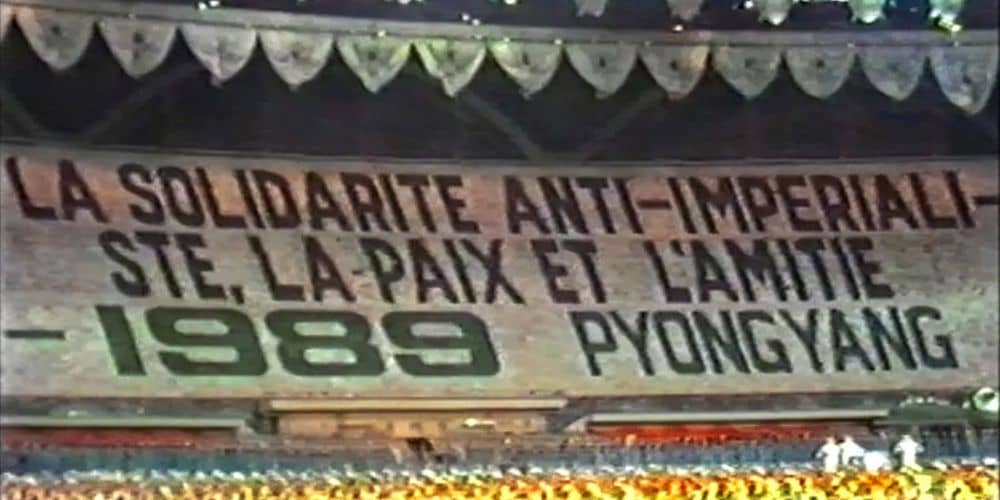
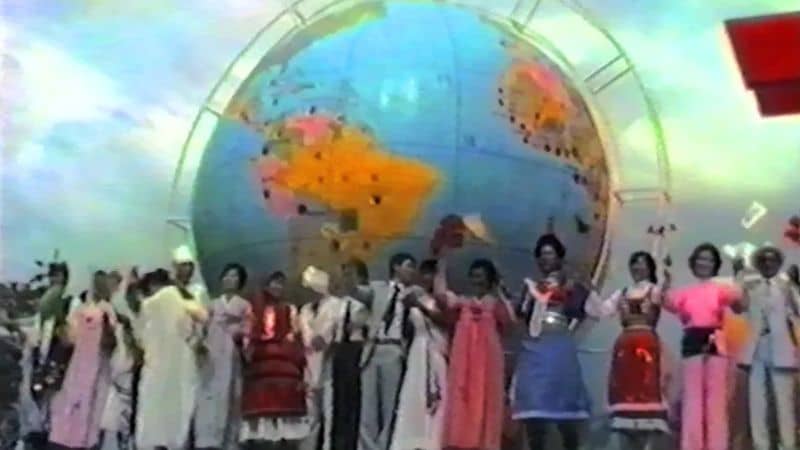
The festival, grandiosely operating under the theme, «International Anti-Imperialist Celebration of Peace, Solidarity, and Friendship,» presented a utopian vision of global unity. However, Bright Future exposes its many contradictions. Against the constant backdrop of anti-capitalist slogans emanating through the stadium loudspeakers, delegations from 177 nations marched in choreographed parades—a carefully curated image of harmony. Yet this facade was ruptured by visible discord, notably over the recent #Tiananmen Square# massacre, diverging visions of socialism among the bloc’s member states, and the ever-present Western double standard.
Against the constant backdrop of anti-capitalist slogans emanating through the stadium loudspeakers, delegations from 177 nations marched in choreographed parade
Narration and archives
The film’s narration is a deliberate linguistic patchwork, shifting between Romanian, Korean, English, Swahili, Russian, Arabic, Mandarin, and a host of other languages. It reads primary source texts published by #UNESCO, the Ministry of Internal Affairs Romania, The National Archives, the New York Times, and more. This overlays the raw VHS 80s aesthetic of the archive footage, mostly from #Emilian Urse#, a Romanian delegate and future filmmaker whose wandering lens captures both the orchestrated spectacle and spontaneous human exchanges that defined the event.
The zeitgeist of 1989 is captured with dexterity as the festival. Delegations addressed pressing global issues such as nuclear disarmament, environmental degradation, and women’s and human rights. MacMasters juxtaposes these lofty debates with the lived experiences of participants: young activists in impromptu moments of connection, impassioned discussions on world affairs unfolding in the shadows of monumental pageantry, singular feets of (sometimes bloody) achievement and quiet glimpses of delegates processing the enormity of the political moment.
Bright Future‘s vivid recreation of the sensory and emotional atmosphere of the festival is its premiere strength. Its grandiosity verges on the surreal. But not unlike the #nationalist pageantry of the country’s present. While the film successfully acknowledges the allure of such a utopian gathering, it never lapses into #nostalgia—although, for an experiential wanderluster like me, it presents something that would surely have been attended. Instead, it quietly and confidently presents its subjects without production or editing fanfare. It is a snapshot of a singular event at a singular moment. The festival provided the opulence, while the film offers its context.
A bright future?
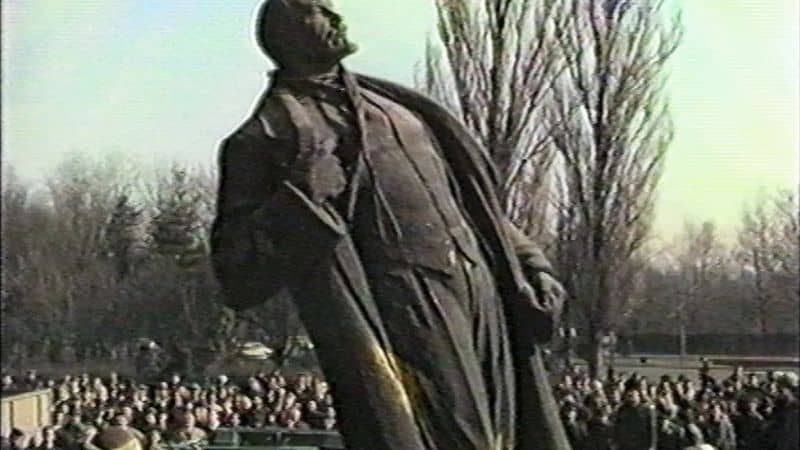
By its end, MacMasters has not painted a picture of disillusionment. The film’s final frames, an interview with two Romanian youths playing in the fresh snow, actively encourages hope. She also presents pertinent questions for today’s world: What lessons can be gleaned from fleeting solidarity? How might this inform contemporary struggles for justice and peace? These are questions that feel particularly urgent in today’s landscape of fractured global alliances and a neo-Cold War. Here, MacMasters’ grounding in visual anthropology is evident as the film’s very structure suggests that historical memory is not a passive presentation of facts but an active process that challenges us to reinterpret the past in light of present concerns.