«Canada is not a nation, it’s a corporation.» These indignant words come from a #First Nations# woman who has to go to absurd lengths to protect her people’s basic right to clean water. The undue sway of business interests over government at the expense of indigenous and black communities in Nova Scotia is the subject of There’s Something in the Water, directed by Ellen Page and Ian Daniel, a social issue documentary that, with its #DIY aesthetic and personal approach, feels as heartfelt as it does urgent.
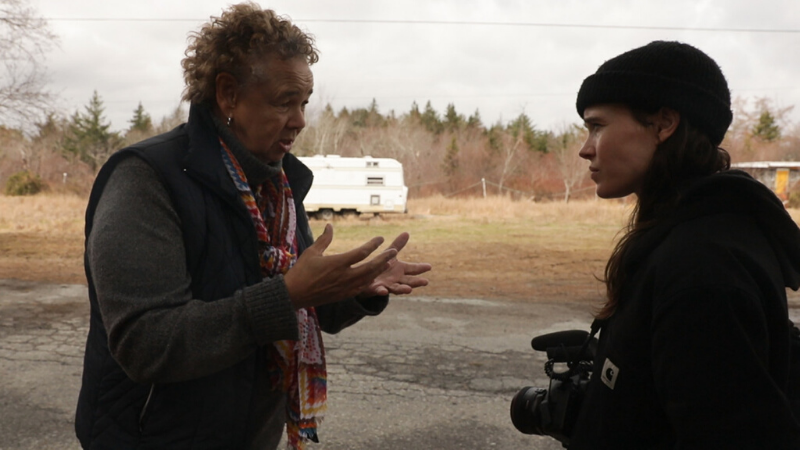
Page, an actress well-known for indie hits such as Juno, speaks in voice-over of growing up in Nova Scotia’s capital, #Halifax. The beach, which we see in retro, carefree archival footage, was less than an hour’s drive away, and during her childhood seemed to be the embodiment of Canada’s reputation as a «sweet escape,» open-hearted and connected to nature. That wholesome surface image later cracked. Her on-the-ground research into #environmental racism# is, then, framed as a coming-of-age journey from #white privilege# and ignorance to a more informed and active role in the health of her community. But far from making the film self-indulgent, she wisely positions herself as a secondary, facilitating presence ready to listen and learn from the stories of those who have disproportionately borne the brunt of profit-driven pollution.
Embedded oppressions
The film draws upon the book of the same name by Dr. Ingrid R. G. Waldron, which revealed the impact of environmental racism on indigenous and black citizens, whose historical homes tend to be considered prime dumping site locations by those authorities unwilling to allow this toxicity near their own homes. #Colonial oppression has in this way continued through the generations, embedded into institutional structures.
Page’s first stop is Shelburne, which once had the highest population of freed blacks in North America. A dump placed in their hometown in the ‘40s, and finally closed in 2016, continues to harm residents, who are subjected to high levels of arsenic in their drinking water. Many have died from cancer. There has been little will from the local government to help, despite calls for a provincial bill of rights and the fact that the annual Founders’ Day festival costs more than five times as much as a clean community well. «Stop playing the race card,» activist Louise Delisle was told by the mayor, a hostile mode of denial in a nation that obscures its bigotry through making it a conversational taboo.
The interconnectivity of all the planet’s creatures has never seemed so callously disregarded.
The toxic legacy of governmental neglect and subjugation continues as we move on to the territory of the Pictou Landing First Nations. Michelle Frances-Denny tells the tragic story of how her grandfather, chief in the ‘60s, was maliciously deceived over the environmental impact of a new pulp and paper mill. Planning to channel its raw, untreated effluent into the harbour, mill bigwigs used a fake demonstration to «prove» the waste’s harmlessness. The chief sold the harbour’s rights to the local government to support his economically struggling community; within days of effluent starting to pour out, all the fish were dead. The guilt and sadness over this mass destruction and cynical trickery reached down to the next generation. Not only did the chief die young, but eleven of his thirteen children were lost early to cancer, suicide or addiction. «So what?» says a culprit, confronted. The Pictou «weren’t living in the water.» The interconnectivity of all the planet’s creatures has never seemed so callously disregarded. In 2014, when a burst pipe spilled 47 million litres of toxic effluent onto Mi’kmaq burial grounds, it prompted a First Nations blockade. Under pressure to close the waste facility, the mill outrageously proposed redirecting the effluent into other Pictou fishing grounds — moving it from their backyard to their front.
«Grassroots grandmothers»
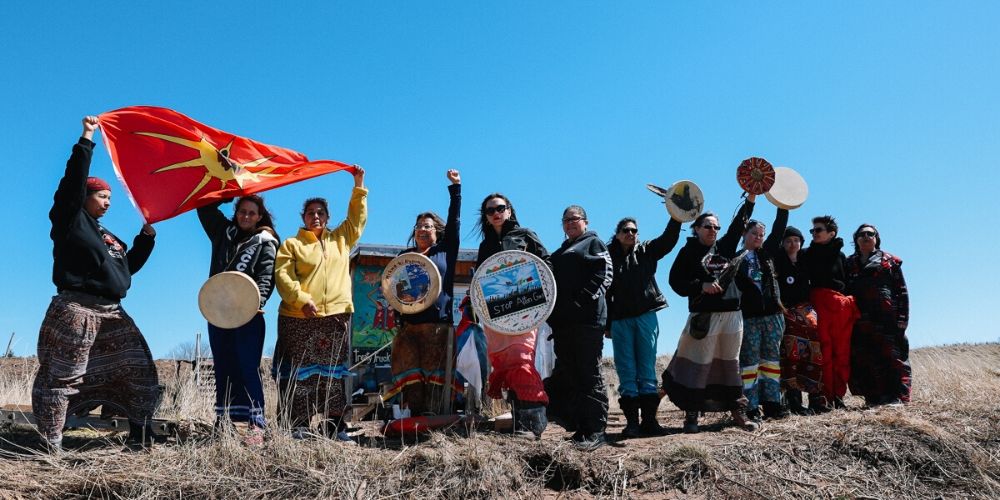
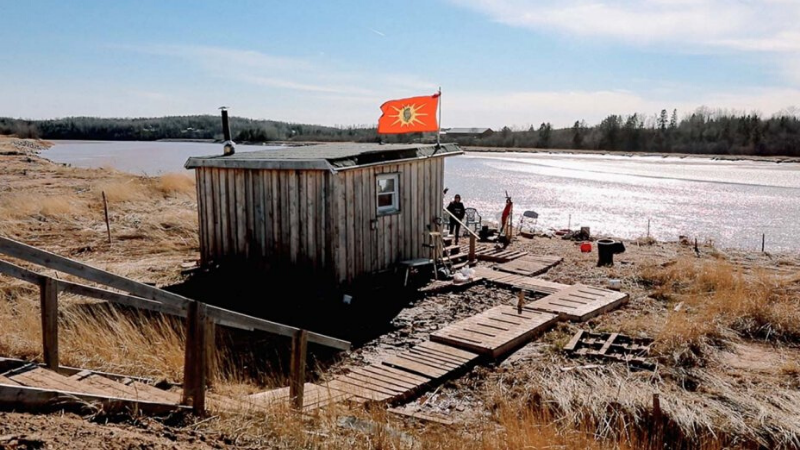
Finally, we come to the town of Stewiacke, where the Alton Gas Corporation is trying to override Mi’kmaq treaty rights to territory in order to create an underground storage facility for natural gas that would dump tonnes of salt into the river, inevitably killing the fish. «Grassroots grandmothers» and local water protectors Michelle Paul and Doreen Bernard have been actively disrupting the project, and take us to where the authorities have caged off a «designated protest area» to restrict their access, essentially criminalising their actions rather than those destroying the habitat for gain. Canadian prime minister Justin Trudeau has challenged legislation as a means to allow the project to become compliant yet still dump salt, in contempt of indigenous rights.
Canadian prime minister Justin Trudeau has challenged legislation as a means to allow the project to become compliant yet still dump salt, in contempt of indigenous rights.
«They’re opening our territory for business,» the grandmothers say. «They’re doing it and they’re not even tricking us now; they’re doing it blatantly.» As these battles continue, Page ends on an upbeat note, inspired by these women who boldly speak truth to power to believe that accountability, and a love of nature, will and must prevail.
‘There’s Something in the Water’ screened at #TIFF and will screen this month at #One World# (Prague)