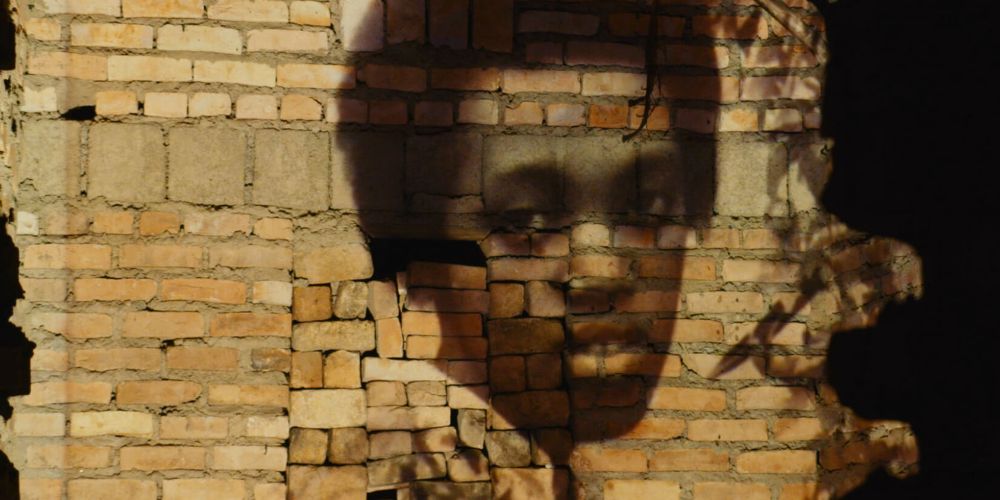
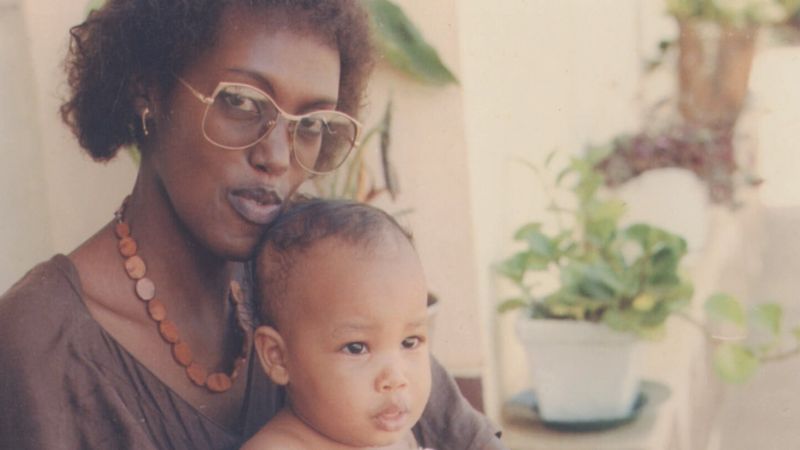
Didy opens with a frenzied search. Gaël Kamilindi rummaging through what appears to be bags full of keepsakes and old stuff in the darkness with a torch in hand. He is looking for something, though we don’t know what just yet. This restless energy sets the tone for the entire film. When he finally unearths an old photo album of his mother, the background music is upbeat, rhythmic, urgent, and suddenly we are launched into a memory-scape that feels alive, intimate, and gripping.
Unconventional
This is not a conventional documentary. It’s a eulogy, a performance, a fragmented love letter, and a poetic excavation of a woman lost too soon. Gaël’s mother, Didy. What makes Didy remarkable is how it blends so many emotions without losing its core: grief, warmth, anger, regret, and ultimately, healing. It holds all of these gently, never pushing the viewer too hard, but also never letting you forget the weight of loss.
Gaël was only five when his mother passed. Her death was soon eclipsed by the devastating civil wars and genocides that ravaged #Burundi and #Rwanda. In the aftermath, he, like many others, was exiled. His physical distance from home mirroring his emotional and psychological disconnection from the memory of his mother. In Didy, we watch him try to reclaim those memories. But not alone.
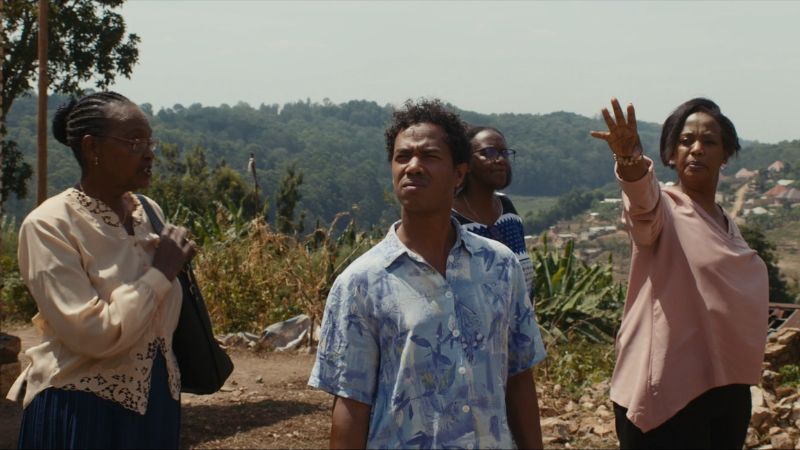
Eight women, each with a unique connection to Didy, form the emotional spine of the film. As they speak, we come to understand that they each hold a fragment of her, a piece of her story. There is something so beautiful, and at times haunting, about how confidently each woman remembers Didy. It is as if she belonged only to them. A best friend. A sister. A lover. A comrade. Each interaction reveals a different shade of Didy’s life, a different stage, a different version of her. Together, they sketch out the portrait of a woman whose memory has survived through others, even as the world around her crumbled.
A best friend. A sister. A lover. A comrade.
Poetic storytelling
The storytelling approach here is deeply poetic. The structure doesn’t follow a traditional documentary arc but rather moves like memory itself. In waves, in flashes, in unfinished conversations. Credit must go to both the director and the editor, whose work in this film feels seamless and deeply intentional. It is clear that they collaborated closely to bring Gaël’s journey to life without ever overshadowing its emotional core. They allow the silences to speak, the pauses to breathe, and the music to guide us.
The music in Didy is a masterpiece in itself; it doesn’t just accompany the story, it carries it. It is soulful, intentional, and emotionally intelligent. It swells when it needs to hold grief, quiets down to let memories breathe, and rises to meet moments of revelation. The score never overwhelms; instead, it creates space for the audience to feel, to reflect, and to sit with Gaël in his journey. It’s gripping when the search feels urgent, sombre when the pain is raw, and tender when warmth returns. In many ways, the music becomes another character in the film. One that guides us gently through memory, loss, and rediscovery.
Visually, the film is stunning. The cinematography is crisp and immersive, bringing us closer to the people and the places Gaël encounters. There’s a softness to the camera’s gaze, one that mirrors Gaël’s own vulnerability. We are not just watching him remember; we are remembering with him.
There is also something deeply moving about how Didy handles the theme of exile and displacement. Gaël’s fragmented memory is not just personal; it is political. The chaos of #war doesn’t just destroy homes and lives; it disrupts personal histories. Didy’s memory, like many women lost in times of #conflict, is not recorded in official archives. She exists only in the lives she touched, and even there, time threatens to erase her. This makes the act of remembering both a resistance and a form of love.
Gaël himself holds the film with grace. He balances personal vulnerability with the responsibility of storytelling. He doesn’t just search for Didy, he gives her back to the world. In doing so, he creates space for those of us watching to reflect on our own losses and what we carry with us.
The slow work of memory
If I could describe Didy in a single breath, it would be with several words: warmth, healing, anger, love, discovery. It is a film about the quiet, slow work of memory. About how love can survive through others. About the courage it takes to ask difficult questions, knowing the answers might change you.
I would recommend Didy to anyone who has experienced premature loss. Whether of a loved one, a homeland, or even a former self. It’s not just Gaël’s story; it’s one that echoes far beyond him. The film doesn’t offer closure in the traditional sense, but it offers something gentler, a kind of emotional reunion.
Didy is one of the most authentic, soulfully constructed documentaries I’ve seen. It doesn’t perform grief; it inhabits it. It doesn’t tell us how to mourn; it shows us how remembering itself can be an act of love.
This review emanates from the Talent Press programme, an initiative of Talents Durban in collaboration with the Durban FilmMart Institute and FIPRESCI. The opinions expressed in this article are those of the author, Gloria Nkatha and cannot be considered as constituting an official position of the organisers.