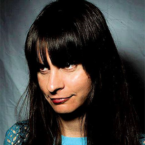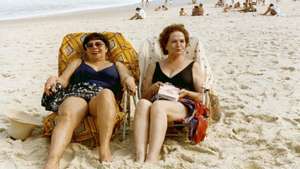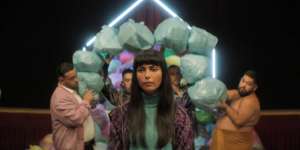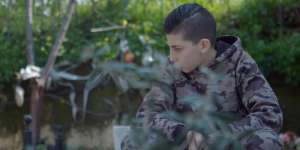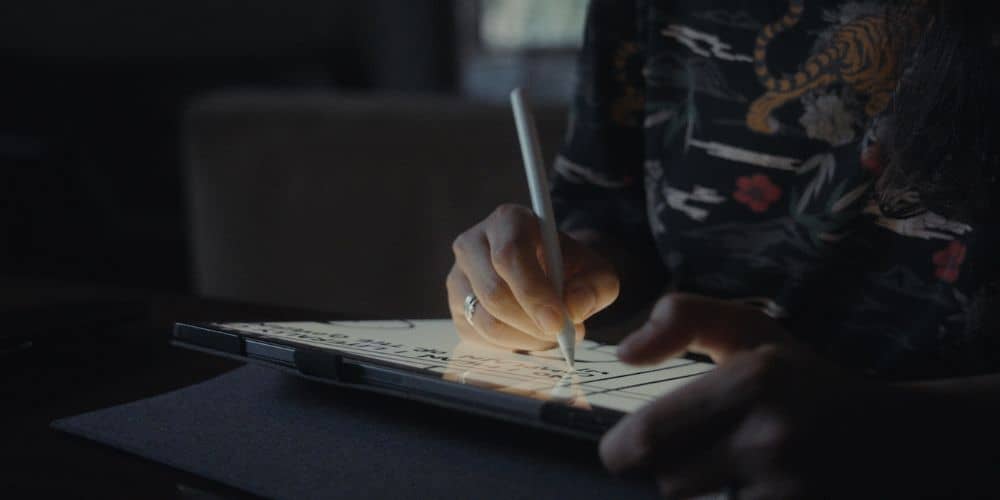
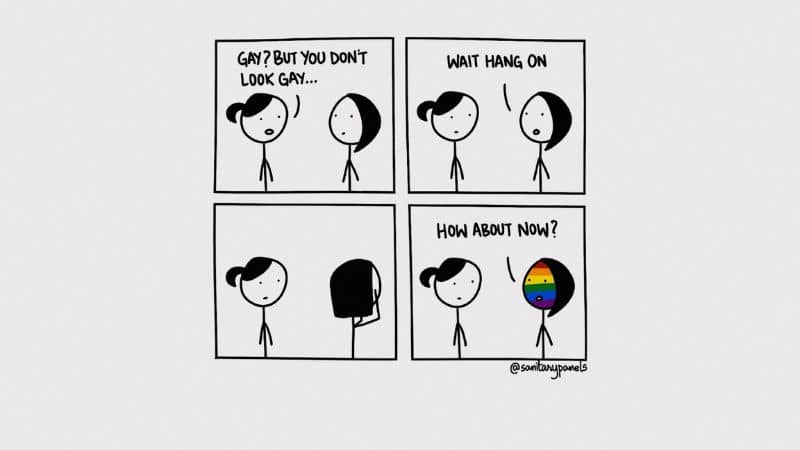
«I enjoy the challenge of saying more with less,» says Indian cartoonist Rachita Taneja about her choice of simple stick figures to represent her ideas. Rigorous limits pose less welcome obstacles in other aspects of her work, as heavy #censorship has become a method of silencing dissenting voices under the current right-wing #Hindu nationalist regime of Prime Minister #Narendra Modi#. And Taneja’s is the kind of political work that makes those in power uncomfortable, motivated as it is by an acute sense of injustice over the direction the country is heading, and the constriction of everyday freedoms. Vicious trolling is already a personally traumatic deterrent to free expression. Added to this, ongoing criminal contempt proceedings initiated against Taneja and her popular web comic Sanitary Panels, in which she published cartoons criticising the Indian Supreme Court, threaten her with the consequences of a fine and potential time in prison for circulating her opinions if it is ruled that her actions diminish the authority of the court. It is in this context of intimidation and continued uncertainty, as the date for the case nears that Sama Pana’s documentary about Taneja’s work, Drawing a Line, was shot. It screens at the latest Movies that Matter edition.
A global application
The protagonists note that India has been deemed «the world’s largest democracy.» Still, it is currently at a low 161 of the 180 countries listed in the annual Press Freedom Index by Reporters Without Borders. It is a very dangerous place for journalists to work, in which criminal prosecution is often used to gag #free speech#. It’s not the only nation with a #media in crisis and authoritarianism on the rise. As such, the film offers an urgent and timely case study and an insight into tactics of targeted oppression with a sadly wide global application.
It’s not the only nation with a media in crisis and authoritarianism on the rise.
After strong advice from Taneja’s lawyers, the documentary team avoided footage of the case hearing to not be seen as trying to manipulate the outcome. They also omit the cartoons in question, as the courts could view this as redistribution. But we are granted a close, personal view of the artist’s everyday work processes and the psychological toll of the pushback. To provide us with a sense of the work she instead creates, especially for the film, animation in her typical minimal but witty and direct style depicting India as a diverse land where community spirit and citizen rights spiralled downhill quickly as a supreme leader tried to enforce a single ideology and stamp out all others. This ruler set up a hate factory that churns out #propaganda to strengthen the misguided beliefs of his followers. It’s a succinct summation of how such repressive regimes operate, and the animation’s efficacy in questioning the status quo underscores why Taneja, with her many thousands of devoted fans and followers on Instagram and other social media platforms, is considered such a threat by the ruling party.
The film and its crew are also a likely target for censorship. With that concern in mind, pseudonyms and other methods to disguise identity, including the director’s replacement with a stick figure in the frame, have been employed as cautionary measures against repercussions.
While the potential court-ordered punishments are set out clearly, the documentary is perhaps most effective in conveying the murkier ground of doubt, fear and paranoia-inducing uncertainty induced by targeting Taneja and other dissenting artists. «I don’t know what it is that counts as a slip anymore,» says one protagonist. Actions against politically critical voices are inconsistent, and the laws are vague enough that if the authorities decide to go after someone, they can easily find a way. The result is hyper-vigilance, second-guessing of speech, and exhaustion over the need to continuously vet one’s thoughts. This should not be termed self-censorship but simply censorship, Taneja insists, regarding this tactic to destroy the confidence of artists to share their work in the public domain. Words and categorising labels have been weaponised by a regime that has associated «documentary» with propaganda and malicious trouble-making in people’s minds and worked to make citizens mistrustful; the same regime that has had school textbooks re-edited to remove any positive references to Islamic leadership and traditions. A legitimate fear of #doxxing and violent persecution is another constant stressor, as home addresses and family photos are frequently posted by trolls online — an incitement that the security of privilege Taneja acknowledges she has cannot fully mitigate. Taneja deliberates over how much to publicise an upcoming appearance at the Indie Comix Fest, a creator-run event for self-published comics where she can connect with her audience in person, because of the risk that those who wish her harm and may be monitoring her whereabouts could show up unannounced to harass her. But turning up at the event is never in doubt for her, and fans stop by to thank her as a source of hope and inspiration. Despite the strain of the legal case hanging over her, she keeps drawing and publishing cartoons throughout. After all, she loves her artistic calling — and is never short of material.