«In a place where a settler-colonial regime is determined to [paralyse] the infrastructures and bodies that reproduce life, both biologically and socially, how does life persevere against all odds?» Layal Ftouni asks in her 2024 article, exploring the practice of sperm smuggling among Palestinian prisoners and their families as «an affirmation of life».
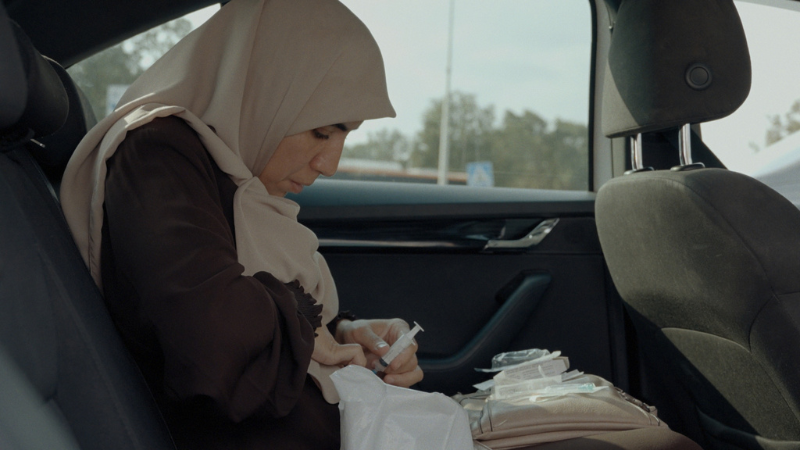
Filmmaker Ahmet Seven seems to wrestle with the same question in his documentary For Life, following Palestinian woman Hind Mashahra, whose hopes for motherhood are hampered by the reality of occupation and her husband’s incarceration. Her spouse is serving a life sentence in an Israeli prison (details of his charges aren’t discussed), one of thousands of Palestinians held far from his family, and he is barred from conjugal visits. Smuggling her husband’s semen out of prison may be the only way she could become a mother (again).
Hind isn’t the first to attempt this. Over the past years, dozens of babies in the West Bank and Gaza have been conceived through in vitro fertilisation (IVF) using the smuggled sperm. The first such case was documented in 2012, when Dalal Al-Ziben, the wife of a long-term Palestinian prisoner, gave birth to their son in Nablus. Since then, more than 110 children have been conceived in the same way, according to a spokesperson for the Commission of Detainees’ and Ex-Detainees’ Affairs, as reported by the Mediterranean Network for Feminist Information. The film doesn’t feature these figures, but it does weave in accounts from other prisoners’ spouses, who resorted to the practice to conceive children. Among them is Fathia Safadi, whose son finally reunites with his father upon release, and Sanaa Daqqa, who conceived her daughter with smuggled sperm during her husband’s lengthy imprisonment (her now late husband, Walid Daqqa, was one of the longest-serving Palestinian prisoners in Israel, who died in custody in 2024 and whose body was withheld, prompting calls to «free [his] corpse», a grim reminder that for some, liberty cannot be found even in death).
Extraordinary cost
The determination of these Palestinian women is what drew the filmmaker to the story, as they pursue, in his words, the «ordinary desire» of motherhood «at the extraordinary cost.» For many like Hind, the consequences of motherhood are dire. Her husband could be punished with «solitary confinement» and «torture», and she, too, may suffer and be denied an ID for her child, a representative of the Committee of the Prisoners’ Families cautions in one scene. «Israeli occupation views this as a direct challenge», he continues. «When he smuggles sperm, or fathers a newborn, it shows his determination and the Palestinians’ will to live.»
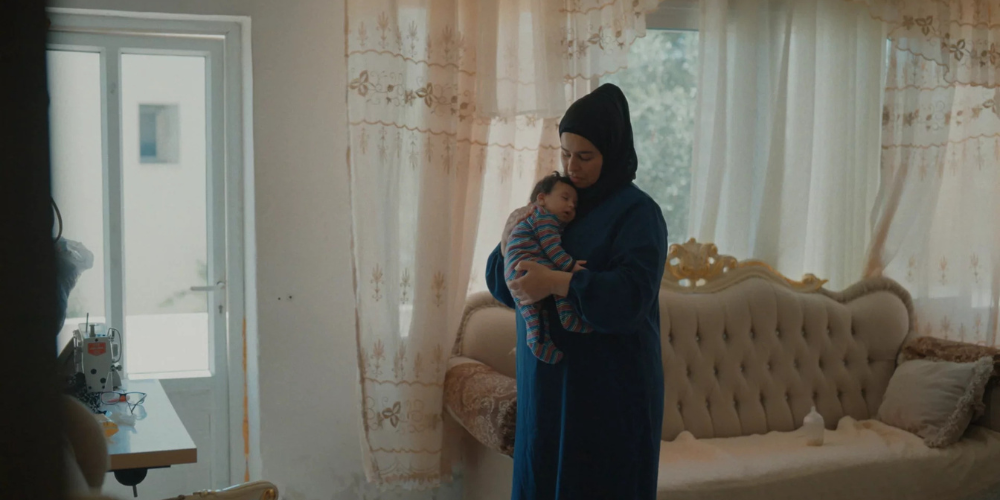
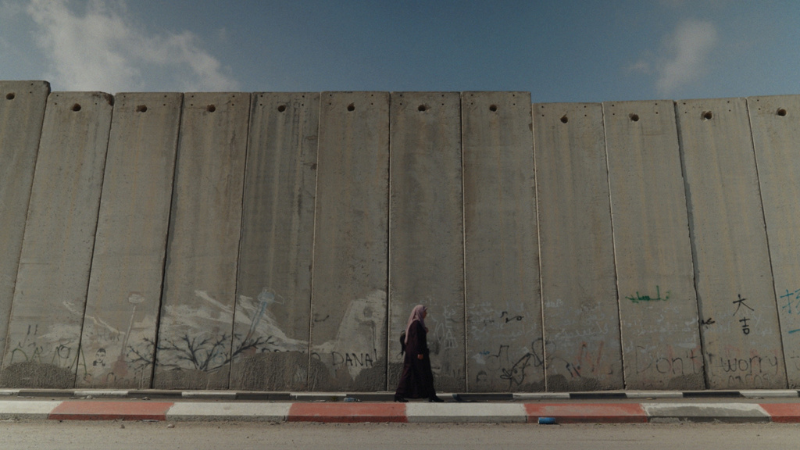
For Life is a documentary about a woman’s personal struggles, but it’s also an inevitably political film, shaped by the burdens of life under occupation. The camera observes Hind’s interior life unobtrusively through moments of despair, waiting, and repeated attempts to deliver her husband’s sample to a fertility clinic (the director’s notes remark that the camera’s restrained presence was also a practical necessity due to security concerns during filming in the West Bank and East Jerusalem and considerations associated with navigating women-centred contexts as a male filmmaker). The film’s unadorned cinematic language also seems to serve another function, directing the viewer’s attention to the unfolding drama, which is abundant given the numerous constraints imposed by the Israeli regime and the short life of semen outside the body, perishing within just hours. It’s like «a race against time, checkpoints, and traffic in the West Bank», Visions du Réel’s Sergio Fant aptly put it, which all stand in between Hind and her reproductive aspirations. Meanwhile, quieter, more subdued scenes prove as useful in conveying the emotional weight of separation and Hind’s motivations for motherhood. Visually, that’s accomplished through a distinct framing, which places Hind’s solitary figure in sparse domestic spaces and long hospital corridors. The phone is often her only link to her imprisoned husband, along with the radio that keeps her company, broadcasting news of prisoners’ (IVF) births.
Don’t say ‘smuggled sperm’, it is liberated sperm. It comes from behind the bars.
Communal practice
Although undergoing IVF is a private act, the film reveals it to be a «communal practice» in the West Bank. A fertility clinic offers Hind an IVF treatment pro bono, which otherwise would cost her around US$3,000 per cycle. It’s a commonplace occurrence, as the scene suggests, with cooperating fertility clinics and doctors offering such support to wives of longtime Palestinian prisoners who have no children or wish to have a child of another sex. Beyond the bounds of the film, the communality and collectivity of this reproductive practice is explored by scholar Gala Rexer, who discusses, among other questions, how medical professionals, civil society groups, Palestinian media, and religious authorities have worked together «to set up the necessary infrastructures and social and religious protocols» to enable more women to continue conceiving children despite the forced separation (the scholar contends the need for sperm smuggling may have stemmed from the «discrepant treatment» of Palestinian political or ‘security’ prisoners in Israeli prisons, who are said to be denied marital visits). In this vein, sperm smuggling emerges «as a communal counter infrastructure that challenges the [militarised] geographies of the occupation, such as borders, checkpoints, prisons, and other infrastructures reconfiguring colonial space and life in Palestine.»
Embodied resistance
«Don’t say ‘smuggled sperm’, it is liberated sperm. It comes from behind the bars», a mother of a Palestinian prisoner exclaims in a scene with Hind. This thought-provoking sentiment offers a fertile ground for discussion, raising important questions about how assisted reproductive technologies such as IVF are «harnessed» for resistance against the occupying power. In her article (not covered in the documentary), Rexer examines sperm smuggling as a «new mode of embodied resistance», with bodies and bodily matter figuring as «central actors» in the exercise of defiance. Meanwhile, in ‘Fertility Frontiers: A Decolonial Materialist Feminist Perspective on Assisted Reproductive Technologies in Israel/Palestine’, Sigrid Vertommen cites Nadera Shalhoub-Kevorkian, who notes the Palestinian women’s «[wilful] act of deciding to continue surviving and giving birth», which she says «is itself perceived as political». Whereas, Ftouni situates sperm smuggling within debates «on the right to life» and its reading as «life-affirming» practice.
Some scholars also complicate the discussion of the practice, highlighting questions of women’s bodily autonomy and consideration of their choices in the reproductive decision-making process, which tends to uphold entrenched patriarchal structures. The «absence» of the female body can also be observed in how the practice is often narrated, Rexer argues. In that regard, it’s imperative to acknowledge the «political work» that different bodies do, including Palestinian women’s production of knowledge about «the various ways of unruly and convivial forms of Palestinian resistance». Echoing Mohammed Hamdan’s argument, she agrees that in being the main narrators, the women «reclaim power» as active actors in history in which their public accounts «[challenge] the Israeli colonial narrative and [decolonise] the oral male history of resistance».
Childbirth can embody hope, but in oppressive systems it’s entangled with negotiations of power and control. The film draws to a close, revealing major changes in Hind’s life as her husband is unexpectedly released in a prisoner exchange. However, it doesn’t conclude with a triumph of motherhood. In fact, her maternal dream is even more out of reach after relentless hurdles, rounds of medications, and ultimately the removal of her uterus (out of medical necessity). It’s an aching ending that leaves the viewer contemplating the costs of choices and a woman’s unsettling life inside the frame, and beyond it.