The soporific, dreamlike intensity of Victor Kossakovsky’s Architecton, where images of ancient hewn stone are juxtaposed with the destruction wrought on modern reinforced concrete apartment blocks destroyed by Russian bombs in #Ukraine or a massive earthquake in #Turkey, makes this one of the Berlinale’s more unusual world premieres in the main competition.
The director – a Russian many years resident in #Berlin – is careful to flag his opposition to Putin’s war on Ukraine, including a lingering shot of a half-destroyed building from which a large flag demanding that #Russia be kicked out of the #UN hangs.
a massive stone quarry that has cut away into a nearby mountainside is a mute witness to just how far humankind has lost its way.
Echoes of ancient mastery
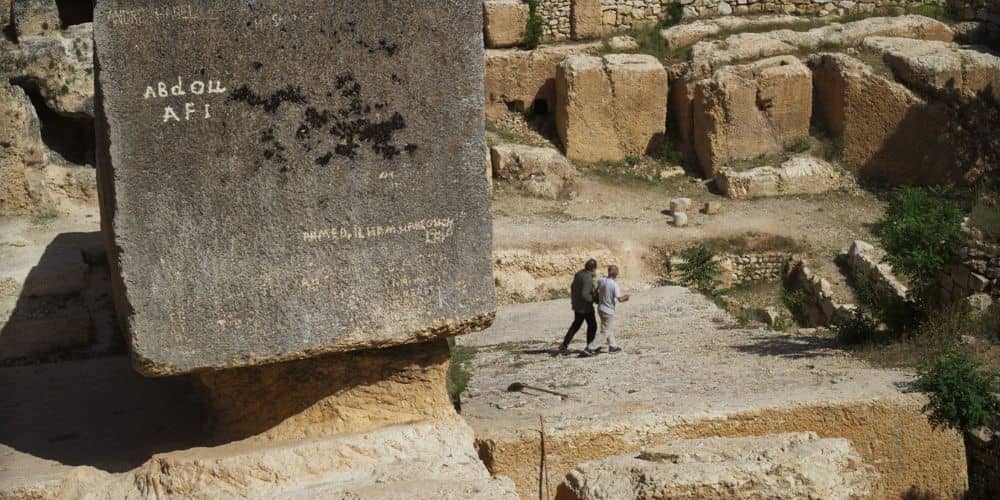
Opening with Italian architect Michele De Lucchi pondering just how ancient stonemasons cut massive blocks in a Turkish quarry – where dozens remain still attached to the living rock beneath, abandoned all but complete millennia ago, Architecton shifts its attention to another stone structure: a rock circle that the architect is constructing in his garden.
There is very little dialogue in this visual sweep of quarries, rocks being blown from sheer cliff faces; the bone-white remains of ancient stone villages, and rock processing to make concrete. Instead, the viewer is treated to a mesmerising sequence of images captured by drone and hand-held cameras that make sense at the time but are hard to mentally reassemble later.
From time to time, Kossakovsky returns to the slow construction of the stone circle, where De Lucchi intends the interior to remain sacrosanct and nature to reassert its vitality within its boundary.
The meanings come together gently in the waves of images of almost liquid rockfalls and the sullen silence of stones that once housed vibrant communities. If the circle means anything, it is that humankind has lost its way. We no longer build with living rock but concrete. We no longer build for human society but for ideas divorced from #community. We no longer build for ages but for short-term spans – high-rise flats thrown up that will be torn down within 40 or 50 years, whether they suffer natural or manmade destruction before then or not.
Reassessing architectural ethos
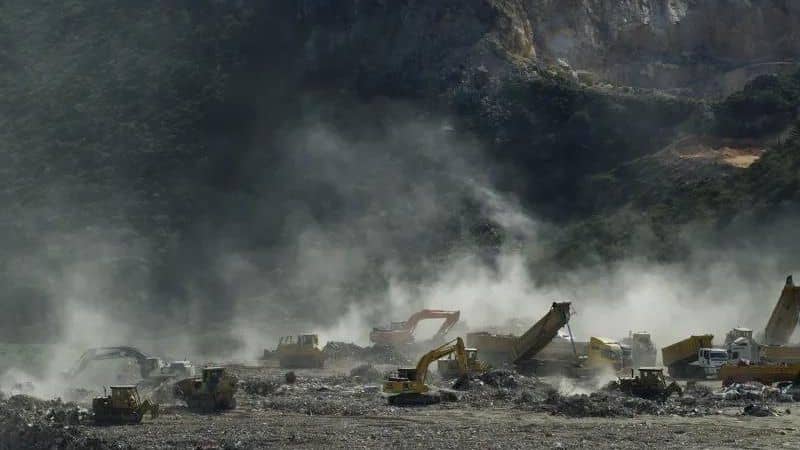
Kossakvosky introduced dialogue – a conversation between him and De Lucchi in an epilogue that follows the 90 minutes of images. The architect is uncomfortable with the part he has played in the dehumanisation of architecture, seeking to distance himself from a project he is working on for a concrete office block in Milan. Kossakovsky asks why we can no longer build for durability. De Lucchi bemoans that we no longer embrace life in our buildings. Even the ancient crumbling remains of stone villages harbour life in abundance, trees, grass, butterflies, and birds. When concrete structures are torn down, they are only good enough for dumping. And in those images of the Turkish buildings that fell during the earthquake, a massive stone quarry that has cut away into a nearby mountainside is a mute witness to just how far humankind has lost its way. Architecton is about much, much more than simply the failures of modern architecture.