Contemporary Latin American scholars of decolonial thought, most famously #Aníbal Quijano# and #Walter Mignolo#, popularised the concept of the colonial matrix of power to characterise the legacy of European #colonialism around the world, especially in #Latin America#. This «matrix» is based around colonial control of various domains — including knowledge, economy, and constructed racial hierarchies — centred around the straight white man at the very top of the pyramid. François-Xavier Drouet infuses his fourth feature effort, the French-Belgian documentary The Gospel of Revolution (2023), with more than just a broad brushstroke of this impulse.
The end of history?
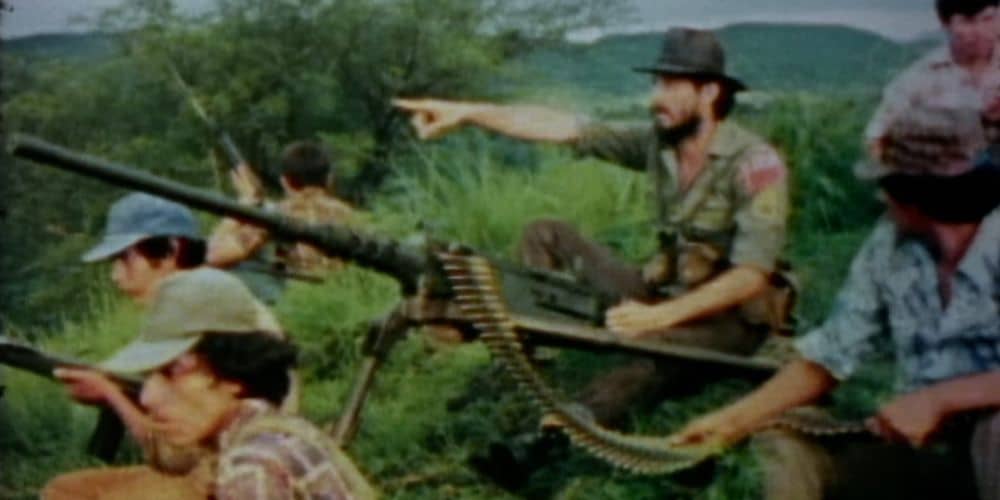
Latin America, the 1900s: revolutions brewed throughout the region against dictators and governments supported by the #United States# and, often, its allies. Centuries of Spanish and Portuguese colonialism left nearly every country in Latin America #Roman Catholic# by this time, instilling in the people an enduring sense of passionate faith in Father, Son, and Holy Spirit.
El Salvador’s civil war lasted from 1979 through 1992 when the Farabundo Martí National Liberation Front (FMLN) was quelled, and a full government turnover did not occur. The Nicaraguan revolution ended in a revolutionary victory — the first successful in Latin America since #Cuba in 1959 — by the #Sandinista National Liberation Front (FSLN) against the #Somoza dynasty and the U.S.-based Contras in 1979, resulting in the regime’s overthrow.
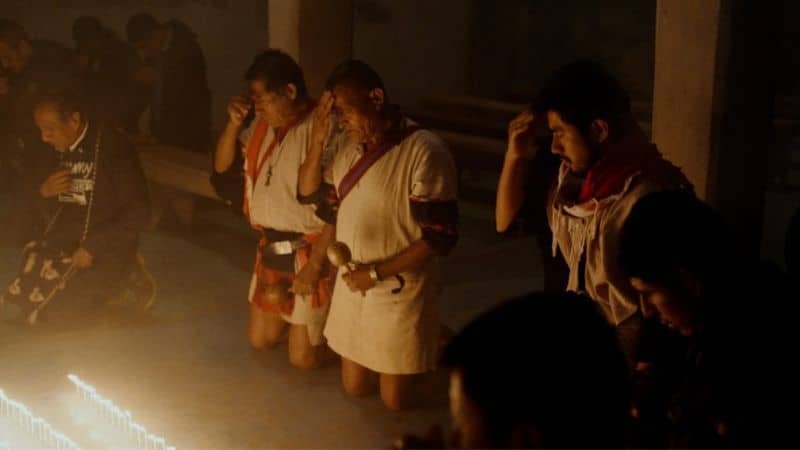
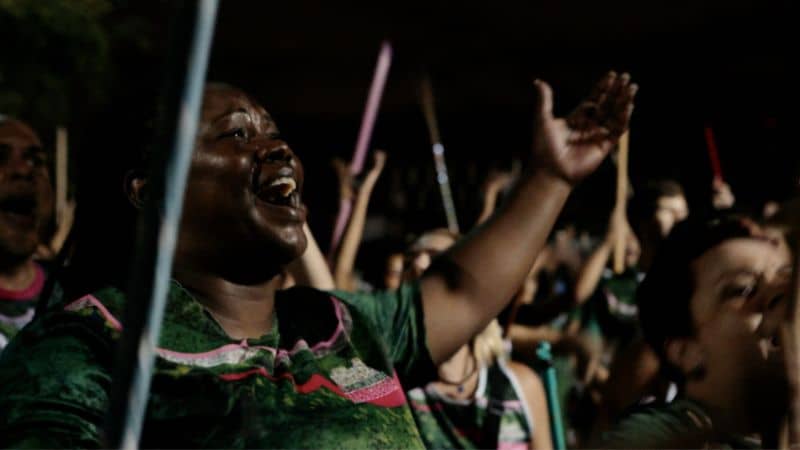
Latin America, present-day: The populist Brazilian government of #Jair Bolsonaro# provided echoes of dictatorships past from 2019 through the end of 2022, with protestors running to the streets in droves to stand up against his far-right and pseudo-authoritarian policies. Bolsonaro’s government was overturned in Brazil’s 2022 election. In #Mexico, the Zapatista Army of National Liberation (EZLN), or #Zapatistas, have been engaged in an armed insurgency war against the Mexican government since 1994, aimed at reclaiming land for indigenous populations.
A century of revolution
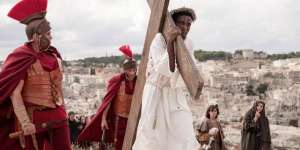
Broken into several chapters, The Gospel of Revolution traces a multitude of revolutionary efforts in El Salvador, Brazil, Nicaragua, and Mexico, unlocking their intersections and conflicts with the proselytisation and practice of #Christianity throughout these movements. But rather than acting as a conventional historical documentary and retrospective, Drouet captures the spirit and feeling of revolt as it was and is felt on the ground, particularly by worshippers, missionaries, and European clergymen embedded in guerrilla groups for years on end — the film makes a bold start with an interview of a now-elderly Belgian missionary who spent 12 years with the FMLN in El Salvador. However, the filmmaker narrates the film with a self-reflective throughline as if to prove why he is the one to be making it. At times distracting, it makes the film take on an overly academic and lecture-like quality, dispelling the eager hope of the emancipatory movements.
Through insightful interviews and rich archival footage of revolutionary groups and everyday life, the film presents a special focus on the importance and personal significance of «liberation theology,» or an approach to liberating the oppressed. However, at nearly two hours long, the archival portions also tend to melt into themselves, making the connections between the distinct revolutionary movements more tenuous. This is why The Gospel of Revolution is at its most interesting when it leans into its thematic contradictions, such as swaths of revolutionary doctrine standing against #religion, just as religion empowered ordinary people to fight against their oppressors. For instance, in archival clips, guerrilla fighters are welcomed into churches and attend mass wherever they can find it.
Are these contemporary phenomena, omnipresent not merely in Latin America but also elsewhere around the world, the makings of a coming global revolution?
Liberation theology, which arguably gives the most «radical internal critique» of the Catholic Church, allowed and continues to allow individuals to reconcile their faith with revolutionary impetuses. This is despite the ostracisation that subscribers of liberation theology face and the Vatican’s refusal to support these revolutionary movements, as we witness in the film. The philosophy aligns Christian belief and revolutionary work with that of Jesus Christ and his teachings, as well as through the deceptively simple idea that «God supports the poor because they are poor,» says an interviewed subject, not because they are innately better than others. At its best, The Gospel of Revolution is informative and inspiring; at its worst, it is a French filmmaker’s partly self-indulgent quest to find his own connection to #revolution in a world that seeks to reinforce the status quo.
Near the end, the film moves toward a contemporary perspective, interrogating the role of religion in Latin American countries today and turning to reasons for revolution: the suffering of oppressed communities—among them migrants and Indigenous people—and ever-increasing global socioeconomic inequalities, ingredients for the very movements investigated in the film. Drouet dares us to ask: Are these contemporary phenomena, omnipresent not merely in Latin America but also elsewhere around the world, the makings of a coming global revolution?