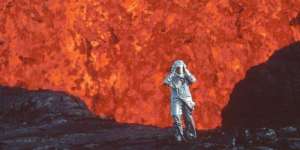
It is not often that a film allows the audience to feel its temperature, crafting two sensory experiences: one strictly visual, the other felt on the skin and almost through the nostrils. Heat, which has just had its world premiere in the International Feature Film Competition at Visions du Reel, is one of those films. Director Jacqueline Zünd is not new to this. Her latest fictional feature, Don’t Let the Sun, which premiered in Locarno last August (where it won the Pardo for Best Performance), also achieved this effect. There, she depicted a fictional, dystopian world in which sunlight is so intense that people are forced to go out only at night. Here, however, there is no fiction. The scorching sun is real, and is not just a projection of what «could» happen.
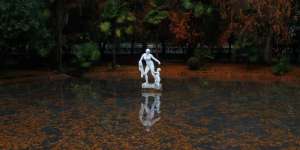
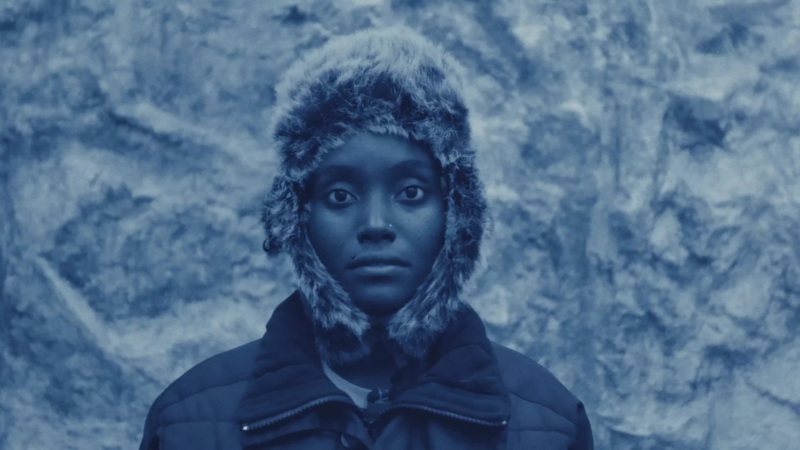
Over the course of 84 minutes, we get to know different personalities that are affected by the heat-stricken Middle East. Among them is Sophy, a young Kenyan who works at an ice bar. She serves hot chocolate, at -6° C, to the rich who enjoy the cold in the desert heat. The striking blue visuals, which contrast with the light tints of yellow and orange in the rest of the film, immediately stand out for their peculiarity, as well as for the enraging feeling that something is off in the whole system. That feeling keeps growing as the film unfolds, and the film ends too quickly.
A tale of social disparities
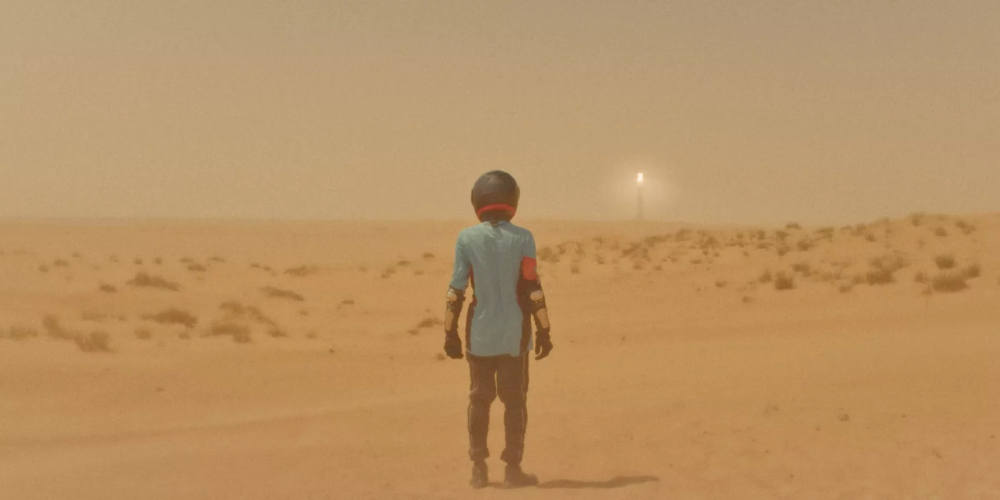
Along the way, we meet Carina, a real estate agent from Sharjah, who fills her car with large blocks of ice before driving to the shore, where she wedges them between rocks to help wild cats survive the heat. This is a moment of reflection on the impact that the climate has on animal species. With such a simple setup, Zünd focuses on multiple aspects of the problem while maintaining the narrative flow. Another character Heat focuses on is Essa Ramadan, a renowned meteorologist who promotes awareness of climate issues in Kuwait. There, people barely go out, as everything they need is sent directly to their homes. Nonetheless, someone is doing that job, and, even though they’re hidden behind helmets while riding the desert, they’re still human beings. Exploited by the system, they’re represented here by Francis, a delivery driver from Uganda. He endures 12-hour shifts in intense heat, while the streets look empty and the air looks difficult to breathe in: «At times, you go to pick up a delivery in a restaurant, and they tell you to stay outside,» he mentions. The sand and the heat are visible, as the camera lingers, waiting with him, outside. Once again, invisible to society.
All of these characters tell a difficult-to-watch story. None of them lives in financial poverty, yet all are trapped in conditions they have no power to change. Their living circumstances are beyond anyone’s control and are likely to worsen. Thanks to the documentary’s incredible delicacy, Zünd’s film ultimately comes across as a quiet wake-up call, disguised beneath its superb aesthetics. It’s a goal that many filmmakers working with reality undoubtedly aspire to achieve.
Texture of a crisis
In fact, Heat resembles a watercolour painting in most of its scenes. Its scenes are seamlessly edited, with a strong visual power and voiceovers that are carefully measured: never too long, never too brief, and always in sync with the film’s rhythm. Way too often, documentaries tend to discard care for visual composition, relying heavily on their subject matter as the primary driver of their impact. Zünd avoids this trap. Rather than resting on its contemporary political relevance, the film ensures a fully immersive experience for viewers. It almost feels like a museum installation that could be played on repeat, and never loses its momentum. Hopefully, parts of Heat will be used in broader artistic contexts, finding a new life beyond the cinema. It feels like a natural trajectory for the film, one that could demonstrate how a well-made, socially relevant work can reach multiple types of audiences.
At the same time, the importance of reflecting on environmental injustice is absolutely undeniable and adds depth to the film. After all, visuals alone in a documentary risk becoming little more than a shell for an empty core. Given the current crisis, the focus on the Middle East will inevitably draw significant attention—and rightly so. Zünd shows us the unfair consequences of an unbalanced climate, reflecting the region’s social inequalities. We need more films like this, and more filmmakers willing to make them.