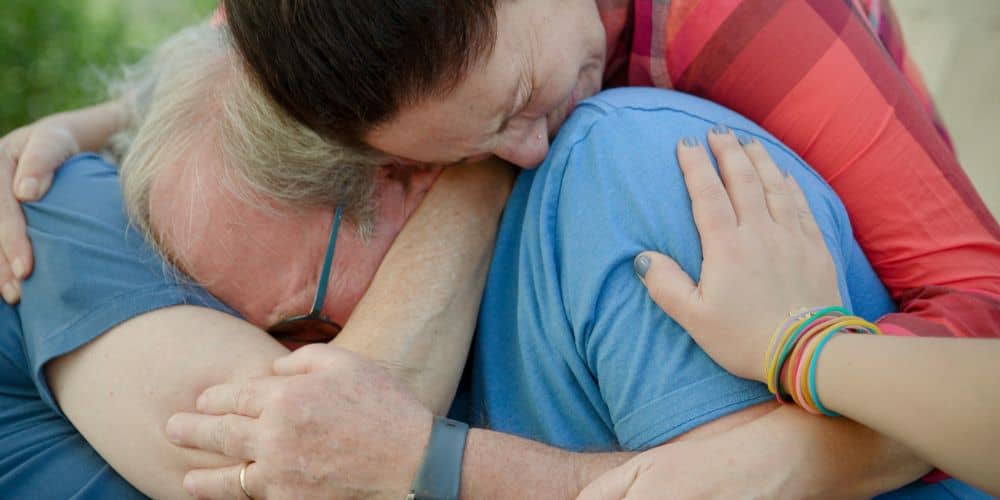
At a time when so many views are locked into polar opposites, and truth has become a relative concept, Brandon Kramer’s Israeli-hostage documentary, Holding Liat which had its World Premiere at the #Berlinale Sunday (16 February), stands out for the pains it takes to offer a nuanced view of a brutal conflict.

7 October
Liat Beinin Atzili, a 49-year-old history teacher, kibbutznik, and mother of three grown-up children, was among some 250 Israelis taken hostage during the brutal incursion into Israel by #Hamas fighters from Gaza on 7 October 2023. Seized along with her wounded husband Aviv – a member of the first response group at Kibbutz Nor Oz – she spent two months in captivity in #Gaza – before tireless efforts led by her father, sister and son to force pressure from the US government led to her release. Her husband was not so lucky: he came back in a coffin after succumbing to gunshot wounds during the attack, which left 30 dead at the kibbutz.
The horrors of 7 October—in which around 1,200 Israelis were killed—were soon eclipsed by the government of Israel’s Prime Minister Benjamin Netanyahu’s devastating war on Hamas. That swiftly turned into a scorched-earth policy that flattened much of Gaza and has killed more than 49,000 Palestinians, the majority civilians, since. Although a ceasefire began on 19 January, the future of the Palestinians of Gaza remains shrouded in doubt—particularly since US President #Donald Trump# voiced plans to expel them and develop the territory as some kind of luxury Mediterranean beachfront resort. It is an idea that has earned widespread global revulsion and condemnation but, unsurprisingly, has been taken up with enthusiasm by Netanyahu.
All these horrors were to come when Liat was seized. Within two weeks of the attack, the family had agreed to a film crew documenting their experience, giving Holding Liat an immediacy that allows viewers to experience the visceral rollercoaster a family in shock, fear, and grief undergo.
All these horrors were to come when Liat was seized.
American pressure
Focused on Liat’s pugnacious old-lefty father, Yehuda—whose car displays a #Bernie Sanders# bumper sticker and who makes clear his repulsion for Netanyahu and right-wing US politicians, as well as extremist #Zionist politics—the film explores the extent to which family pressure from American citizens could be leveraged to secure Liat’s release.
The deep polarisation of public opinion in America in those early weeks following 7 October is clear, as meetings with senators and congressmen show, alongside footage of both pro-Israeli and pro-Palestinian rallies. Yehuda often feels he is being used in ways that don’t reflect his old #Socialist beliefs, but the grief at what may have happened to his daughter drives him to use whatever opportunities he can.
References to the pain and suffering of the Palestinians—including a chance meeting with a Palestinian representative in Washington DC—underscore the attention Kramer gives to displaying the complexities of a conflict involving two groups of people with competing claims to the region they live in.
It seems outside the film’s brief to explore the imbalance in power that means one Israeli family can create the political will and pressure to secure their daughter’s release within two months when tens of thousands of Palestinians were rounded up and imprisoned without charge or trial during the war remain voiceless.
That said, Liat’s commitment to peace is phenomenal. Held by the family of the Hamas fighter that seized her, she took the chance to explore their worldview as she sought to elucidate hers.
«They wanted us to see them as people, and we wanted them to see us as people. So very quickly, conversations started about family and our lives, and it worked,» she told the independent online news outlet Middle East Eye in July 2024. «I was totally dependent on those people. I wanted them to like me, I wanted them to get to know me, I wanted them to care about me. That’s how you survive.»
First draft of history
Liat’s eventual release brings joy as well as grief; it is only then that she and her children learn her husband had died in captivity. But determined to remain committed to peace, she uses her position as a released hostage to advocate for peace in a world where there is precious little currently.
Holding Liat is a first draft of history, yet one that is open and sensitive to the nuances of Middle Eastern history and politics.