Alexander von Humboldt is likely the most ubiquitous name that very few have ever heard of. Indeed, the «father of ecology,» who came up with nature’s theory of interconnectedness, is both everywhere – with more species and places named after him than anyone else – and yet nowhere in the public imagination. It’s an oversight, director-writer (and producer, DP, and editor) G. Anthony Svatek hopes to correct with his subtly head-spinning, Visions du Réel – and MoMI’s First Look-debuting Humboldt USA.
Linked by place name
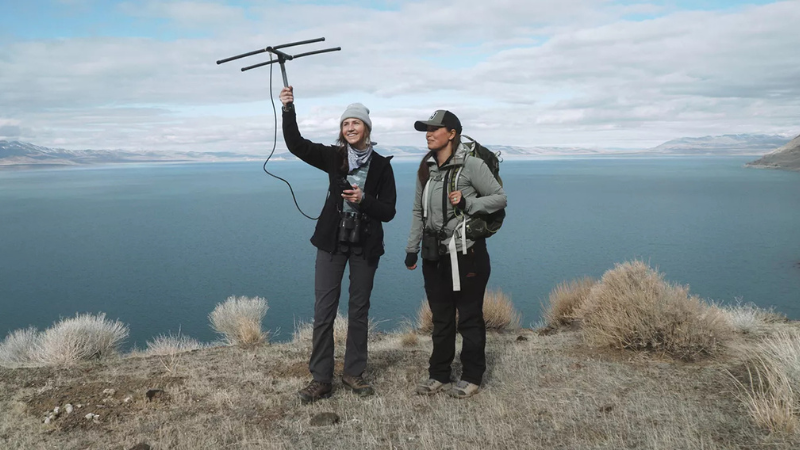
Deftly edited and deeply thought-provoking, the doc intertwines three disparate narratives linked only by the place name Humboldt: Humboldt County, Nevada, where bighorn sheep are losing their habitat; California’s Humboldt Redwoods State Park, where the spotted owl is likewise losing its home; and the Humboldt Parkway in Buffalo, NY, which disconnects the network of the city and has earned struggling Buffalo the dubious distinction of being one of the worst in the nation for air quality. And then there’s the story of Humboldt himself, a German naturalist and queer visionary who warned of industry’s destruction before he died in 1859. Unfortunately, Humboldt was soon to be supplanted by an admirer, Charles Darwin, who tossed aside his idea of interconnectedness for one of competition. (In fact, with the unseen director as our VO guide, we learn that Humboldt actually died the very same year that Darwin published On the Origin of Species. Which was also the year the US began drilling for oil in Humboldt, CA.)
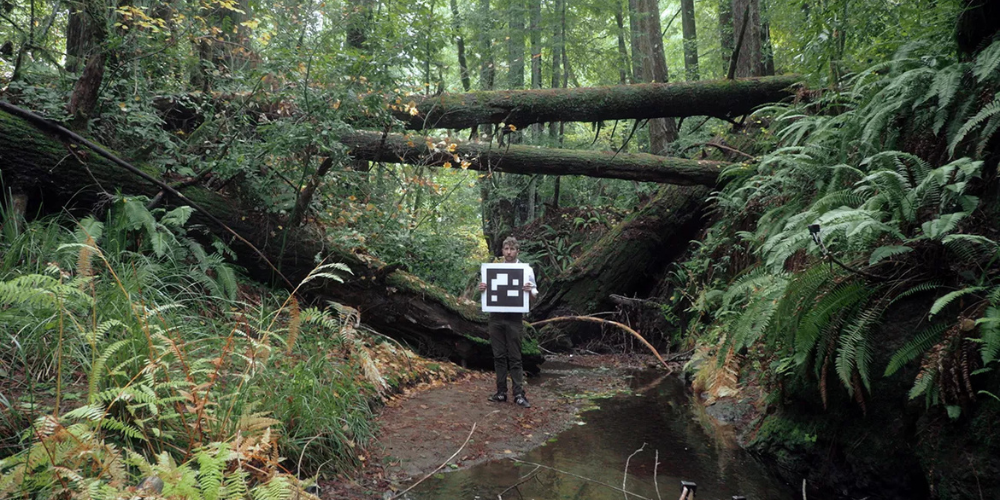
So in true anti-Darwinian fashion, Svatek decides at each stop to connect with a colourful cast of characters that are all on a mission to restore the ecosystem. Humboldt, who believed the «very idea of a colony is immoral», both measured and romanticised. His camera patiently observes Chris and Emily, a pair of tech engineers who descend on the ancient Humboldt redwoods, forever under threat from an insatiable logging industry, with dozens of GoPros. They’re rushing to capture a nature-based dataset to counter Silicon Valley’s data scraped from the internet, which can then be used to train AI to create «organic algorithms.» A passionate disrupter (who, from the footage we see of the duo at a dance club, also appears to be a goth aficionado), Chris wonders aloud if the «trees are all fucking weeping.» With similar concern, Svatek himself later laments to his long-dead protagonist in VO, «I’ve seen your name on machines crushing things you would have loved. Or maybe that’s just you crushing me.»
Alexander von Humboldt is likely the most ubiquitous name that very few have ever heard of.
Unburying the image
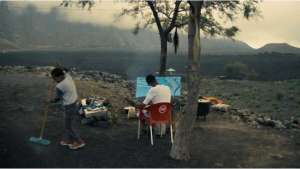
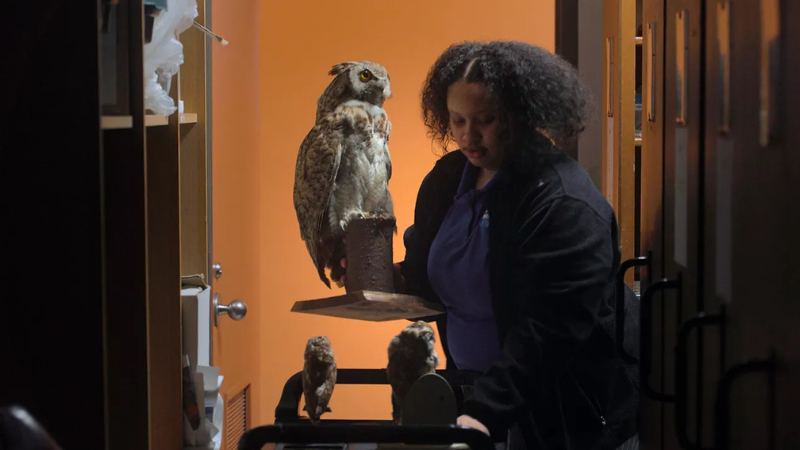
«We have representations that alter how we feel about a topic,» posits Angel, a young, wise-beyond-her-years Black resident of Buffalo who educates visitors at the science museum, with its Hall of Extinction serving as a community gathering spot for discussions on the future of the Parkway. «It alters the memory that we have of it, but the original was lost over the years because it’s so engineered to be appealing to how we see things now.» She explains that in school, she was taught about how the expressway was constructed, but was never shown pictures of what it looked like before. Which in turn renders added poignancy to the scene in which we see Angel and Terry, a Black male activist who resides along the Parkway (and whose white wife is a retired air quality scientist and leukaemia survivor), meet for the first time while working side by side along with other residents to scrape off a billboard-sized photo of the Parkway. It’s a collective neighbourly effort to unbury the original tree-filled image beneath. History, like nature itself, can be erased but also restored.
Wake-up call
Indeed, by the end of Humboldt USA, the Brooklyn-based, Austrian Alps-raised Svatek has managed to weave a surprising number of topical threads – from human exploration, to tech-enabled infrastructure, to environmental racism – into a cohesive whole greater than the sum of its parts. And while the movie’s interconnectedness is poetic, today’s interconnectedness 2.0 is really just «one interconnectedness choking another», the director ultimately realises. All this tagging, measuring, and quantifying of nature over the centuries has only led us to separate ourselves from it.
So Svatek proposes a new theory: that interconnectedness doesn’t hold the world together but leaves us «disentangled.» While our smartphones can capture a facsimile of nature to be remembered in the future, it’s always at the expense of actually connecting with the real thing in the moment. (Though park ranger and TikTok star Griff Griffith, who livestreams some great dance moves among his beloved redwoods, might very well disagree.) For Humboldt, USA is, above all, a wakeup call about the perils of end-stage technology and of experience mediated by cameras, which thus robs it of any inherent meaning. In other words, it’s also a cinematic warning to documentary filmmaking itself.