For its 62nd edition, the 2020 Nordische Filmtage Lübeck (Nordic Film Days) meets online from 4 to 8 November 2020. With one of the longest festival traditions on the continent, Nordic Film Days Lübeck is the only festival in #Germany, and the only one on the European continent, which is entirely devoted to the presentation of films from the North and Northeast of Europe.
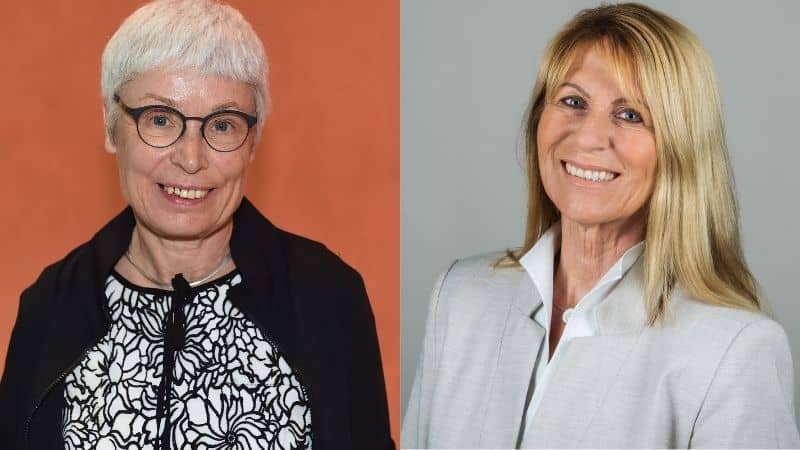
Before launching for 2020, Modern Times Review spoke with Artistic Director Linde Fröhlich Festival Director and Managing Director Susanne Kasimir on its programme and the challenges faced in the year of #COVID-19.
What would you say are the main theme(s) for this year’s Nordic Film Days Lübeck?
Linde Fröhlich (Artistic director): This year’s retrospective is entitled «Fishermen’s Films» and deals with fishing and fish processing in the Nordic and Baltic countries. And the documentary section will also feature culinary delights: for example, there is Spanish-Icelandic Lobster Soup about a pub in the Icelandic port town of Grindavik. The Bountiful Land introduces us to Icelandic cuisine, from the earliest settlements to the present; from traditional dishes to the newest nutritional trends. And in The School of Housewives we learn how everything is prepared in a tasty and sustainable way. A good meal is best enjoyed in company or with the family. That is why we have many films in our programme that deal with the family, like Amanda Kernell’s Charter, Malou Reymann’s A Perfectly Normal Family or Diana’s Wedding by Charlotte Blom. These films, and of course Dag Johan Haugerud’s now award-winning film Beware of Children, are politically important films that show that we have to look and listen carefully and take care of each other. Highly political, of course, are films like Ole Christian Madsen’s The Day We Died, which has gained frightening topicality again just in the last few days, or our opening film The Good Traitor by Christina Rosendahl. Although the film is set in the past, it is highly topical because it is about character, attitude, and choices. These are qualities that we need especially in today’s world. And this is why the Masterclass documentary film deals with the animated documentary My Favorite War, in which Ilze Burkovska Jacobsen tells about growing up in the #Soviet system. And that’s why the industry panel is entitled «Bringing the Past to the Future – Audience Building for Historical Films in Unprecedented Times».
The festival was scheduled for a hybrid edition but has recently moved entirely online due to health and safety concerns in the country, as well as from around Europe. How will audiences be able to view and engage with the programme this year? Does the online space allow for any additional opportunities that a physical event does not?
LF: 146 films from a total of 160 films from the 62nd edition of the festival will be available online via streaming. This applies to all festival sections from feature film competitions to drama series, from documentaries to short films, from retrospectives to children’s and youth programmes. Here we have specially recorded the German dialogue text and added it to the films so that even the youngest viewers and their families can enjoy them. With geoblocking, the films can only be seen in Germany, but the «bonus material» on our website can be seen everywhere.
Here we have asked directors for short statements about their films, which can be seen as «Director’s Voices» on our website. They are complemented by film talks and explanations by the various curators regarding their selection. The festival opening and award ceremony can also be viewed online, as well as the above-mentioned industry events.
How do you find the support given by the country & city cultural/governmental sectors? Do you find that there has been support for Nordic Film Days Lübeck and other such cultural institutions in Germany during these unprecedented times?
Susanne Kasimir (Managing director): The Nordic Film Days Lübeck is an event of the Hanseatic City of Lübeck in cooperation with many partners, who support the festival not only immaterially, but also financially, including the State of Schleswig-Holstein – Ministry of Education, Science and Culture – and the EU – Creative Media Europe programme. Even in these times we still experience a lot of encouragement from our organizer, the public and we can rely on our sponsors and supporters: especially the citizens of Lübeck, its foundations, and commercial enterprises.
What was the most difficult aspect of the 2020 Nordic Film Days Lübeck preparation?
SK: The challenge was to plan reliably with the unknown. That’s why we very quickly decided to give absolute priority to the safety and health of all our expected guests and our team to set up the festival as a hybrid two-track event. Which was the right decision, as the second lockdown in Germany has shown us now. Thanks to this foresight, it is now possible to show a curated and unique program with 146 films online throughout Germany.
Even in these times we still experience a lot of encouragement from our organizer, the public and we can rely on our sponsors and supporters: especially the citizens of Lübeck, its foundations, and commercial enterprises.
How do you see the future of film festivals in the post-COVID-19 era?
SK: The future of cinema is quite uncertain at the moment and the actual impact of the Covid-19 pandemic will only become clear in the upcoming months. Like all affected economic sectors, financial support for cinemas and festivals will depend on how they position themselves for the future. Of course, the pandemic is changing people’s viewing habits. People tend to watch more and more films via streaming and VoD on their devices. This will certainly continue in the future. But a cinema experience cannot be replaced by streaming and many people are longing to go to cinemas again under normal circumstances. As a film festival, we get a lot of feedback from our audience which is looking forward to enjoying real screenings in the cinemas again.
LF: I am convinced that festivals will continue to have online offers in the future. But I very much hope that the heart of the festivals will beat in the cinema and that the films will get the big screen they deserve. And I hope that we will be able to travel again and that the filmmakers will be able to come to the festival in person to present their films and meet the audience and industry representatives. But for this to happen, it will be important to set up state support programmes to help film production, distribution, cinemas, and festivals, and the many different trades involved in the film industry. It would be a terrible idea if only Netflix and Amazon were left and the streets in our cities were permanently as empty as they are under the lockdown.