The 29th Ji.hlava International Documentary Film Festival has announced its full programme ahead of its 2025 edition, running October 24–November 2 in Jihlava, Czechia. This year’s event features 305 films across competitive and non-competitive strands, including 76 world premieres, 28 international premieres and 15 European premieres. The festival opens with Barbora Chalupová’s Virtual Girlfriends, a Czech documentary on digital intimacy and relationships in the era of artificial intelligence.
This year’s official festival trailer is by Ukrainian filmmaker #Sergei Loznitsa#. Shot in the Dnipro metro as part of his The Invasion project, the piece juxtaposes everyday commuting with the constant possibility of air-raid alerts—an image of wartime routine that underscores his body of work’s focus on precise observation and a humanistic view of history.
In competitions, the Opus Bonum section highlights 15 titles that probe personal, social and geographic boundaries. Standouts include Peter Mettler’s seven-hour diary While the Green Grass Grows: A Diary in Seven Parts and Carlos Araya Díaz’s Floating Population (65 minutes). Additional entries span India (Surabhi Sharma’s Music in a Village Named 1PB) and Austria (Lisa Polster’s Bürglkopf), alongside Chalupová’s opener and the Slovak film Open by Diana Fabiánová.
First Lights is devoted exclusively to debuts, with 11 films that consider isolation and transitional states. Notable titles include Maja Penčič’s Prague-set Minimum Love; Daphne van den Blink’s naval observation Standby, following young sailors during NATO training; and Rim Harrabi’s Passengers, about multinational residents sharing a Tunisian house during the first COVID lockdown.
Czech Joy presents 18 domestic documentaries across subjects from political campaigning to cultural memory. The slate features Jakub Ondráček’s Grolich the Great; Petr Záruba’s composer portrait Kaprálová; Markéta Ekrt Válková’s decade-spanning Amira’s Children; Vitaly Mansky’s Lviv chronicle Time to the Target; Weronika Mliczewska’s Child of Dust; Martin Kollár’s Chronicle; Viera Čákanyová’s Bardo; and Robin Kvapil’s war-era road film Change My Mind.
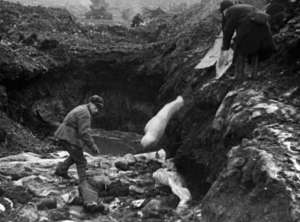
Testimonies gathers 15 titles on personal and collective memory, including Petr Krejčí’s Forested Future; Joanna Grudzinska’s Poland Versus History on the legacy of Neighbors and Polish pogroms; and Podnieks on Podnieks. A Witness to History, a portrait of Latvian documentarian Juris Podnieks.
The Virtual Reality competition includes 11 works exploring ecology, war and mental health, among them Honey Fungus, The Exploding Girl, Illusion, Trans-composition, Shelter, The Choice – Chapters 2 & 3, Fly to You, Magic You and Somewhere Unknown in Indochina.
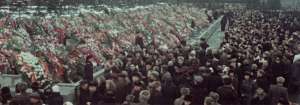
Retrospectives feature «Collective Film,» surveying global collective practices from Grupo Ukamau’s Blood of the Condor to Black Audio Film Collective’s Handsworth Songs, Videofreex’s Mayday 1971, and Forensic Architecture’s The Bombing of Rafah. The non-competitive Constellations section includes David Borenstein’s Mr. Nobody Against Putin, Alisa Kovalenko’s My Dear Théo, Claire Simon’s Writing Life: Annie Ernaux Through the Eyes of High School Students, and a Zelensky portrait by Yves Jeuland, Lisa Vapné and Ariane Chemin.
Returning guest Tsai Ming-liang will shoot and world-premiere a new entry in his Walker series during the festival, in collaboration with FAMU students; the premiere is slated for November 1.
The Inspiration Forum programme (25 October – 1 November) examines Europe, love, money and radicalisation, with speakers including Jonathan Ledgard, former Ukrainian defence minister Oleksiy Reznikov, physician Izzeldin Abuelaish, economist Grace Blakeley and political scientist Jeffrey A. Winters.