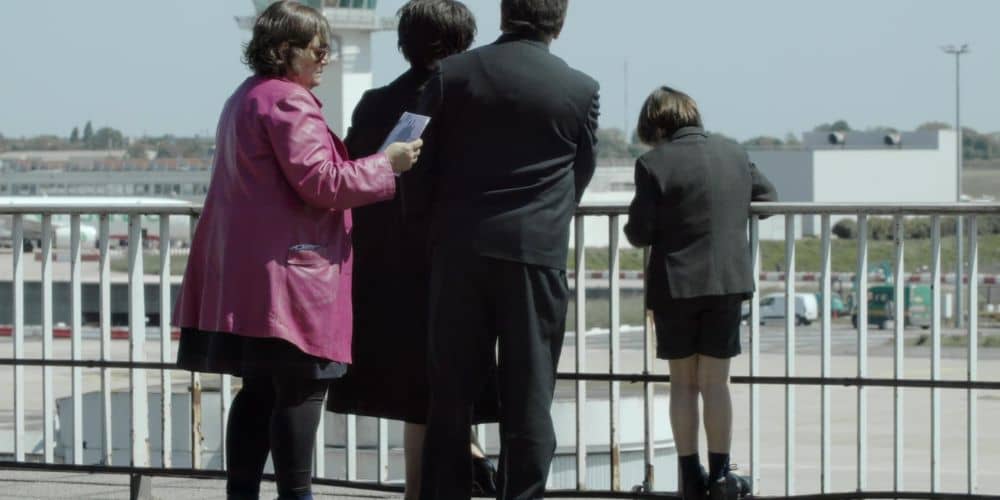
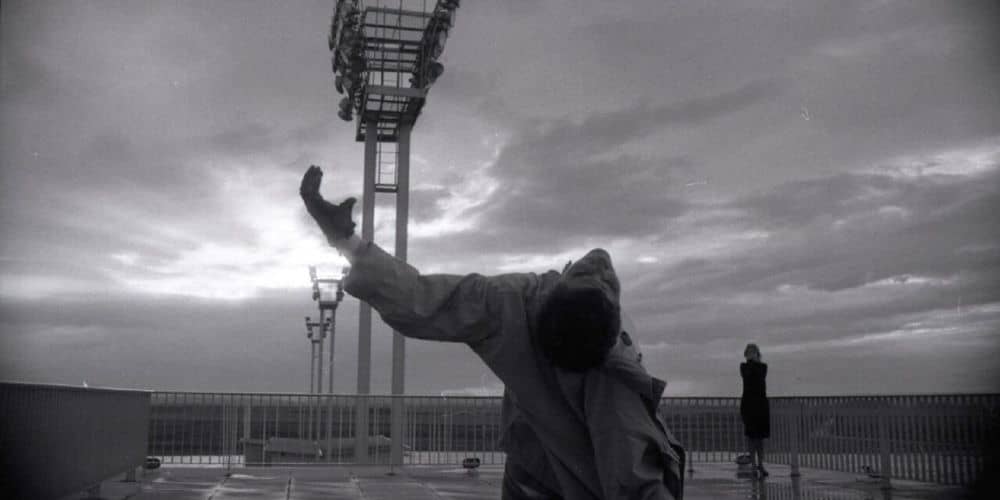
La Jetée, the Fifth Shot, the latest film by the renowned French documentarian Dominique Cabrera, narrates her quest following the #Chris Marker# exhibition at the Cinémathèque Française, where her cousin Jean-Henri recognised himself in La Jetée. Shot from behind, the photograph of him and his parents on the observation deck at Orly Airport was the fifth shot of the film. «If it was him, he was the hero of the film as a child,» says Cabrera. Involving her and Marker’s family and colleagues, she started the thorough investigation with an uncertain end. Her film about this investigation, persistent and calm, revives the splendour of the visual, the sublime pleasures of careful observation, the suspenseful tensions between mystery and discovery, and the joy of playfulness and chance, serendipity. It reveals new information about her family history, and also about Chris Marker’s approach, introducing a new perspective on his legendary #science fiction# short in the form of a 28-minute black-and-white photo novel with a single moving shot.

Orly Airport
La Jetée was made in 1962, the same year the war for #Algerian independence# from France was over, and #Algeria gained independence from French colonial rule. Hundreds of thousands of people of French descent who were born in Algeria during the period of French rule from 1830 to 1962, the so-called Pieds-noirs, left their homeland to enter France via Orly Airport, the family of Cabrera among them. The director, who was born in Algeria a few years before, in the film fondly recalls landing in Orly. While the family is searching for the photos they took at the observation deck at Orly, a popular Sunday picnic spot, to see if among the people they accidentally «caught» in their photographs was Chris Marker, other secrets come out. For example, one of the actors in Marker’s film was born in the same Algerian village as the mother of Jean-Henry, the director’s cousin and presumably the boy in the picture.
La Jetée was made in 1962, the same year the war for Algerian independence from France was over
The Power of Images
Cabrera’s investigation of the fifth shot of La Jetée brings the images that, since the making of the film, became ephemeral and unimportant back into focus. Chris Marker, of course, was very well aware of the power of the images. He was also cautious about his public image; for example, he avoided being photographed or filmed. His peculiar attitude is also visible in the design of his biography, from the use of «nome d’arte» (his name was Christian François Bouche-Villeneuve) to the information about the place of his birth. Sometimes, he claimed he was born in Ulaanbaatar, Mongolia, and other times in Belleville, Paris. However, Cabrera’s film reveals that he was born in Neuilly-sur-Seine. Among other interesting details Cabrera’s inquiry brought to light was also his fascination with the actress Hélène Châtelain, the girl whose face the protagonist of La Jetée is pursuing desperately.
On the other side?
Marker made his photo novel during the breaks while filming, together with Pierre Lhomme, the 150-minute documentary essay The Lovely Month of May (Le joli mai, 1963), a portrait of #Paris during May 1962, immediately after the ceasefire in Algeria. Cabrera’s film introduced a new meaning to the observational deck at the Orly Airport. It is the passage from home to exile (for Pieds-noirs, for example, the Cabrera family and the actor of La Jetée, Davos) and from the colonial to the post-colonial time. La Jetée is set in the aftermath of World War III in post-apocalyptic Paris, where survivors live underground, and the scientists research time travel to send test subjects to different time periods in their attempt to rescue the present. They selected the protagonist because of his vague but obsessive memory from his pre-war childhood of a woman he had seen on the jetty at Orly Airport.
It is the passage from home to exile and from the colonial to the post-colonial time.
Decolonisation
Even if Marker was well known for playing with interpretations, La Jetée is unambiguously celebrated as a science fiction story of a time trip from a dystopian future back to the present, in which the hero experiences a traumatic event again. It is so, for example, in references to this film in other science fiction films, such as Terry Gilliam’s 12 Monkeys (1995). Now, in the context of revelations brought about by its fifth shot, its connection with the Algerian war and the critical view of the consequences of #colonialism can’t be unseen. Returning from the future in a desperate attempt to save humanity, the man, the protagonist of La Jetée, is returning to the jetty, the observational platform at the Orly Airport as the traumatic place. The place of his death, but also, Cabrera will not let us not see it, the emotional border between home and exile, the historical border between colonialism and post-colonialism. From «What went wrong?» in a sci-fi movie to «What did we do wrong?» suggested by Cabrera, is just a step. Her film is a humble kind of magic. It preserved Marker’s playfulness and openness to interpretation and opened up new space for interpretation. Could it be that by making La Jetée, Marker questioned the French and European post-colonial reality? Film La Jetée, the Fifth Shot is an invitation to read Marker’s legendary science fiction experiment as a political essay on decolonisation. More importantly, it is also a clear reminder that the unresolved trauma, represented by the jetty at Orly Airport in La Jetée, is an integral part of the reality we live in today.