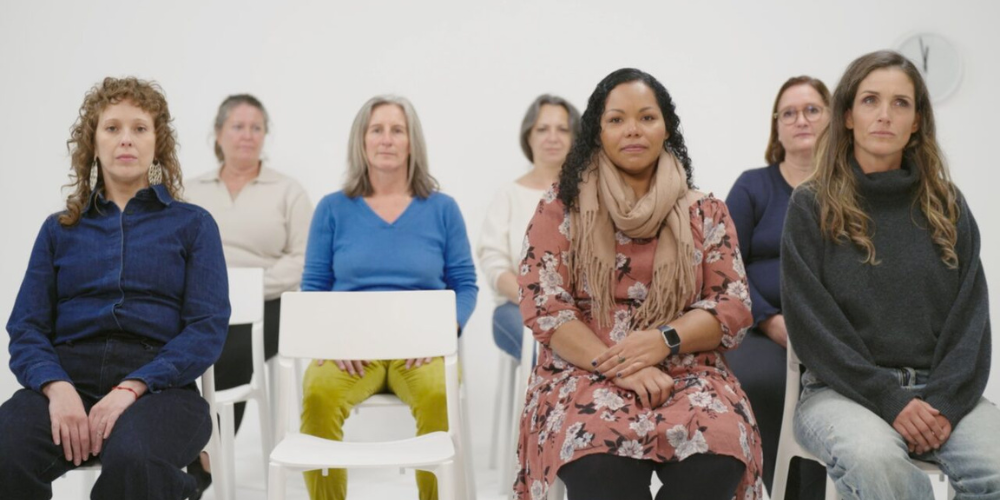
You will hardly find a more suitable film for the Inconvenient Films festival than Louise Unmack Kjeldsen’s documentary about Menopause. Talking publicly about the female body itself is inconvenient; the film reveals inconvenient facts about a possible connection of menopause with dreaded brain diseases such as Alzheimer’s, and then, far the most inconvenient, is the reaction of the «official» scientific community to these facts. The recent, 2024, orchestrated denial of findings by authoritative female scientists by the world-renowned medical journal Lancet is (at least for me, a part-time scientist myself) heartbreaking. You thought that, 100 years after the first wave of feminism and the suffrage movement achieved the right to vote, women are equal to men? Think again.
Being aberration
The situation in science is particularly dire, and one of the film’s outstanding achievements is showing that gender inequality in science is not only a matter of politics, culture, or economics. It is a matter of survival. Because it directly impacts women’s health. The male body has been the standard and the female body an aberration. Less than 5% of global research funding goes specifically to women’s health. «Science has made fantastic discoveries. They put a man on the moon and all kinds of spectacular things. So why do we still lack answers to basic questions about menopause?» asks the director, furious that she «had to solve this mystery» all by herself.
She collected testimonies of several women from all over the world who, after their fertile period was over, fought with similar symptoms as herself. Hot flashes, insomnia, loss of short-term memory, inability to concentrate, lack of work efficiency and motivation. One was so exhausted because she couldn’t sleep that she was ready to commit suicide. The other left her job because of her short-term memory problems, without telling anyone. Not all experience this the same, and certainly not in such a distressing way, but the transition into menopause disrupts daily life for most women globally. And for most, finding a solution isn’t easy. The idea that women who can’t reproduce are worth less is still alive, as is the image of the troublemaker, the hysterical woman, since the diagnosis of hysteria was only removed worldwide in 1992.
You thought that, 100 years after the first wave of feminism and the suffrage movement achieved the right to vote, women are equal to men? Think again.
Her own journey
The director sets out on a trip around the world, visiting scientists pursuing hard-boiled research and making important discoveries. Silje Mæland at the University of Bergen, who warned that menopause is too often the reason women in their 40s and 50s disappear from the workforce. Pauline Maki at the University of Illinois in Chicago, who discovered that menopause symptoms such as hot flashes can cause measurable changes in the brain, including those associated with Alzheimer’s disease. Anette Tønnes from the University of Copenhagen, who established that fluctuating estrogen levels are the real menopausal problem and that estrogen is a crucial hormone for women, affecting everything from bones to brain function. And Jayashri Kulkarni at Monash University in Melbourne, who is researching why so many women experience depression when hormone levels change drastically. As a second-year psychiatric trainee, Dr Kulkarni introduced a first-ever estrogen trial and found that several chronic female patients who were recovered in Psychiatric Hospital improved after being treated with estrogen.
We also see Dr Kulkarni when she learns about the publications in the Lancet and presents their content to her team. The illustrious medical journal is refuting the importance of menopause depression, and the idea that menopause is an illness altogether, claiming that society had to stop concentrating on menopause and medicalising it. The researchers we meet in the documentary are aware of the dilemma: talking about the symptoms of menopause can make women more fragile on the labour market and in society, but silence, on the other hand, leaves them without help. This will happen after Lancet’s publication: researchers studying menopause will not be able to get funding for their research and will have to change their object.
For the world
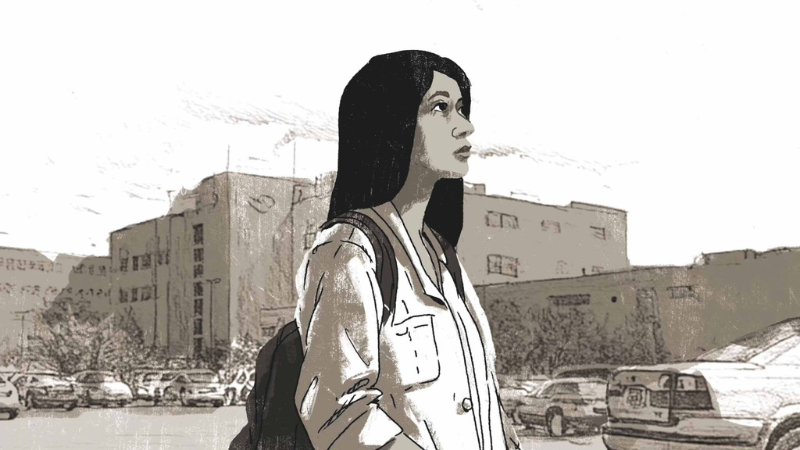
For this reason, as many people as possible should see this film. It should leave the festival circuit, not least because it was made with a general audience in mind. Documentary cinema has traditionally played an important role in endorsing women’s struggle for more rights, and Menopause Mystery is a prime example, because of the topic, and in particular because it addresses difficult issues in a straightforward and accessible way. It starts with an illustrated journey through the female internal reproductive organs, intertwined with home movies. Its darkest part, women locked up in a psychiatric clinic, is represented with animated inserts that don’t hurt so much, and scientific research is made easy to understand. When dealing with public reactions to estrogen therapy, it boldly confronts another inconvenient truth – that menopause itself is perceived as an unattractive topic dealing with depressed, sleepless, ageing women. This is a particular charm of Menopause Mystery; it presents it without discomfort, as something to think about.