Angels on Diamond Street, by the Netherlands-based director #Petr Lom#, is rich with quotable quotes. It is a tender look at an American church with an old, persevering, social justice soul, and the people who make their soup kitchen a communal magnet.
The film was recorded during a two-year focus on North Philadephia’s activist congregation of the Church of the Advocate in the heart of a poor, African American neighbourhood. The church building is a huge, stone beauty finished in 1887, named the George W. South Memorial Church, but is best known by its current moniker. Informative and strung together chronologically, it grows into an occasional conversation between the man behind the camera and the people he follows. You can read a lot in its details.
Warmth
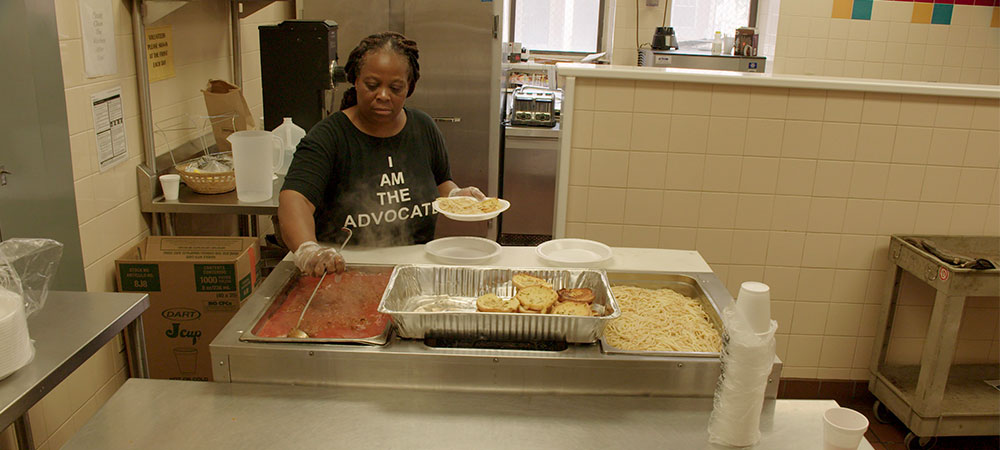
The human warmth of Angels on Diamond Street radiates from its big soup kitchen as Mamie Mathias, the lead cook, prepares hot meals for about 90 to 125 covers a day. But we are led through a lot of history by Barbara Easely-Cox, a veteran of the Black Panther movement and its grassroots social work. She quips, «I’m a loner. I walk with God.»
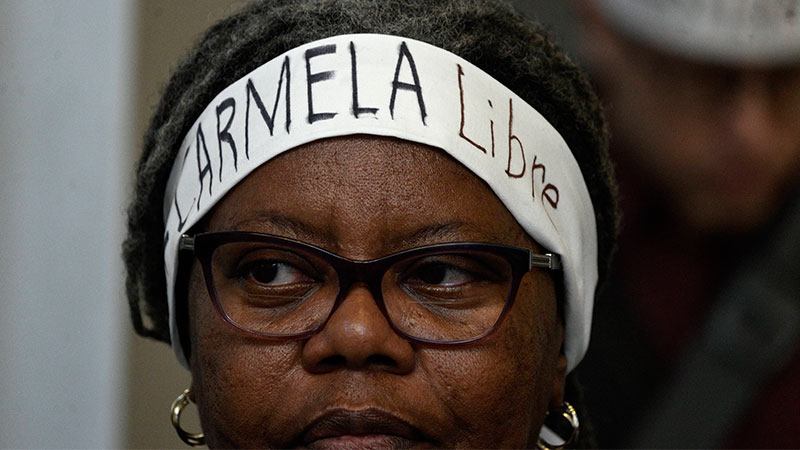
The story of the Advocate’s activism goes much further back than Donald Trump’s presidency. As an example, the first eleven female Episcopalian ministers were ordained together in this church in 1974; all of them were white. Now, the film demonstrates how the church is rolling with the needs of its patrons, how it manages the people who come and go who are not so in control of themselves or who need to feel they are in a safe spot, and how it’s reaching out in new ways too. Like many old houses of worship, the stone remains but the space’s use evolves. Here, huge, colourful murals were painted and hung in the 1970s. They were commissioned to bring African American narratives into the space when the congregants felt unrepresented by the original stained glass that rings the church with images of white-skinned saints. When Dr. Renée McKenzie, the Episcopalian minister who heads the church, explains the limits of how they can legally shelter one undocumented Mexican family, Carmela and her four children seeking sanctuary, she also tells us this is the first time the church is working directly with «brown» people. And when a man is trying to hang plastic sheeting over the murals as rain literally streams down the inside of the church’s walls, he says gently, «It feels like the building is crying every time it rains… Maybe it’s just telling us it has a heart, too.»
«I’m a loner. I walk with God.»
The sanctuary offered to the Mexican family is portrayed within a longer flow of life and work at the church. It feels like the family arrives some months after filming has started, and over a year later they move on to a Mennonite church that is part of the New Sanctuary movement. The film stays with the Advocate itself, however, after the family is gone, and chronicles the impending soup kitchen closure as the church runs out of money.
Impending closure
If the legal challenges and public demonstrations to help Carmela’s family to remain in the USA are just another sanctuary story, that is precisely why her story is so important. There are so many Carmelas and so many children like hers who fear being stopped and removed. Dr. McKenzie says that the most important thing is to provide care and attention for oppressed and marginalised people.
The plain felt truth is that the struggle for social justice needs witnesses who record and disseminate what’s going on. Dutch public television may have bankrolled much of this film, but at the church, faith is fuel. On Thanksgiving, Barbara Easely-Cox calls out to the patrons she welcomes to the dining-room, «We’re gonna say grace -loud!»
Listening. Sharing
How important is it to make this kind of film in that kind of context? The mother of a hoodie-wearing young man who has been unjustly stopped and detained by police appears to have a video of him being stopped and she says, «Ain’t nothing get done unless (you) got it on camera.» The quality of life in the community around the Advocate Church is also dependent on listening and sharing that life. Near the closing of the film, when it is not clear if the soup kitchen will survive, one hears, «…it’s more than just a place to eat.»