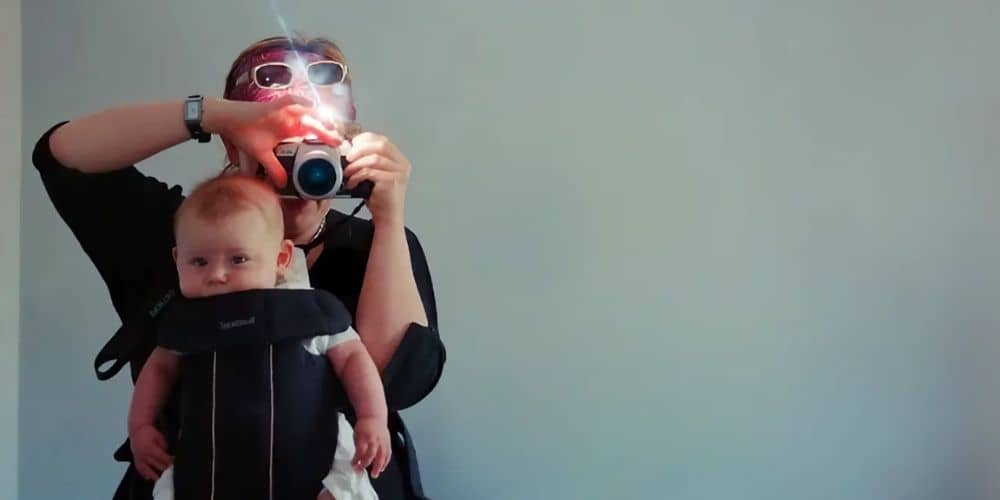
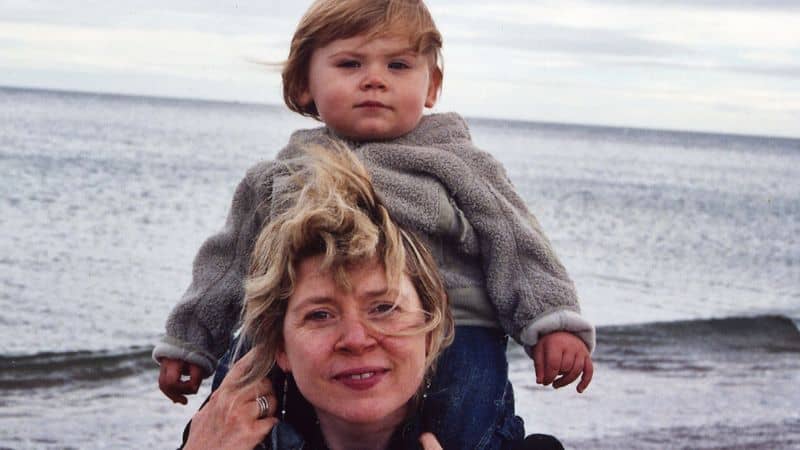
Infused in the technology of #iPhone lenses, Motherboard, a feature-length existential documentary study of 20 years of ups and downs of motherhood, puts together a selection of everyday-life scenes of the XXI century independent woman who decides on single parenthood. With the use of various iPhone models (from 6 to 15), one can see how #technology merges with ordinary lives, uplifting and aesthetisising the experience of the world and becoming almost the natural element of the environment. Its small, smooth lenses and an imagined viewer who will watch the scenes in the future become another point of reference for characters, sometimes neutral or friendly, and annoying or disturbing at others. In Motherboard, the iPhone coverage seems to be, on the one hand, the last resort for continuing the creative work. On the other, it is a way of capturing the bare, subtle, intimate relations between a mother and a son. It gives testimony to and transforms the characters’ lived experiences at the same time – sometimes, the characters turn into actors in their own family play.
Previous acclaim
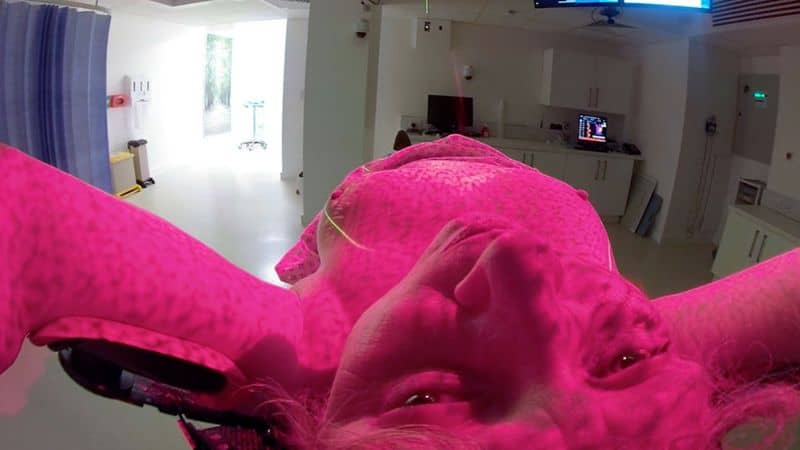
Motherboard continues and develops previous digital projects of Victoria Mapplebeck: Missed Call, which brought her the #BAFTA in 2019, and The Waiting Room #VR, which premiered at the Venice IFF 2019 and was awarded with the #IDFA DocLab# Award for Digital Storytelling. The film intermingles the motives of single motherhood, the fight with #cancer, and Victoria’s son, Jim, growing up by spinning a tale of consciousness of becoming a parent and taking care of a growing individual. With motherhood, a woman’s «I» (both rational and emotional) is instantly pushed to the background of the others’ (a son’s and a partner’s) needs, urges, and convictions. The bare necessity of securing the growth and well-being of a fragile newborn human being makes the mother’s personal needs less important. In such a situation, a man—as the history of generations past shows vividly—can often find the strength to distance himself from this immediate need to provide for a child, but a woman can rarely do so. During pregnancy, a woman goes through complex physiological and psychological changes (including, as the film points out, exchanging cells with a fetus) affecting her brain and all the other organs. These profound changes prepare a woman’s organism for a task that will take at least two decades to complete – the upbringing of a child.
The bare necessity of securing the growth and well-being of a fragile newborn human being makes the mother’s personal needs less important.
Moral entanglements
Interestingly, the film captures the moral entanglement not only between a woman and her child, which is obvious but also between a woman and her partner. The partner has a right to know about her pregnancy, so she has to let him know about him becoming a father, even though he does not care and is not interested (they have met four times through a dating agency). In a loose relationship without obligations, a woman is by necessity and physiology in the position of the one who cares and bears responsibility for others and has, hence, a weaker position in the relationship—she must constantly take into consideration and bend to the aims and circumstances of the partner, of his travel schedules, work responsibilities, meetings with friends, and moods. It is a constant giving way to the rights of others in this primary entanglement in which the basic rights of its particular participants crisscross and fuse into an undistinguishable whole that is supposed to be a family life built on a shared engagement but is not due to the choice of particular individuals.
Somewhere in the background of the author’s reflections on motherhood lingers the famous Simone de Beauvoir’s observation that women have to choose between independence and motherhood. As a creative TV director, her personal choice of having a baby determines her economic options, in which from this moment on the priority is given to stability of employment, paid leave and holidays, and regular working hours, i.e., the #social security# that is unimaginable in the precarious work environment of the creative industries. The other ethical or cultural dimensions of becoming a mother do not play a role in her situation, pointing to the crucial importance of economic and social factors underlying the reality of individuals working in the creative industry. It seconds the numerous sociological studies of media professions in the last decade, documenting that «behind the ethics of meritocracy, youthfulness, openness, creativity, autonomy, and self-realisation which surrounds these industries, are structural inequalities of #race, #class, and #gender, precarious contracts, unpaid #labour, and a culture of long hours, work stress, #anxiety, self-blame, competitiveness, and individualism» (Marisol Sandoval, Sebastian Sevignani Digital Exploitation: Linking Communication and Labour Global Dialogue 10.2).
Economy
Economy, not woman selfhood and subjectivity, appear to foreclose motherhood here. Despite all the tribulations and difficulties, the author’s position is closer to the postmodernist stance of #Julia Kristeva#, in which motherhood locates woman on «the threshold between nature and #culture, #biology and #language» (A New Type of Intellectual: The Dissident, 1986). In Motherboard, Victoria tries to perform her right to artistic expression through a minute observation of everyday existence in which she reclaims her identity as a creative, independent individual. The intimate recordings and their eventual composition in film editing allow her to regain agency, autonomy, and a sense of control over life in a process of sublimation that is affecting and compelling.