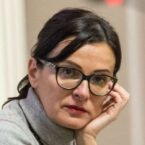
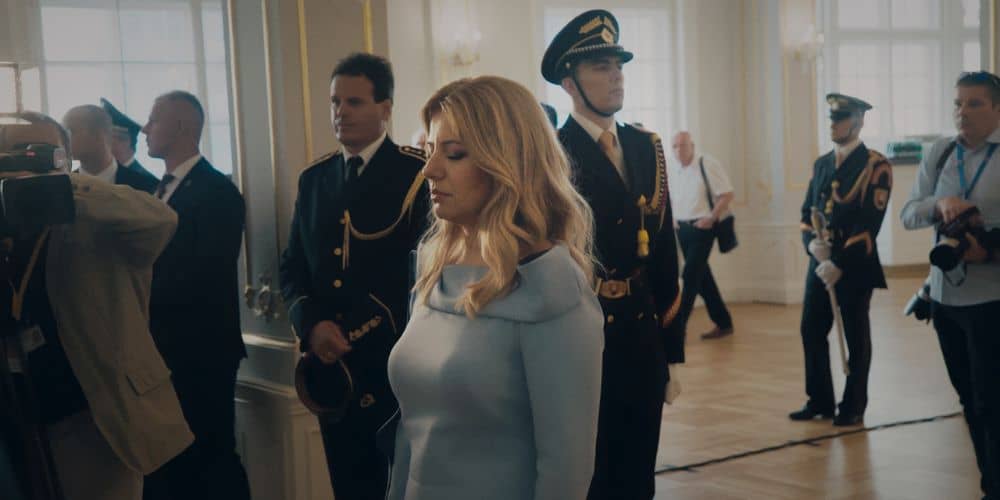
«In 1989, I stood pregnant in the square to make life better here,» cries a citizen who steps from the crowd and approaches the Slovak president #Zuzana Čaputová# to persuade her to run for the second term. «Many people support you. Don’t leave us alone in what’s going on!» Marek Šulík, the writer and director of the documentary about Čaputová’s presidency, concentrated on domestic events, and the viewers unfamiliar with Slovakia’s political landscape might not be able to notice all the details. Still, this inside view of the presidency of Slovak lawyer and anti-corruption activist Zuzana Čaputová, who became the country’s first female head of state, not only excels because of its tense narrative and captivating images but also has a clear universal appeal and relevance.
High hopes
The fall of the #Berlin Wall#, that is, the disintegration of the #Soviet Union#, #Yugoslavia, and #Czechoslovakia, and the fall of the #communist and #socialist regimes in that region were the result and also the cause of the great expectations about future politics. The disillusionment we live in today is huge. However, it is not limited to Central and Eastern Europe. The crisis of political leadership is worldwide. Encouragingly, Ms. President highlights a female politician who started her career with the basic, long-forgotten premise. A desire to be a good politician.
The crisis of political leadership is worldwide.
Behind the closed door
What makes a politician a good one? Once, the teaching of politics as a profession was part of educational systems. Some argued that the experts, not professionals, make for the best politicians. But today, we are way beyond this dilemma. Everywhere one looks, it seems that the most liked politicians, the preferred ones, those who won elections, are communication experts. They are good at communicating through #social media#, particularly in creating the impression of openness and having nothing to hide. So much so that this led to a conflation of honesty with a certain, reality TV style of public communication.
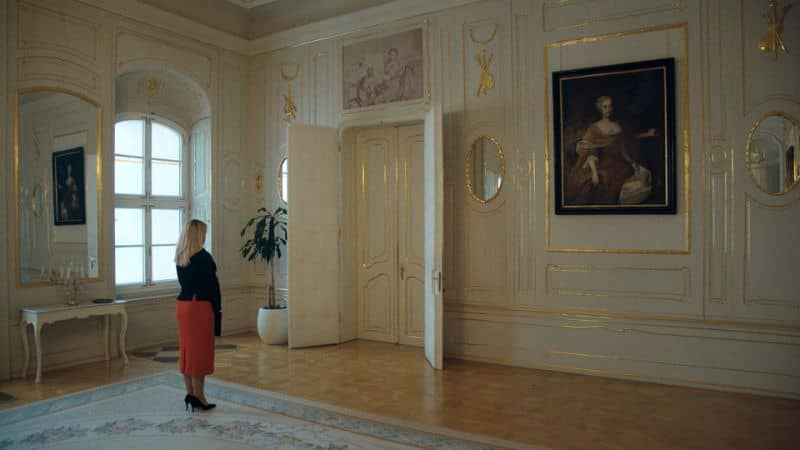
One of Marek Šulík’s greatest achievements in his latest documentary is that he openly confronts the ideology of political honesty as impulsive acting and disrespect for any limit separating the private from the public. The temptation to offer a look «behind the scenes» in portraying a female head of state must have been strong; however, his portrait of Čaputová after she is elected president starts not with the opening as one might expect but with the closing of the doors of her presidential office. Later, the doors open several times, yet it is more than obvious that whatever the audience has been offered to see or hear has been carefully planned and thought through. Other elements also indicate this, such as meticulous discussions about the wording of Ms. President’s speeches and planning of her public appearances.
Personal integrity and self-knowledge
Another outstanding myth-busting feature of this political documentary is that even if Čaputová was the first female president in the history of the Slovak Republic, her female identity did not prevail in the representation of her private and presidential life. Her being a mother interfered with her presidency, but so did her being a daughter, and both were the reasons why, through her presidency, she considered her private life more important than her presidency.
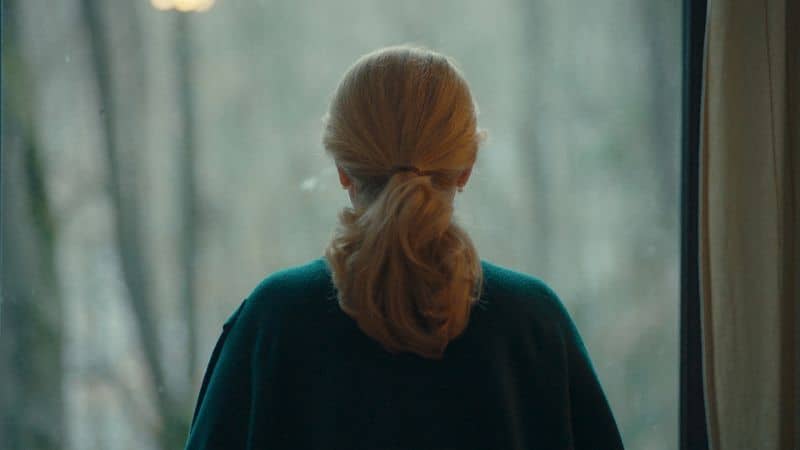
This does not imply, however, that the film altogether denies the importance of a politician’s personality, on the contrary. But what defines Čaputová is not her motherhood nor her womanhood. It is her being a #Buddhist. It stands at the beginning of her portrait and defines the essence of her personal political philosophy. Tao Te Ching’s writing, in particular, his «call for deep personal integrity and self-knowledge,» has been, Ms. President admits, «partially my motivation to run for the presidency». Tao Te Ching describes «the attempt to follow one’s inner journey, and to govern at the same time», and Čaputová, in her own words, is «testing if this can be done in Slovakia at this times». She said this in 2019 when she was elected as the fifth president. In 2024, she decided she would not run again. In the film, we hear many who doubted that this decision was the right one. We also get a glimpse into the hate-and-smear campaign against her during the last part of her time in the office, showing that she could not decide differently.
her words also remain as proof that presidents who care still exist.
Justice essential for Democracy
Čaputová’s presidency took place between two violent events. She announced her candidacy during mass protests against the links between top Slovak politicians and leaders of #organised crime# that presumably lie at the roots of the murder of investigative journalist #Ján Kuciak# and his fiancée in February 2018. Shortly before the end of her presidency in May 2024, an assassination attempt on Slovak Prime Minister #Robert Fico# took place. In one of her public speeches regarding the killing of Kuciak, she warned about the failing trust in the justice system, claiming, «With no trust in justice, society is not democratic. In such a society, someone will seek their own justice sooner or later. That would be the worst scenario for us all.» The assassination attempt on Fico seems as if her warning came true. But her words also remain as proof that presidents who care still exist. And this is good news.