My Father and Qaddafi is a documentary directed by Jihan and produced by Desert Power. The film tells the director’s true and personal story of the 1993 disappearance of her father, Mansour Rashid, who was, at the time, an opponent of Muammar Qaddafi.

Fragments of memory
The film opens with the director’s childhood, spent with her family as they demanded her father’s return. He was abducted when she was just six years old, leaving her with only fragments of memories of her father. It is through images from her childhood, testimonies and archive footage that she attempts to piece together the puzzle of her memories of her father. Using television archives, she sets out to trace the course of history. Alongside this, she highlights her mother’s struggle during that time. The director traces Libya’s history and the workings of the Qaddafi regime, which ruled the country for 42 years. Her aim is to help the viewer understand the fate that awaited her father.
The narrative unfolds until the macabre and belated discovery of the body hidden in a freezer.
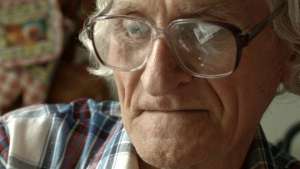
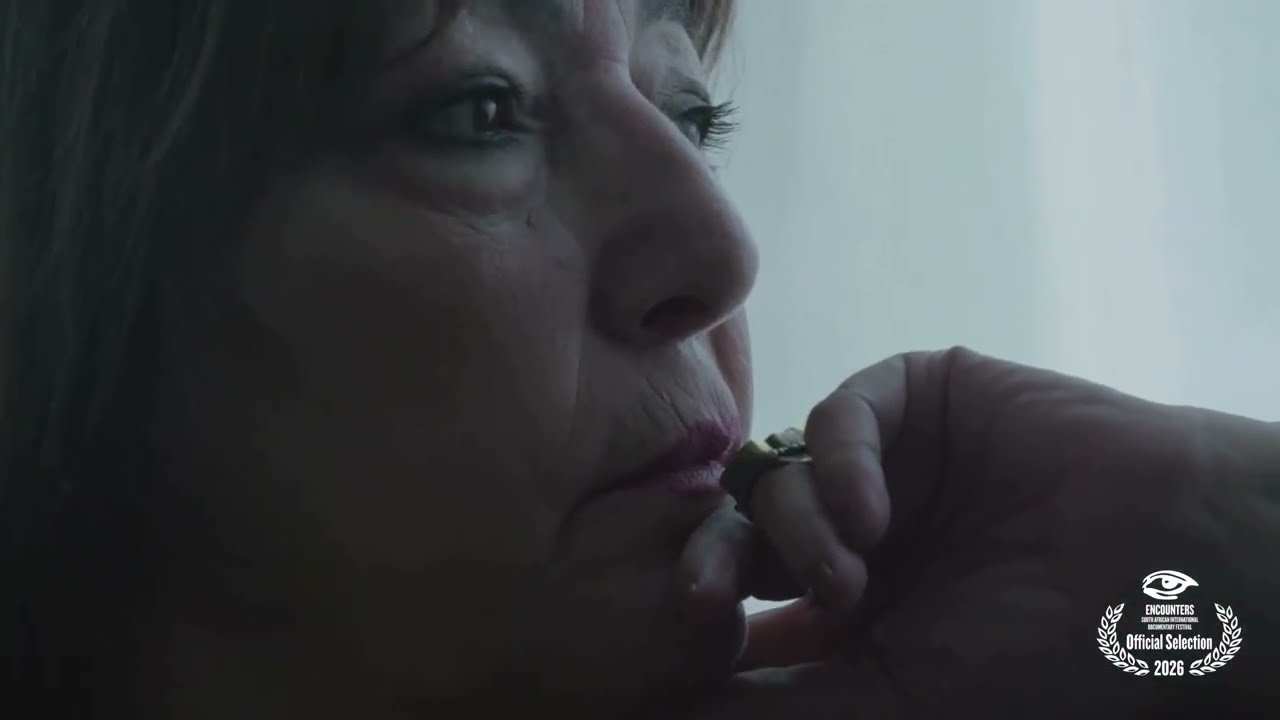
In this reconstruction, she uses archive footage of her father from when he was still Minister of Foreign Affairs and later Libya’s Ambassador to the UN. She also conducts interviews with members of her family. Her mother, the central figure in the family, shares her account, recalling the steps she took at the time to find her husband. At the time, her mother did not hesitate to demand answers regarding the reasons for his enforced disappearance and the location where he was being held. Furthermore, former friends and political colleagues gave testimony and shared their accounts to help Jihan find answers. Interspersed with archive footage, the film follows Jihan on her quest. As she travels from country to country—notably to France, the United States and Libya—the film conveys an atmosphere of silence and glances that betray fear. It also captures the unbearable sense of waiting that has lasted for years, fuelled by the hope of finding her father.
The film also shows how the Libyan secret services exerted pressure on the families of political opponents with intimidation. By picking up the camera, the director makes an act of defiance and rebellion to investigate, despite a sometimes hostile environment, in order to obtain answers. As the film unfolds, it focuses on uncovering Mansour, the father and the politician. For a long time, the regime kept information about Mansour’s disappearance secret. Piecing all these facts together is an act of taking control of a family history. The other aspect is the account of her mother, who at one point in the story decided to meet President Qaddafi to negotiate her husband’s release. In the documentary, this step becomes a means of maintaining control. The contrast that emerges from this film is between Mansour’s democratic ideals and Qaddafi’s violence. This contrast is a clash of visions.
Inner conflict
Beyond the political conflict, My Father and Qaddafi also explores the director’s inner conflict. Here, she must piece together her love for her father from the fragments of memory she has of him. It is the frustration, but also the trauma of her father’s disappearance, that haunts her. The narrative unfolds until the macabre and belated discovery of the body hidden in a freezer. Seeking the truth about his disappearance is, in a way, a tribute. As in the film Life After Siham (Namir Abdel Messeeh, 2025), the director seeks to overcome this sense of emptiness. It is also a way of re-establishing a connection with Libya, her country of origin, despite everything. In making this film, Jihad undoubtedly wanted to pay tribute to her mother, who led an international campaign at the time to try to uncover the truth. This quest for justice bears witness to the courage and bravery of a determined mother and wife.
All things considered, the making of such a personal and family-oriented film can lack nuance. Indeed, all accounts portray Mansour as an exemplary figure without qualifying what led him to turn his back and establish himself as the leader of the opposition, or even the reasons behind his assassination. Furthermore, the portrayal of Mansour leaves something to be desired insofar as not all facets have been examined to reveal the full story. The story has been viewed from a single perspective: that of the victims. Like it or not, the creation of such a work is more of a personal quest, a perspective on a broader story that contains more unspoken truths and many secrets than answers.
This review emanates from the Talent Press programme, an initiative of Talents Durban in collaboration with the Durban FilmMart Institute and FIPRESCI. The opinions expressed in this article are those of the author (Harouna Neya) and cannot be considered as constituting an official position of the organisers.