«Palestine ’36.» Without preposition. Because it means Palestine in 1936. But also, since 1936. Nothing has changed.
The Arab-Israeli conflict certainly did not start on 7 October. But neither did it start in 1967, with the occupation of what was left of Palestine, nor in 1948, with the founding of Israel: it started in 1917. With the Balfour Declaration. When Britain promised to establish a Jewish national home on foreign soil, and while the Jews, hunted by Hitler and racial laws, took refuge in Palestine, isolating themselves, however, rather than integrating, building fences, and Arabs, day by day, lost land and jobs, the British stood by and watched. When the sentry of a Jewish settlement guns down an Arab who draws near to try to talk, to try to find an understanding with the newcomers, the British burst in among the surrounding Arab hamlets, ask why the hell they are bothering the Jews. In the ensuing brawl, a child is arrested – the victim’s son. Is it not the same in Sheikh Jarrah? In Jerusalem?
The scuffles. The reversal of roles. Of responsibilities. The kids in handcuffs.
In Sheikh Jarrah, that’s what you experience every moment.
With the settlers who live not alongside, but among the Palestinians.
They advance not house to house, but room to room.
Then the police arrive and arrest the owners for blocking the intruders.
Palestinian identity
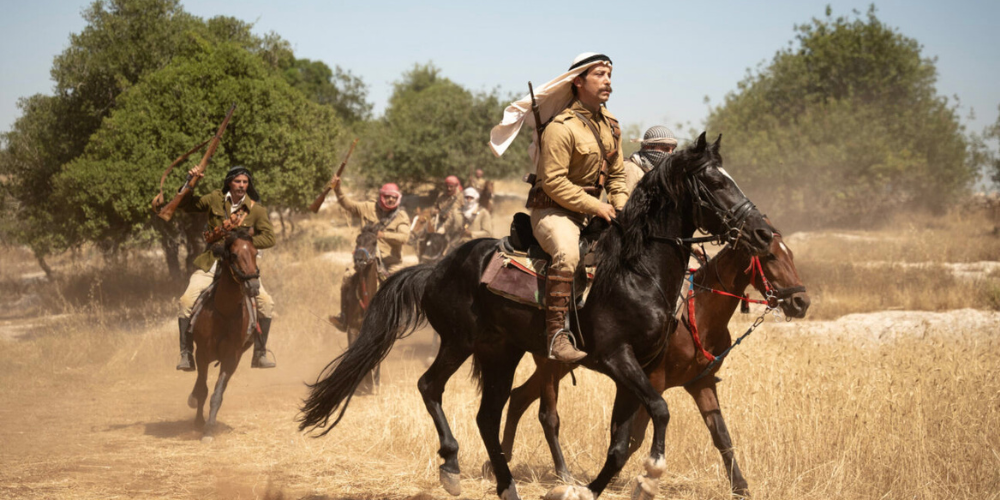
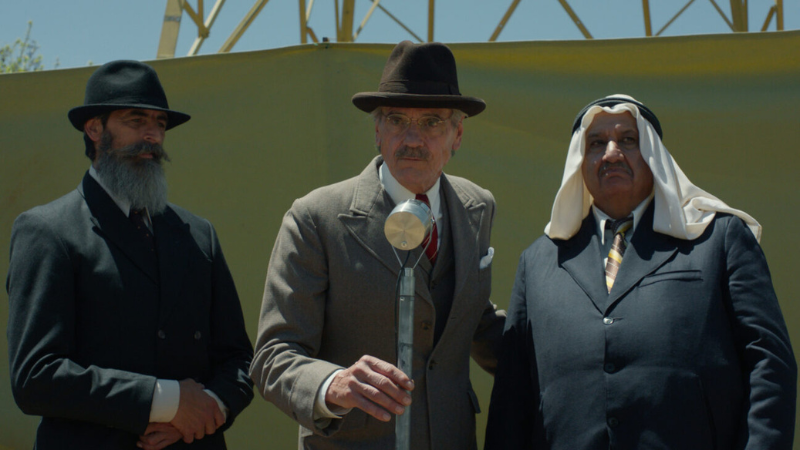
The first uprising was in 1936. And it is the uprising this film is about. For historians, it is here that a Palestinian identity, and not just an Arab one, began to emerge, as opposition to Zionism: as resistance to this colonisation within colonisation. And it is a revolt that already has all the themes of today. The trigger is land registration, just like the one currently underway, which is stripping Palestinians of some 40% of the West Bank: in a society largely based on collective property, land registry is not a tool for modernisation and development, but actually, a pretext for expropriation. Because many do not have property certificates. And so, most of the land will be classified as no man’s land. And the first protests, the first demonstrations, the first acts of resistance are immediately outlawed as crimes. By a Governor who, meanwhile, rhetorically promotes peace, assuring that coexistence for Arabs and Jews is possible, while doing everything that prevents it. But also the Zionist Agency, which backs the Muslim Association to divide the Arabs, stirring up tensions between Islamists and nationalists: doesn’t it remind you of how Israel, to weaken Fatah, tolerated, and later on, even funded, Hamas? And the Arab landowners who do business with the Zionists, because in the end the ones who suffer the most, as usual, as everywhere, are the poorest, the labourers, the workers, the fishermen, who are being replaced by more organised, more unionised Jewish immigrants, don’t they remind us of the Palestinian Authority? Of all those who drive around Ramallah in BMWs?
Who does business with the Occupation?
From strikes and rallies, the revolt quickly scales up to weapons. And to stem it, what do the British plan? They plan to build a Wall.
The Arab-Israeli conflict certainly did not start on 7 October.
Yusuf
But above all, one of the main characters is Yusuf. The son of the man murdered by the sentry. When his father dies, he joins the resistance. After an attack, the British respond with a raid that is exactly like today’s IDF raids: roundups, cold-blooded executions, demolished homes. Until the priest hands over the weapons hidden in the church, Yusuf will plant a mine along the road. But when the British convoy passes, the jeep that will step on it will be the one carrying the prisoners—theone with the Arabs. And Yusuf himself will be killed. He runs into three British soldiers as he runs away, and throws a grenade while they open fire. They will all die in the end.
Both.
His brother Kareem, who is the child arrested in the first raid, is now alone.
He will shoot the first British soldiers he comes across.
Isn’t this a story of a thousand stories? That has happened a thousand times, here?
From father to son. From brother to brother.
The story within the story
This film is a must-watch. Every scene is a thousand scenes interwoven.
And the images, especially, are a must-watch. A story in itself. A story within the story. Because they are vintage images. Images of a classy Palestine, lively and vibrant: certainly not the one of the Zionist narrative – «a land without a people for a people without a land.» What would it be like today, without the British?
But as the priest says to Kareem, asking him to bite his hand with all his strength, and biting his hand in return, to see who wins, and winning: I won not because I am stronger, but because I lasted longer. And you have a weapon stronger than the entire British Empire, he says. You have a bond with this land.