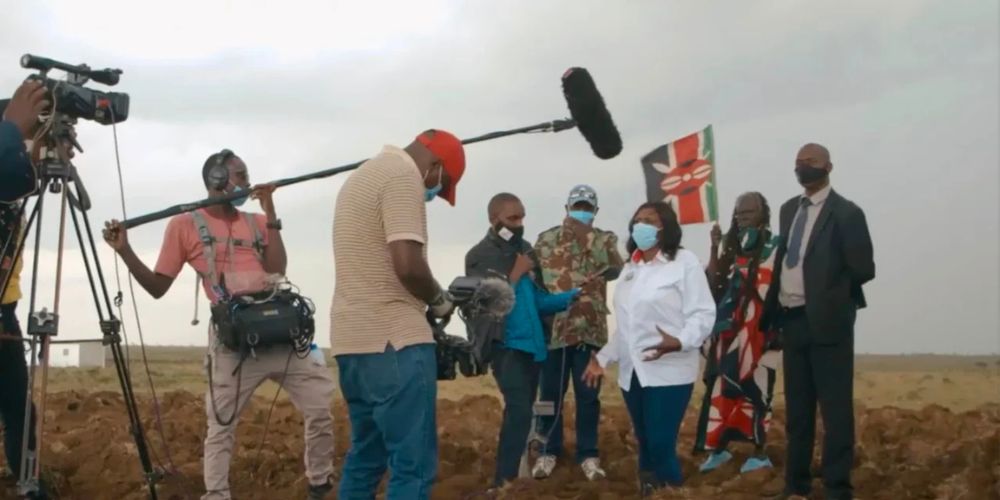
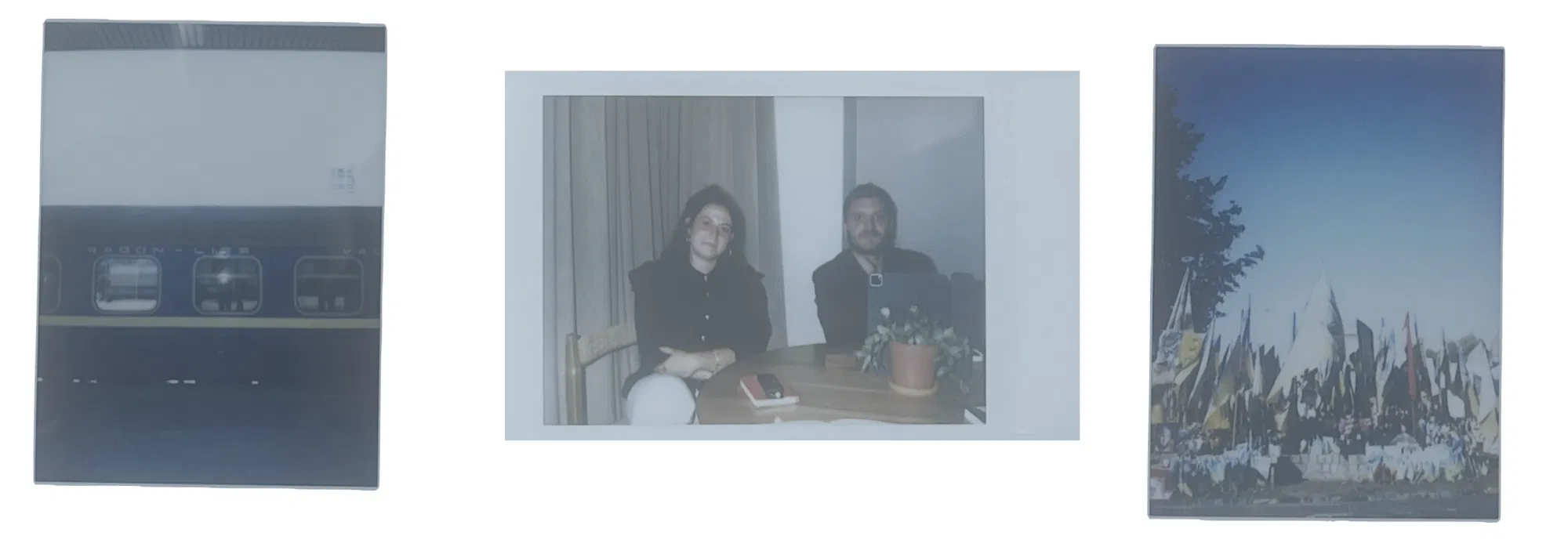
On 25 April 2025, Italy’s Liberation Day, curator Sofia Baldi Pighi and I travelled to Ukraine at the invitation of Vidnova Placements. Our route took us via Warsaw, followed by a long night train journey to #Kyiv, a stark reminder of the fragile nature of borders, marked by soldiers arriving at night and lengthy passport checks. Our invitation letter, addressed to the head of Ukraine’s state border guard service ‘Insha Osvita’, requested easier passage for us, foreign intellectuals, in order to promote ties with the Ukrainian art community so that we could witness and share their reality.
History unfolding nearby
Before arriving, we downloaded Air Alarm, an app that warns of nearby bomb attacks – a disturbing contrast to our usual use of apps for social contact or parcel delivery. We felt the frequent vibrations of our phones signalling drones and ballistic missiles over Kyiv – like a surreal film. But it was a harsh and frightening reality. When we crossed the border, we left Europe behind. We entered an area longing for peace, a peace that could potentially be achieved with a poor agreement.
Our travel grant enabled us to meet and interview local artists, writers and intellectuals, people struggling with their thoughts amid the despair of war.
Frequent vibrations in our phones signalled drones and ballistic missiles over Kyiv – like a surreal film.
How can one reflect when surrounded by explosions? The often-discussed ‘privilege’ we have in bourgeois artistic endeavours is clear here. We both follow a ‘participatory’ practice, a philosophy and curatorial approach with the body present. Our presence here, marked by humility, acknowledges that history is unfolding nearby – rather than a distanced ‘irreverent’ discourse. Considering the debate on cultural appropriation, where few speak from the unknown realities.
We interview local intellectuals not because of the war, but beyond it, considering their past, present and potential future.
This reality belongs here and now to us. In Kyiv, normality and abnormality exist side by side. Perhaps Kant’s vision of a Europe with ‘eternal peace’ is in danger of perishing here. Contradictions characterise the spirit of the times. The #war may be coming to an end, but not in the way Ukraine wants, leading to intensified, final battles that threaten our lives on a daily basis. Death, the tangible, is what one of those who invited us in, Yulia Alenina, calls ‘noisy night’.
Our task was to undermine the portrayal of war zones as the British John Berger’s ‘zoo’, where ‘inhabitants’ are observed as if in a zoo, precisely because a conflict has changed their former existence. We wanted instead to apply philosophy professor Christa Acampora’s concept of ‘ooz’ and interview local intellectuals, not because of the war, but beyond it, considering their past, present and potential future (if such a thing exists, as Italian writer #Leonardo Sciascia# pondered).
However, theoretical frameworks often clash with reality. In Ukraine, war permeates everything, even in moments of oblivion. It is like the air, present in every face, and every second carries the potential for finality. ‘Here and now’ is not a curatorial statement, but a lived condition. An unspoken truth binds us together: we are alive here, now. We too are part of this strange ‘ooz’, and the days that follow frame the war not as an object of study, but as our very plane of existence.
War and reality
Our itinerary was packed with interviews, which often had to be rescheduled due to unforeseen events. Upon arrival, we visited our hotel’s shelter, a spartan basement room with chairs and blankets. Without knowing it at the time, this became our nightly refuge – rather than our rooms on the seventh floor.
Fyokla Fortel, actress and director, introduced us to her family outside Kyiv and began to guide us around artistic circles. Just the day before, a Russian #drone had destroyed the house next to theirs.
Stefano Moser from the Italian Cultural Institute welcomed us to the Italian Embassy, but a persistent anxiety clung to us. The sky, once a natural backdrop, now felt threatening. ‘The sky is open to everything,’ Fortel remarked.
Ukrainians are exhausted, they want a ceasefire, but cannot reconcile themselves with the fact that the victims along the way were of no use.
Nikita Kadan showed us his exhibition at the National Museum and told us about his nine-year-old daughter’s ‘underground’ education as her everyday life. We discussed his despair over essays on Ukraine written by Italian philosopher #Giorgio Agamben# and French writer Paul B. Preciado, whose work he usually respects. But he comments: ‘How can they write such nonsense about the war without having witnessed it? How can they expect it to end without military assistance? Preciado’s suggestion that we occupy the port of Odessa with queer bodies is completely incomprehensible.’ Kadan’s exhibition on the current war avoided such typical compromises from the art world.
And an opera singer’s reinterpretation of air raid sirens challenged Agamben’s paradox of the present, where #museumification seemingly negates an external reality. This war is undeniably real – here, Trump’s recent statements about imminent peace ring hollow.
An opera singer’s reinterpretation of air raid sirens challenged Agamben’s paradox about the present, where museumification seems to negate external reality.
Our direct experience here shows a gap between the news media and reality: Ukrainians are exhausted, want a #ceasefire, but then cannot reconcile themselves to the fact that the victims along the way were of no use. And the sight of Ukrainian police recruiting men my age on the streets was disturbing. Few European intellectuals have come here to witness this with their own eyes. As Fortel’s Russian-speaking father puts it: ‘You care more about #Palestine because it doesn’t affect you. This is your war, and you avoid taking a stand.’ His words were difficult to refute – we felt guilty.
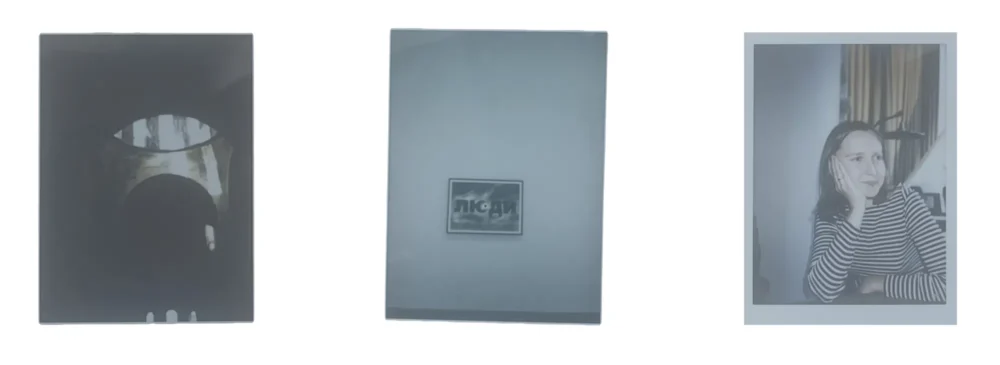
Underground rooms
We visited Saint Sophia Cathedral, a central site for Eastern European Christianity and a symbol of Ukraine’s spiritual independence from #Moscow, even though the Russians consider it their mother church. Inside the cathedral, the war seemed less present.
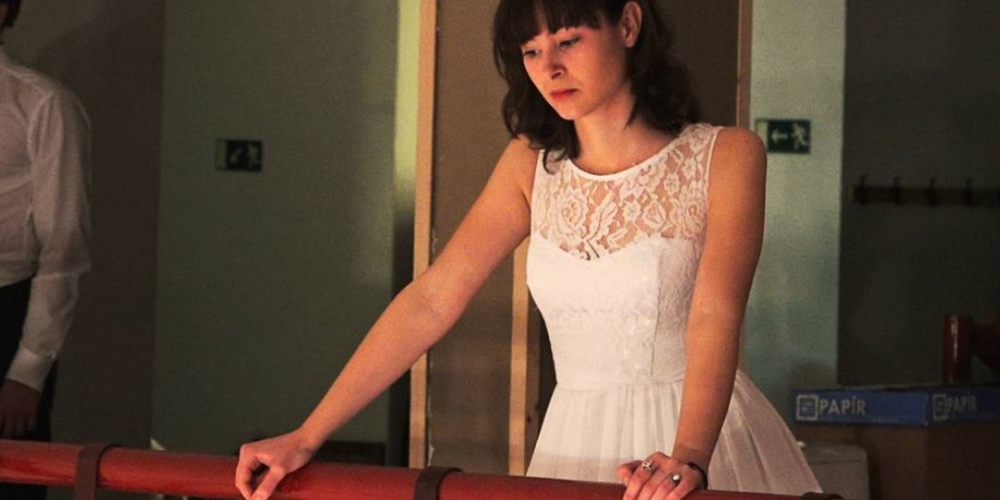
At the Black Square Theatre in the city centre, comedies were the main attraction. ‘Since we’re underground, we don’t interrupt the performances even during bomb attacks.’ They create a jarring paradox where laughter exists side by side with the destruction above them. We met Kateryna Hryhorenko at the Yaroslava café after several air raid sirens and rocket explosions: ‘Theatre seems irrelevant here. People just want to laugh, but I sleep locked in the bathroom at night out of fear.’ At her home, she shared a disturbing feeling: ’But I feel better under the bombs here than in Europe, where leftists organise naive disarmament exhibitions and believe that the war will end with flowers.’
The Russians have stolen peace, the sky and the night from a beautiful city.
Stanislav Turina, who showed us the Institute of Automation, echoed this sentiment. The former Soviet technology production facility now houses artists’ studios, a place caught between war and #creativity. ‘We want,’ said the artists, «you to stop seeing us as interesting just because of the war. It’s a perverse form of pain pornography.» The «zoo» analogy resonated. ’It’s important to keep busy to avoid thinking.’
The underground spaces are flourishing, with restaurants and bars moving underground. The Russians have stolen the peace, the sky and the night from a beautiful city. As I crossed Kyiv, including the rebuilt glass bridge, it struck me that this was a metaphor for all European cities: beautiful but fragile. This is undoubtedly our war too.
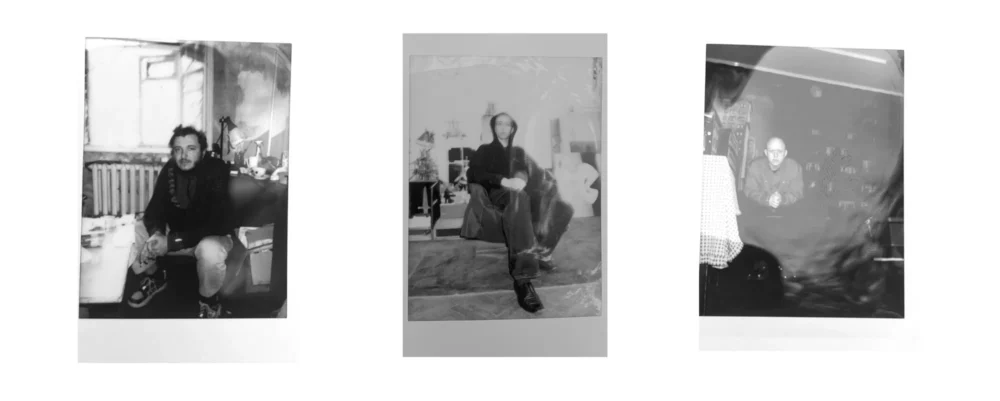
Oblivion
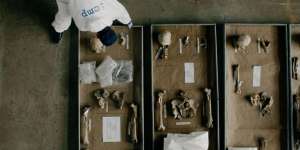
Adaptation is a human trait. After a few days, I often ignored the rocket alarm while showering, thinking, ‘If it happens, it happens.’ Only the night was still frightening, the thought of oblivion was disturbing. Meanwhile, on 29 April, the body of Ukrainian journalist #Victoria Roshchyna#, who had been kidnapped and killed by Russian secret services, was returned to the #Red Cross# in Kyiv in a white plastic bag. Her shaved head and numerous burns, indicative of electric shocks, were horrific. Three organs were missing, reinforcing suspicions that they had been removed to conceal further torture. This happened while some in Europe were suggesting that #Zelensky should accept any peace terms.
Three organs were missing, reinforcing suspicions that they had been removed to conceal further torture.
At Naked Room, a bookshop in Kyiv specialising in Ukrainian and international creative literature, we took part in a memorial service for #Margarita Polovinko#, an artist who volunteered for the front line and was killed at the age of 30. Her sister’s Instagram post on 8 April confirmed that she died ‘in defence of Ukraine’. One of Polovinko’s last works, Dream in Landing, showed a skeleton handing a gun to a reclining figure with a body stained with blood.
In May 2025, EU-verified Ukrainian sources estimated over 75,000 dead and 500,000 injured as a result of Russian actions. The invasion, which claimed the lives of Polovinko and other artistic volunteers, has had a devastating impact on Ukraine’s artistic and cultural life. It is estimated that $10 billion will be needed for reconstruction, in addition to the irreplaceable loss of monuments and museums. #UNESCO reported at least 670 damaged sites, including 145 religious and 238 of historical/artistic significance.
Her latest work, My House, My Fortress, shows hundreds of images of destroyed homes across Ukraine.
When we met #Zhanna Kadyrova#, a well-known Ukrainian artist and winner of the Her Art Prize, she stated succinctly: ‘We must find every way to tell what is happening here without blinders. Also what is happening in art, through art.’ Her latest work, My House, My Fortress, shows hundreds of images of destroyed homes across Ukraine, including occupied areas such as #Crimea, accompanied by poignant testimonies from former residents. Kadyrova’s studio, located in a complex of converted warehouses that now house electronic music clubs and workshops, felt surreal. Here, life continued amid the remnants of a #gentrification project halted by the war. ‘We enjoy every second, because here it could also be the last.’ Yes, how can a war be won without a home?
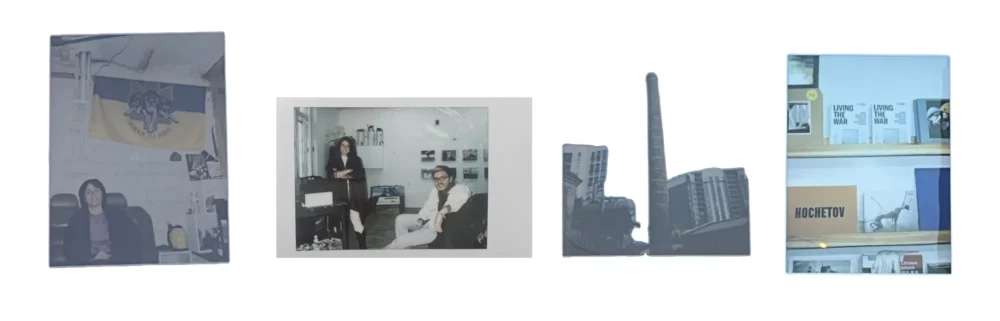
Resilience
In the city centre, a new clothing store opened, called ‘Unionizing Optimism’. Here, as elsewhere, electronic music played in the background – as it does everywhere in Kyiv. The history of this genre is closely linked to the idea of the end of the world. ‘You can’t understand anything if you stay here; you have to go to the border’ – which gave us a feeling that made us want to try to reach #Kharkiv. At five in the morning, on our way to the station, a rocket alarm forced us to return to the shelter, and we lost our train and our money. But perhaps it was possible to understand Ukraine from inside Kyiv, as artist Alina Zamanova noted: ‘There is no place here that is safer than any other.
Here, as elsewhere, electronic music played in the background.
An underground party in a club by the waterfront was an example of the resilience against the all-encompassing war. The Ukrainians did not dance as usual – here, their feet shook the earth.
At the Pinchuk Art Centre, Yevhen Korshunov’s work about his memories as a soldier provided a deeply poetic introduction to the war. My travelling companion Sofia described it as ‘heartbreaking’. The compulsory military service for artists underscored the renewed relevance of art for understanding our existence. Anton Shebetko’s exhibition also explored the devastating impact the conflict has had on Ukraine’s #LGBTQIA+ community, where non-normative identities challenged the rigid gender binary system imposed by the war. The common narrative that Putin’s attack is only about #NATO expansion felt superficial here. A deeper understanding emerged: #Putin wanted to suppress the burgeoning civil rights, dreams and hopes that were moving westward. ‘This is our war,’ was repeated by everyone.
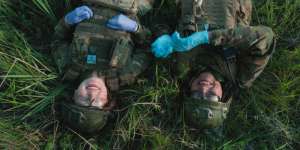
We spent our last day in Kyiv with directors Yarema Malashchuk and Roman Khimei in their studio. After a night of bombing until six in the morning, sleep felt like a distant memory. They had long been unable to leave Ukraine, and their perception of the world was now dominated by sirens, bombs and shelters.
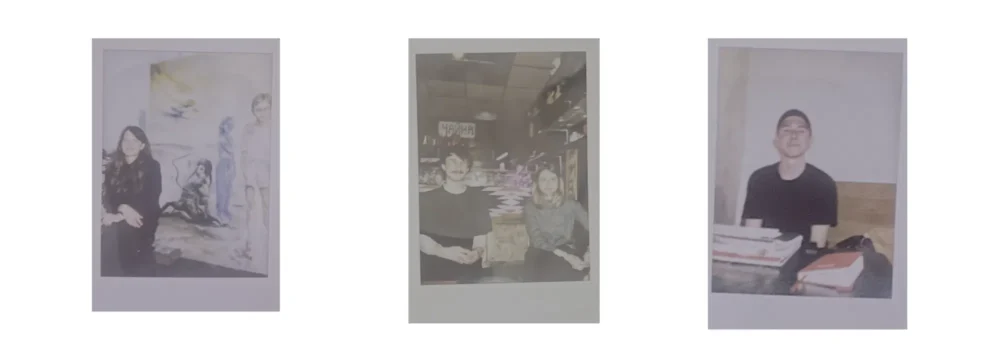
The scent of home
As we left the bus station in Kyiv on our way to Poland, we saw many uniformed fathers saying goodbye to women and children, each farewell potentially their last, yet they laughed, joked and exchanged ‘Slava Ukraini’. After a gruelling journey with distant drones and unexplained stops, we reached an old border, which we crossed on foot for safety reasons. As a man, I was subjected to lengthy questioning by a sergeant who was confused about the purpose of our visit. His ‘thank you’ at the end was moving. Dozens of Ukrainians waited in a freezing room filled with hope. On the other side, Polish and European flags awaited them. I had seen these flags in Kyiv, blue with stars, reminiscent of the Virgin Mary’s crown, but Ukraine was the missing star. In Poland, the flag symbolised security; in Ukraine, it symbolised hope for it.
I prepared myself to return to my bourgeois concerns.
On the journey between two worlds, I prepared myself to return to my bourgeois concerns: legal issues, bills, mortgages and a foreign Italian cultural life. Crossing the border into Poland, the same land Hitler invaded and unleashed a well-known hell, felt ominous. It felt like a similar, but deliberately ignored, history.
The relief of being safe in Milan was overshadowed by a sense of guilt. When I scrolled through Instagram after my trip, I saw friends and enemies trivialising their lives.
At the same time, I feared that our Western privileges could quickly disappear if Ukraine was not taken seriously. The taste of Kyiv is also the taste of our home – let us not allow anyone to turn peace into war without putting up a fight to the very end. Beyond peace at any price, there is dignity. Slava Ukraini, Slava Europa.
The authors would like to extend special thanks to Vidnova Placements and the Insha Osvita Foundation for their support during the trip.
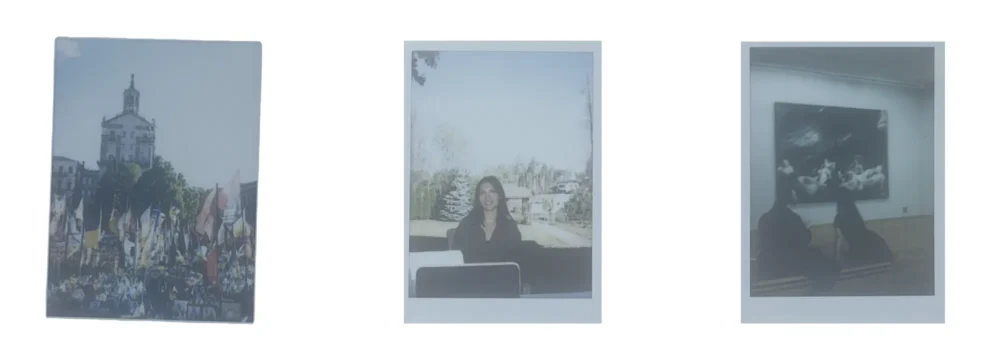
All Polaroids by Leonardo Coffo