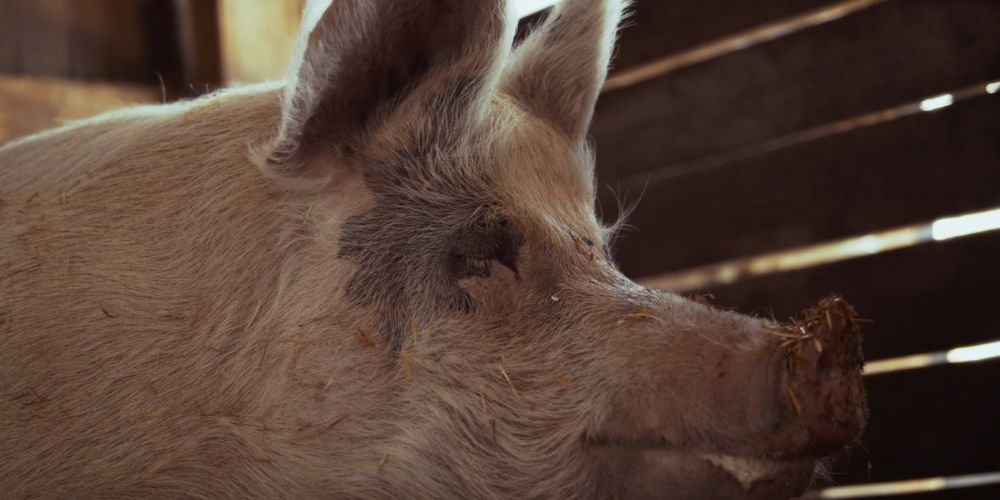
Stefan Enslin’s documentary feature, Pigcasso: The Million Dollar Pig, is an interesting story that prompts one to sit down with their thoughts and wonder just exactly what they’ve just experienced. From the outset, the film presents itself as a chronicle of the origins of arguably the world’s first non-human artist to exhibit their show, but as the film progresses, questions begin to fill in, rising to a point of no return.
Artistic phenomenon
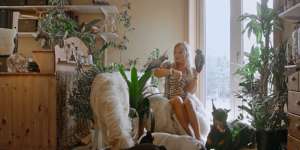
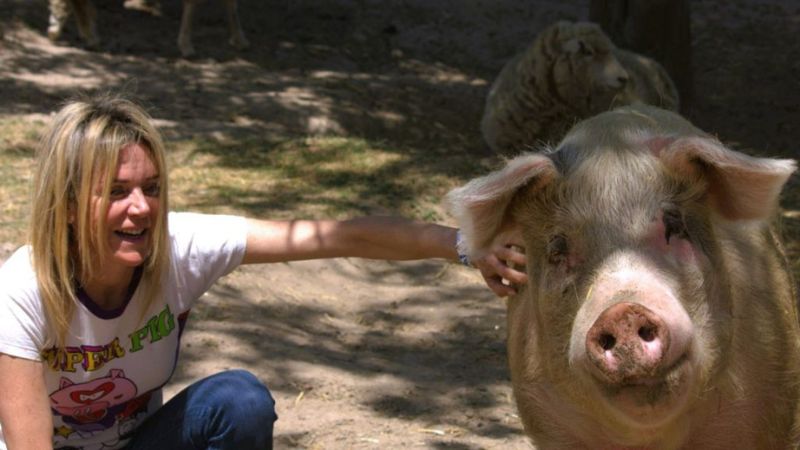
Set in #Franschoek Valley#, the film tells the story of Pigcasso from when she was rescued from a slaughterhouse and guided into becoming the artistic phenomenon she is known to be. It features animal rights activist Joanne Lefson, who is the founder and owner of Farm Sanctuary SA, a wellness home for many animals that have been liberated from mistreatment.
Enslin begins the film by highlighting his attempts to «capture the movement of grace in its rawest form,» and how, while the footage that is used may appear corrupted, the reality of this story and its creator’s intentions remain important. Told through both acquired footage from Lefson and the cinematography of Jurie Badenhorst and Amelia Henning, Pigcasso can be forgiven for the technical chaos that introduces the film because it allows the viewers to experience the jarring experiences of the animals being rescued, with the opening footage of Lefson being a case in point.
The earlier part of the film sees the screen covered in a vignette kind of framing, something that may be intended or the effects of Enslin’s mentioned camera issues, but works simply because it centers the subjects on the screen―when Pigcasso is painting and Lefson is guiding her, with the other animals lounging in the farm and going about their lives. It shows the viewers what they’ve arrived to see, the mundanity of farm life as opposed to the chaos of the slaughterhouses, where, as Uma Mesthrie mentions in another insert, «they would’ve been food.»
While touching and often fascinating in its portrayal of an unlikely relationship, it also makes one wonder about agency and ethics, authorship and collaboration.
Animal Rights?
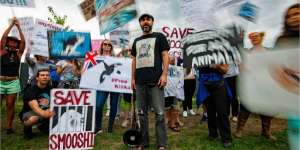
Pigcasso’s story then becomes a symbol in the context of #animal rights# and treatment, as it posits that these animals are intelligent creatures deserving of respect and humanity in a world that often overlooks them. This is what drew the director to tell this story: the cultural impact it would have on people to see these feats.
While it is rich in its thematic portrayal of the bond between a human and an animal, and the power of creativity and collaboration, Pigcasso is also a film not without its criticism. At the premiere screening, an audience member posed a crucial question that had lingered in my mind: just how much collaboration went into these lucrative art pieces, notably the painting pig. They asked, «What has the response been like from animal rights activists?» They went on to explain that from afar, Pigcasso’s story is told in a way that makes it seem like the artistry came organically to her, like picking up a brush and creating a piece, whereas the documentary shows the active hand that Joanne Lefson played in training Pigcasso to paint. Because while this collaboration is important and signifies something worth holding onto as people, it cannot be ignored that Lefson herself, author of Pigcasso: The Painting Pig That Saved a Sanctuary, had mentioned having an epiphany for an experiment in which she rescues a pig and teaches it to paint, taking it all the way to superstardom that people start viewing animals differently and become #vegan. She also speaks casually about stopping the animal artist from a work-in-progress if she sees something that speaks to her creative interpretation.
Admiration and unease
In questioning the human story permeating that of a pig that paints, one begins to wonder what level of agency the pig had in making the work and being platformed as a celebrity figure for animal intelligence. At what point does coercion get misconstrued with collaboration, and exploitation with exploration?
Lefson answered that it is impossible to force a pig the size of Pigcasso to do anything, and explained the part of the story that didn’t make the cut―when she discovered that her rescue had the artistic prowess that could compete, if not rival, human artists. It was then that she decided to put her time and effort into honing these skills for the animal’s artistic expression. One thing led to another, and a painting was discovered. When an interested party opted to buy it, Lefson suggested that they simply donate to the sanctuary. And thus began the journey of honing Pigcasso’s skills and monetising them to help other animals at the sanctuary.
The documentary feature produced by Greg Meaker, Enslin and Lefson leaves the viewers middling between admiration and unease. While touching and often fascinating in its portrayal of an unlikely relationship, it also makes one wonder about agency and ethics, authorship and collaboration. You get to wonder yet again where the line of advocacy ends and the love for spectacle begins. Enslin presents a subject that is lovable and easy to relate to, and invites us to reflect on animal rights and human intentions. On how we see animals, and even better, how we see ourselves in relation to them.
This review emanates from the Talent Press programme, an initiative of Talents Durban in collaboration with the Durban FilmMart Institute and FIPRESCI. The opinions expressed in this article are those of the author, Gloria Nkatha and cannot be considered as constituting an official position of the organisers.