Published in 1933 just after the Nazis came to power in Germany, «The Shape of Things to Come» by sci-fi prophet H.G. Wells set out a vision of a future stretching into the start of the 22nd century. In the novel, benevolent dictators use their power to pull humanity up out from the devastation of a massive war and the threat of plague, paving the way for a peaceful utopia in which citizens are enlightened super-talents who no longer need them to oversee and command their lives, and national divisions are abolished. The spectre of modern civilisation’s collapse and the struggle of isolated survivors in the wake of catastrophe fired the imaginations of numerous sci-fi greats that followed. It‘s a preoccupation that has become entwined closely with non-fiction, as #climate apocalypse# looms and mass displacement of #refugees is fuelled by conflict and resource shortage. Yet, as world leaders fail to act and ultra-nationalist #populism rises, the wise wielders of power that Wells so optimistically envisaged seem all but an outlandish fantasy.
The fringes of capitalism
The title of documentary A Shape of Things to Come, co-directed by J.P. Sniadecki and Lisa Malloy, recalls this thematic territory of large-scale strife and fanciful conjecture over the best recourse for human survival. But in feeling out just one idiosyncratic, dreamed shape, it makes no claim to offer a definitive, overarching picture of what may await us. Rather, in our world of fragmented #tribalism, we find an aging, anti-establishment misfit guarding a hideaway beyond capitalism’s fringes, as the oppressive hand of the state becomes harder to ignore.
His is an insular, individualistic lifestyle almost hedonistic in its insistence on the primacy of simply enjoying being
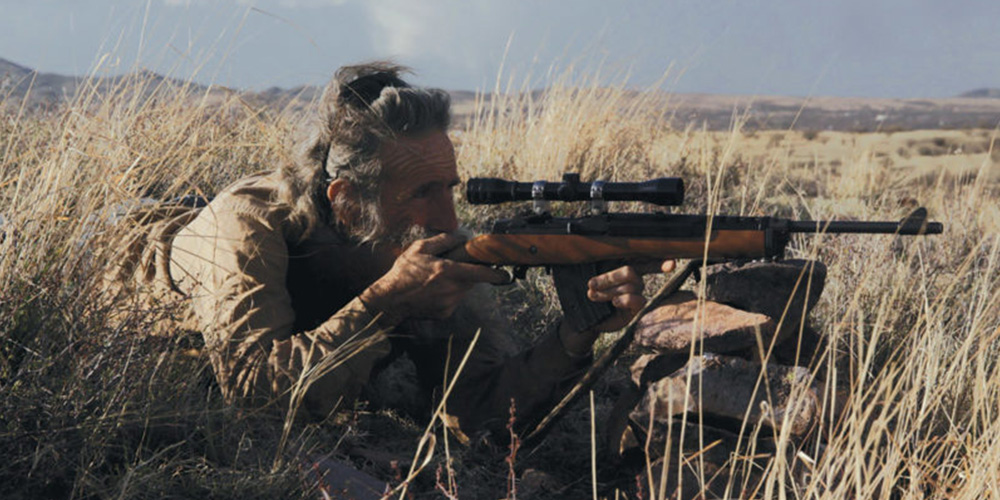
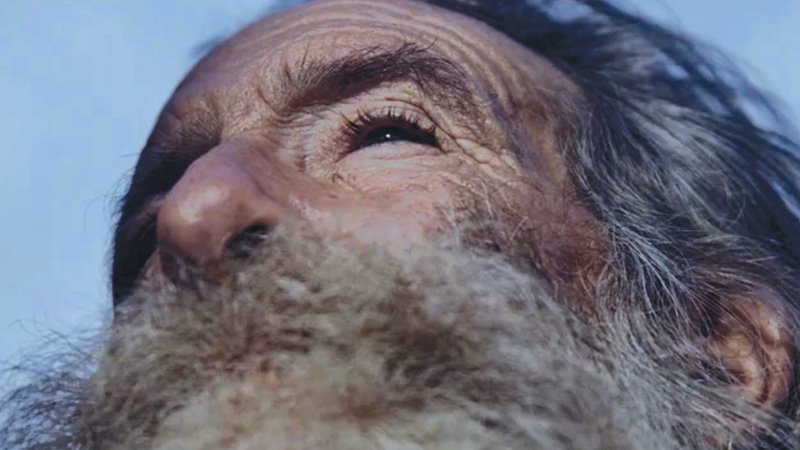
Sundog is a sixty-year-old white man with a long, straggly beard living in the #Sonoran Desert#. We accompany him in some of his routines as he lives off the land, hunting wild animals and cooking them on an open fire, scavenging and as he puts it, simply «enjoying life on planet Earth». We’re never quite sure how he came to be here, other than an aversion to a «dominant culture» prone to pounding its chest and demanding others serve it as «cannon fodder» — the clout of a corrupt political class an aggravation that border patrol surveillance towers, drones, and aircraft overhead remind him of constantly. He’s a fascinatingly ambiguous figure for ethnographic treatment, in the sense that he has rejected some of the social constructions of modern, urbanised life, such as frenzied productivity, but lives to some degree perched atop the land, picking off food with his high-powered rifle, in little symbiotic harmony beyond use-value with his natural surroundings. He smokes in the evening, listens to the radio (a Hungarian composer, a philharmonic: the trappings of civilisation are never too far removed), or reads, driving in his bulky vehicle to stock up on new reading material from the local bookstore (but nothing about «snitches,» he crankily chides the staff, his aversion to peer control bordering on the obsessive). Back at his haphazardly roofed, greenhouse-attached abode, he relies on his cat, Sparkles, for companionship. His is an insular, individualistic lifestyle almost hedonistic in its insistence on the primacy of simply enjoying being; doing what one likes, subject to no rules. He fantasises about taking out surveillance towers with one of his high-powered weapons. Anarchic freedom fighter, or just another uninvited guest on the land, with macho frontier fantasies? The directors, amply onside with his prickly, eccentric charms, do not dig deep into this.
The stakes
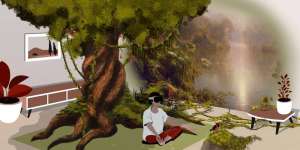
Sniadecki first encountered Sundog when making El Mar La Mar (2017), co-directed with #Joshua Bonnetta#, a darkly poetic and experimental immersion into the extreme natural phenomena of the Sonoran Desert and its politicisation as a highly treacherous refugee-crossing from Mexico into the United States. A Shape of Things to Come is possessed of that film’s appreciation of the awesome power of the desert and its sublime, aesthetic potentialities (Sniadecki emerged from #Harvard’s Sensory Ethnography Lab). But this is a quieter, more unassuming film. A rattlesnake, bats, the moon, pink blooms: elements and creatures of the natural world enter the frame, observed but unjudged, as the rhythms of life play out. Sundog catches a Sonoran toad and scrapes its back to collect and dry the psychedelic venom. It’s interesting to compare the treatment of this practice to the use of ayahuasca by Colombian shaman Don William in last year’s documentary A Tree is Like a Man, by Icelandic artist #Thorbjorg Jonsdottir#. Don William contextualises the practice in inherited, collective legend, and a lineage dying out; Sundog is probably, after smoking the psychedelic, also able to access an obliteration of the ego, but he dips in as a hobbyist, his usage divorced from tradition. Maybe it’s all the same to the frog. But it’s difficult to feel there is much at stake in any aspect of Sundog’s existence, as it’s portrayed to us. Then again, without the urgent spectacle of life-threatening drama, should his alienation sting any less?