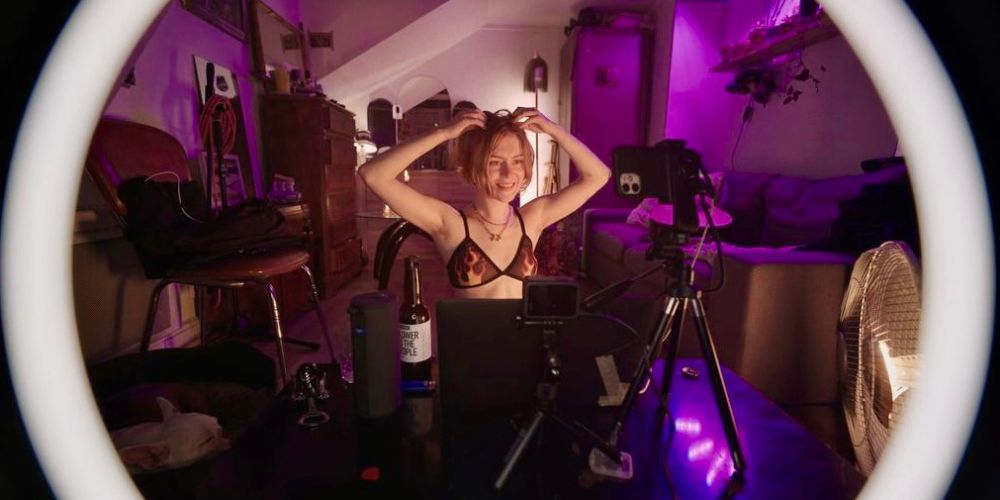
Kaleidoscopic observation of various levels of practical meaning, a notion of the «real» has gained in human current lived experiences, holds a mirror to our times in a multicoloured, thoughtful picture presented in the #Majordocs fest program. Adele Tulli’s Real puts side by side individual, communal, and societal stories to show how our foregoing fusion with the net and the #VR technologies changes behaviours, #psychology, and ways of being. The Ethernet cables forming the basis of the global internet age span the world as the physical form of virtual reality, which seems to increasingly eclipse the «real» in «traditional» precise sense of the word; the one that was valid till the beginning of the XXI century and now gradually transforms in the public discourse.
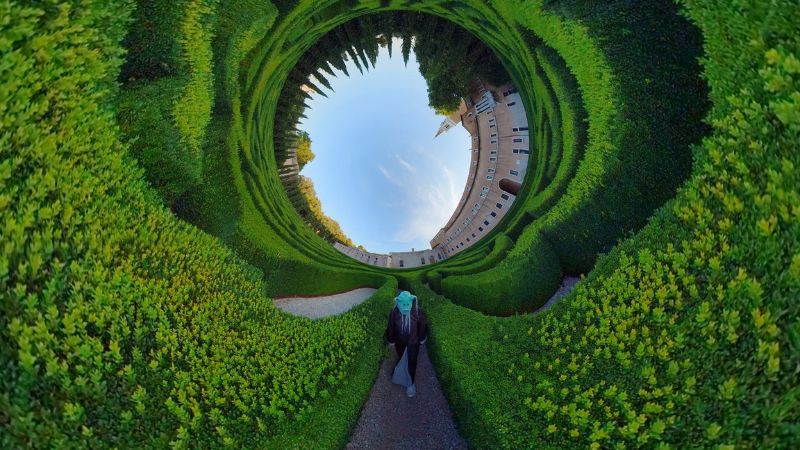
One environment to another
The «traditional», shaped in the XIX century, meaning of the «real» opposed it to «imaginary» and «symbolic» as in Jacques Lacan’s three orders in which human beings operate, which were distinctive and separate, although tightly connected. With the rise of virtual technologies, the World Wide Web changed reality, adding additional layers of experience to everyday life that extend noumenal qualities into the sphere of hyperreality – a symbolic, formless area where imagination is rarely checked. Zoom meetings, seminars, and courses connect people from various places and spheres of life, freeing them (to some extent, once they can afford it) from geographical and social limitations. Remote work and remote forms of entertainment (#sex work#, gaming, relaxing in the #Metaverse, or meeting new friends) expand the virtual sphere into an individual’s intimate life, making it a place to meet multiple basic needs. Today, individuals are working, resting, forming community, and spending their communal lives on the net, in more or less «realistic» costumes, from «official» Zoom meetings, to influencers’ culture, which rests upon self-creation of a certain public persona, to super imaginative avatars in the Metaverse. Often, a single person moves smoothly from one digital environment to another, playing various characters and taking up different roles.
Real follows its several characters across Italy, Korea, Germany, and the US, focusing on their various everyday net activities, while also observing the moments of change connected with turning their internet cameras on and off. In the majority, they are digital natives (born and raised with the net and new technologies), who seem to perceive the physical world as only a part of their experience, sometimes less real than the virtual one. Their behaviour distinctly shifts depending on whether they see the internet camera rolling. Their psychological reflections, especially those of the influencers’ on and off camera, emphasise the emotional costs of constructing and upholding a distinctive public persona, stressing depression, insecurity, and emotional outbursts. Others go through gaming addictions, keeping them at the computer for long hours, days, and months. The special therapeutic centres treat their online experiences as the factual ones, addressing at the same time their accompanying alienation from the physical world. Their group’s public meetings use VR tools to create community, foster a sense of belonging, and share common views, goals, and a future.
The real becomes not only the concrete, physical reality but also an imaginary space involving human interactions with other humans or machines
Intermingling
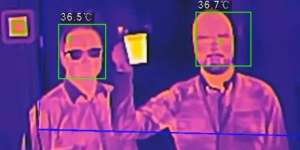
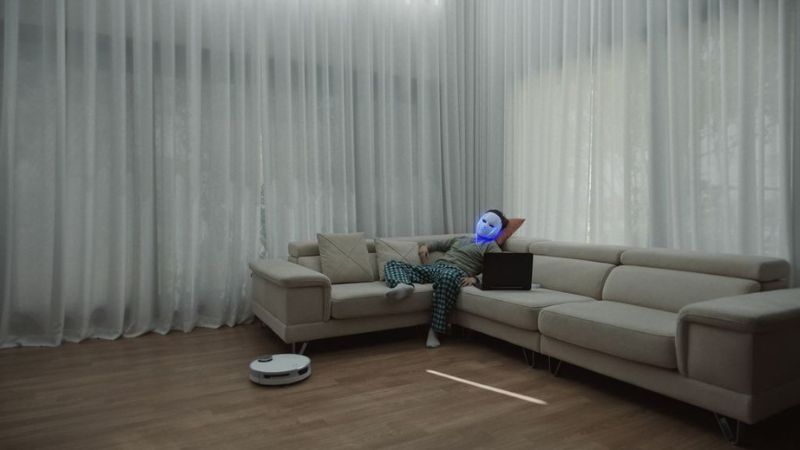
The virtual world overtakes the physical world as «intelligent» houses monitor every aspect of their inhabitants’ lives, from high temperatures to proper diet to security. The robots – serving coffee, vacuuming, regulating cars’ movement in a neighborhood, or analysing various elements of the environment become slowly normalised, as is the #AI, who accompanies toddlers answering their numerous questions in absence of parents, and – on the other side of the spectrum – the AI, whose numerous slops create in the net an astonishing and often ghastly mutations of actual elements. The virtual intermingles with the real in many ways simultaneously, also as a way of dispersing a feeling of solitude at work for a professional delivery driver in Korea, who, with his camera on, talks to his friends while driving. The real becomes not only the concrete, physical reality but also an imaginary space involving human interactions with other humans or machines, bringing in true experiences, consequences, and social facts. Sometimes, the physical space is partly colonised by a virtual world, with an influencer making content addressing distant audiences, and other times, the meeting with friends in the Metaverse is «very, very real,» as one of the characters asserts, distinguishing the «physical» from the «real». The virtual world copies and reconfigures the physical world, pulling in more and more existential functions, which leads some of the characters to form the most important relationships of their lives with a camera, a technological device, which secures them access to an intimately true «reality» much more important than the surrounding one.
Questions to ask
Real presents the world from a perspective of younger generations familiar with brand new technologies by interspersing their «imaginary» and «symbolic» in Lacanian sense, individual, and historically and geographically specific spheres of perceptions with occasional pictures of the «real», which still – as in Lacanian view – appears to thwart and trouble the virtual worlds with its physical form of the Ethernet cables on a bottom of ocean, surrounded by beautiful and rich living organisms much more sophisticated than their digital copies observed by particular characters. Should we then believe in and move to digital paradises or perhaps keep living in the real, things-in-themselves, which still pertain their power of perturbing and subverting our imaginations from within? It is a question worth thinking about.