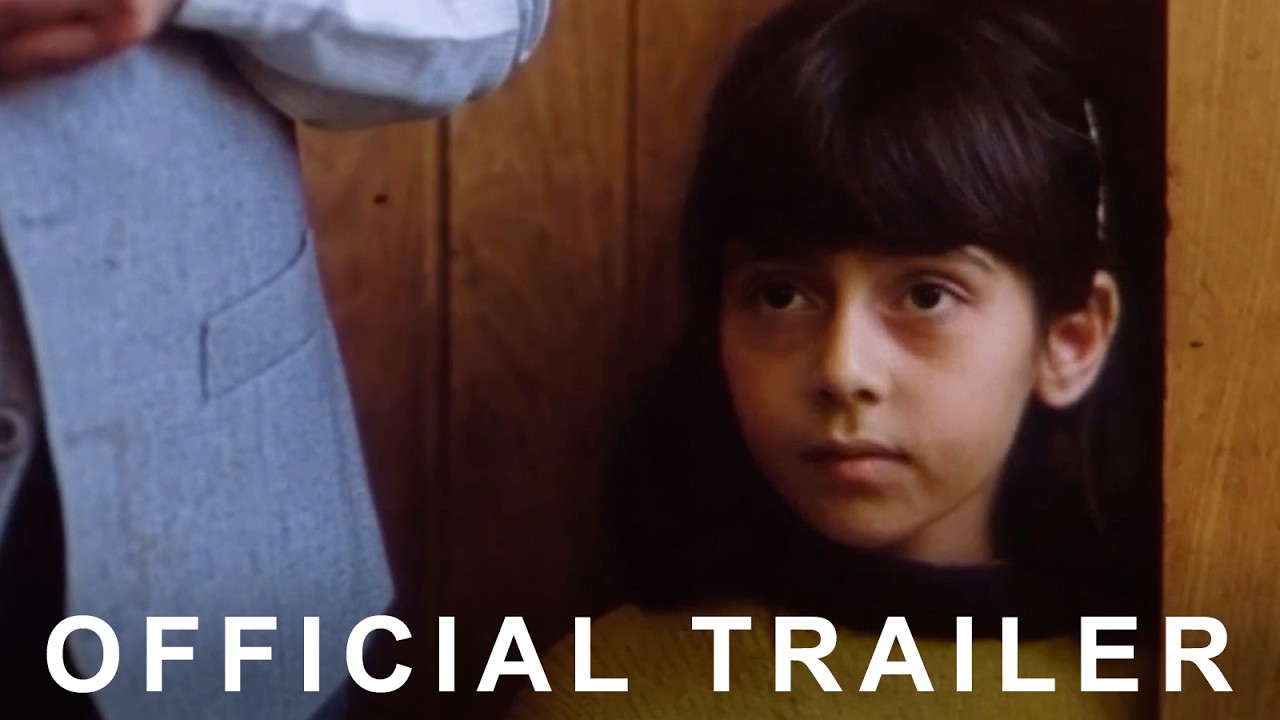
Yad is a Farsi word with no direct English translation. «Memory» is not quite right, for this term refers to the past returning to the present. Iranian actress-turned-filmmaker Pegah Ahangarani, whose voiceover narration guides us through five portraits in her feature documentary debut, Rehearsals for a Revolution, which screens at the Karlovy Vary International Film Festival, introduces this word to audiences in her prelude, and we come to understand that the concept is precious. Moving, intimate, and expertly assembled, the film is a significant witness of history not only for Iran, but for all committed to cross-generational resistance around the globe.

Cumulative effect
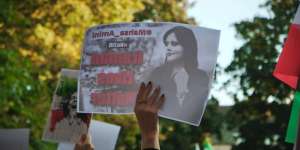
The cumulative effect of the stories Ahangarani has gathered about people she knows who defied and were crushed by the dictatorship is heavy, showing how the fates of those in resistance reverberate through the lives of their friends and families. But a sense also builds of a living legacy of experiences of revolutionary struggle that, more than the sum of their parts, are never in vain, even if protest movements at some point seem to have failed. In salvaging and storing traces of these individuals, Ahangarani pays tribute to them as part of Iran’s collective history, bringing them back to light the way for citizens who now remain caught between violence from within and without. They take their place in a wider cycle of hope of people who, after every crackdown, still return to the streets to call for change, persistently rehearsing for the revolution that will surely come.
A title card at the end of each of the five stories places the tragic losses in a broader historical context with dates and numbers, so that we get a sense of how many thousands met similar fates and how authoritarian systems amplify pain. But between these factual summations, the documentary is intensely personal. Not only was Ahangarani’s life in Iran one of loss after loss, but it was also one of taboo silences under a veil of fear. The process of assembling the film meant countering disappearance and finding a way to make these stories tangibly material when there was very little archival footage or memorabilia. Super 8 film, photographs kept by family and other citizens, YouTube footage and newspapers are all woven into the film, as Ahangarani hones her attention on what is told or just hinted at within them.
The cumulative effect of the stories Ahangarani has gathered about people she knows who defied and were crushed by the dictatorship is heavy
Half-century of resistance
The five stories of resistance span a half-century, from the overthrow of the Shah, when an Islamic theocracy came to power, to the turmoil and bloodshed of the present day. In the first, Ahangarani reflects on her father, who filmed on a Super 8 camera before he went to fight on the front lines of the Iran-Iraq War. His initial belief in Khomeini as the father of the nation turned into disillusionment with the regime, a painful psychological process that will recur through generations. His rupture point was the execution of his friend Davood by firing squad in the 1980s, for so-called anti-revolutionary activities and the distribution of pamphlets. Khomeini’s photo was removed from the family’s Nowruz table and replaced by Davood’s. The director, who was told as a child that Dawood had «gone to Hollywood,» only learns of her father’s taboo thoughts much later, after reading a hidden letter.
The other stories similarly touch on despair, death, or exile. Young and confused by propaganda, while simultaneously enthralled by the Western lifestyle trappings of her literature teacher, Ahangarani was instrumental in the teacher’s expulsion from the education system after she showed photographs of her with her hair down at a party to friends at school, placing the teacher under scrutiny. Ahangarani was consumed by guilt, but the teacher, who later wrote to her from Cologne, understood she was a pawn within a system that uses shame as a means of control. Ahangarani turned her back on school to become an actress, joining her mother’s film industry as a director. Acknowledgement is given to the decades-long struggle of Iranian women, which has evolved into the Women, Life, Freedom movement.
The suicide of her uncle Rashid, a journalism major subjected to beatings and forty nights in solitary confinement after a 1999 raid on student dorms, is the most haunting of the segments. Ten years after that, Ahangarani enters the frame, in a protest met by bullets. Afterwards, many young Iranians left the country.
In exile
Ahangarani now lives in exile in England, and the culminating segment is for her baby daughter, Lily, who knows nothing yet of grief and suffering. There is no simple, unmitigated hope, because in January of this year the biggest massacre in contemporary Iran was carried out by the regime upon its own people, and the director relays the panic of the internet blackout and the guilt of not being there. But, as the population endures hard days stuck between internal theocratic repression and a war waged upon them by Israel and the United States, the documentary pays tribute to a flame of resistance passed between generations that burns still.