For its 24th edition, the 2020 Ji.hlava IDFF meets online from 27 October to 8 November 2020. As the largest festival of creative documentary films in Central and Eastern Europe, Ji.hlava IDFF draws attention to documentaries notable for their innovative visual style and a deeper social reflection and confrontation.
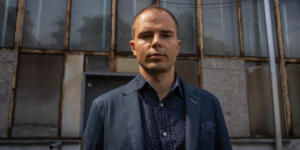
Before launching for 2020, Modern Times Review spoke with Festival Director, Marek Hovorka on its programme and the challenges faced in the year of COVID-19.
What would you say are the main theme(s) for this year’s Ji.hlava IDFF?
We do not focus on main themes, just films and their unique visions. But a couple of thread lines in the programme can always be found. There are documentaries that deal with the coronavirus pandemic, what fascinates me knowing that we as a society did not go through it, but we have a chance to reflect on this experience through some extraordinary films.
The other line connects films observing the border between democracy and autocratic regimes or questioning the responsibility of corporations. #China and #Hong Kong#, Shell and Ford, global warming and corruption. But not only big topics are reflected. Documentary films are always lighted by fragile intimacy, for example, many films in our First Lights competition of first features are re-thinking a fundamental question – What does it mean to be at home. Unique is the largest retrospective of South Korean Documentaries, as well as the showcase of Afro-American non-fiction «Black Cinema Matters».
We do not focus on main themes, just films and their unique visions.
The festival was scheduled for a hybrid edition but has recently moved entirely online due to health and safety concerns in the country, as well as from around Europe. How will audiences be able to view and engage with the programme this year? Does the online space allow for any additional opportunities that a physical event does not?
Yes, opportunity is the right word to use in this situation. We have tried to have a physical, or let’s say a hybrid edition of Ji.hlava until the very last moment. But the circumstances prevented it, cinemas closed down and we were left with 20 days to shift to the digital. Fortunately, we were always prepared for this extreme option in the back of our minds.
Though it is a challenge, we want to do a festival, which will be unique, and will not only focus on virtual screenings. In order to bring the unique atmosphere of Ji.hlava to online audiences, we have prepared several simultaneous live streams, all-day live service from the festival’s Lighthouse studio at the Ji.hlava’s central Masaryk square as well as an interactive environment interconnecting the audience with the filmmakers and the guests of our Inspiration Forum.
I am very happy that the filmmakers supported us by not withdrawing their films when we moved online. The result is a full-fledged festival with over 270 remarkable films! These will be accessible to viewers in the Czech Republic, which will get their accreditation for a symbolic amount. As for the viewers outside the country, they will be able to access over 80 world, international and European premieres from our competition programme, which is quite unique. They will pay 2-4 Euro for a stream running on DAFilms.com – a leading European VOD platform for documentaries founded by Ji.hlava 15 years ago, the same year when YouTube came into existence. So, we are not new in the digital world and hope that to bring great documentaries to many new audiences this year.
How do you find the support given from the country & city cultural/governmental sectors? Do you find that there has been support for Ji.hlava and other such cultural institutions in Czech Republic during these unprecedented times?
The cultural sector in the #Czech Republic# is hit severely by the pandemic – just like in most of the other countries. I want to say that our main partners – the Ministry of Culture, Czech Film Fund, the City of Jihlava, and the Vysočina regional government have supported us – especially by their understanding and flexibility. They did not limit their support to the physical edition exclusively, and we are thus able to realise the festival this year.
The cultural sector in the Czech Republic is hit severely by the pandemic – just like in most of the other countries.
What the most difficult aspect of the 2020 Ji.hlava preparation?
It is the uncertainty. On the other hand, as goes the saying – When nothing is certain, anything is possible. The films will be watched by people that – for whatever reason – wouldn’t consider attending Ji.hlava in person. Now everyone will be able to get a bit of Ji.hlava, see the films and take part in the amazing discussion at our Inspiration Forum.
Of course, we are sorry that we can’t screen the films in cinemas. We have always drawn our inspiration primarily from screenings in cinema halls, discussions, and personal meetings. So, now the challenge is to transform the unique vibe that has attracted thousands of visitors to Ji.hlava from all around the world each year, into our digital edition.
How do you see the future of film festivals in the post-COVID-19 era?
The festivals in the future will be hybrid, that is very clear. We all learned an interesting lesson from the current situation, and that lesson is shared by many filmmakers, too: There are so many opportunities how to bring films to the viewers and if we would not have been through this experience, maybe we wouldn’t see them!