There’s a new documentary out about Robert Fitzgerald Kennedy — RFK: Legacy. It is directed by Sean Stone, son of acclaimed director #Oliver Stone#, who directed the epic conspiracy drama, JFK (1991). Many viewers can recall sitting up straight-and-smart at around the three hour mark of the film when investigating attorney Jim Garrison (played by Kevin Costner) announces, «I submit to you that what took place on November 22, 1963 was a coup d’état.»
Money swears
US President #Dwight Eisenhower#, the former Supreme Commander of the European Expeditionary forces that were vital in the drive to defeat the Nazis, had warned Americans in 1961, in his last speech before leaving office, about the undue influence of «the military-industrial complex» (MIC). The American arms industry had grown exponentially since the end of WW2, and Ike was worried that its unabated growth, tax dollars spent, and lack of accountability could ruin democracy.
As if to underscore the power of the conspiracy of ‘undue influencers’, later in the film, Garrison and his family are watching the 1968 California primary when news flashes that RFK’s been slain:
Jim Garrison: They killed #Robert F. Kennedy#. He won, and they killed him. They shot him down.
Liz Garrison: Oh, God. Both of them? Both brothers? You were right.
«They» is the MIC, and Garrison adds, «The war is the biggest business in America, worth $80 billion a year.» That was then, but by FY 2025, military expenditure represented «$1.20T committed of $1.94T Total Budgetary Resources,» according to the US government’s own spending agency. Money doesn’t talk — it swears, according to a Bob Dylan line. And, arguably, the MIC is joined by the #Deep State# and the #Social Media#, who work with them to control the masses for money.
The Stones give RFK, Jr. the latitude to connect conspiracy theories — and to then let him liken those conspiracies to his own living problems.
Closing gaps
RFK: Legacy begins with RFK announcing his candidacy to run for the presidency in the fall of 1968. The film depicts him as lying low in an extended period of grief after his brother’s murder five years before, but is energised by the national opposition to the #Vietnam War# and decides to run for the presidency. He connects with America’s youth and seems a healer of the racial divide exacerbated by the murder of MLK in Memphis in April of that year. He opens his candidacy with a speech before supporters:
I run to seek new policies. Policies to close the gaps that now exist between black and white, between rich and poor, between young and old. I run for the presidency because I want the United States of America to stand for hope instead of despair. I have travelled, and I have listened to the young people of our nation, feeling their anger about the war they are sent to fight and about the world they are about to inherit.
It had been a while since Americans had been told they were being listened to about problems in the present and their right to a brighter future. Stalwart supporters had seen #JFK as a proponent of peace and as an advocate sharing knowledge in cooperation, rather than in competition, as a universal attribute of the species, homo sapiens. Such qualities ran against the grain of the military-industrial-complex operatives that the previous president, Dwight Eisenhower, had warned Americans to be on guard against. RFK was promising to end the war and pursue domestic tranquillity. He had to go.
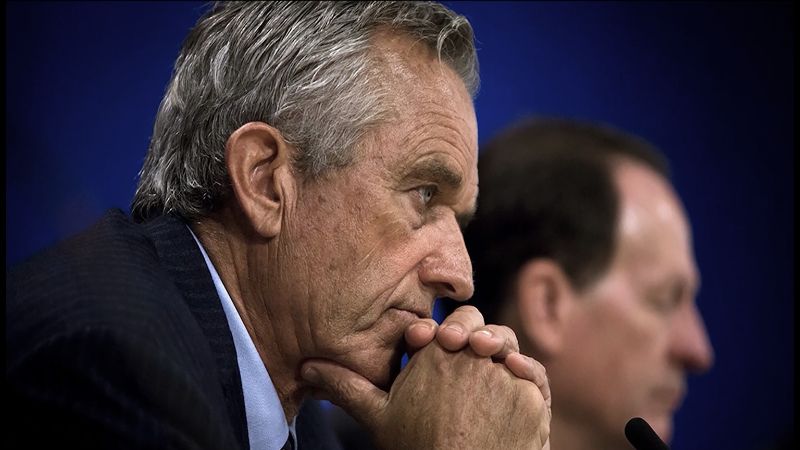
RFK: Legacy also spends a lot of time with Robert F. Kennedy, Jr. being interviewed by Oliver Stone about the Kennedy legacy — and about RFK, Jr’s own troubles with MIC-like forces aligned against him. This is where the film takes an uneasy segue into paranoia and defensiveness. It begins to feel like Sean Stone is constructing a fantasy about RFK, Jr’s well-known troubles with information surrounding #vaccines and #autism, and overlaying this fantasy with warm, delicate memories of the Kennedy years, when so many average Americans saw John and Bobby as akin to Batman and Robin fighting bad guys (CIA, Mafia, and warmongers).
The Stones give RFK, Jr. the latitude to connect conspiracy theories — and to then let him liken those conspiracies to his own living problems. For instance, Oliver Stone asks if RFK, Jr., believes #Sirhan Sirhan# murdered his father in LA. RFK, Jr., immediately replies, «No.» He elaborates, «I read that autopsy report. And it was transformative for me, because anybody who reads that report will understand that Sirhan could not have killed my father.» We hear again what we’ve heard before that Sirhan Sirhan, the Palestinian-born Lebanese alleged assassin, confessed, even telling a courtroom what motivated him:
You must remember the circumstances of that night, June 5. That was when I was provoked. That is when I initially went to observe the Jewish Zionist parade in celebration of the June 5, 1967, victory over the Arabs. That was the catalyst that triggered me that night….(here)
And yet, Sirhan Sirhan has maintained for decades that he doesn’t even remember the night of the assassination. RFK, Jr. apparently buys this, and Stone inserts a visual reference to MK-Ultra, suggesting Sirhan was brainwashed.
The documentary slides further into connective speculation when Sean Stone references the plight of #Rachel Carson#, who was attacked in the media and by corporations, following the release of her groundbreaking reportage on the damage to the #environment that is detailed in Silent Spring (1962). She was especially critical of #Monsanto, the supplier of #Agent Orange# in Vietnam. They couldn’t nuke it, but they could defoliate the place. It seems abrupt and not entirely convincing when Stone then draws a parallel to RFK’s woes with political operatives unhappy with his anti-vaxxing statements, as well as his views on autism. In RFK: Legacy, RFK, Jr., explains, «What I’ve been saying is people are going to be frightened of vaccines if they don’t trust the federal regulators to be honest with the American people.» While the MSM throttled RFK, Jr. for speaking to the dangers of vaccines, he was correct in pointing out that all of the vaccines for #Covid-19 that appeared in a deluge in late 2020 (though even the NYT had criticised the notion that any vaccine could be created in less than four years — it never had been before, and never for Covid at all) — all of the released vaccines were made available by the US government through the Emergency Use Authorization (EUA), which drastically limited liability, and by which #Big Pharma# released insufficiently tested vaccines to the public, making millions of Americans guinea pigs.
RFK, Jr. ran for president as an independent in 2023/24 after the #Democratic Party# shut him out as a viable candidate, as they had the candidacy of #Bernie Sanders#. He eventually dropped out of the race after accepting an appointment as Secretary of Health and Human Services from Donald Trump.
Familiat tropes
RFK: Legacy closes out with a return to a speech of Bobby expressing his own version of «I Have A Dream,» which moved so many Americans who yearned for decency and dignity and equity. And then, RFK, Jr. adds, «Ultimately, the only thing that will save our country and our children is if we choose to love our kids more than we hate each other.» A familiar Kennedy trope.
We know how that ended.
RFK: Legacy can be viewed on Angel.com, an online film streaming platform. They provide a 23-minute excerpt from the film to help you decide if you want to sign up to view it in its entirety.