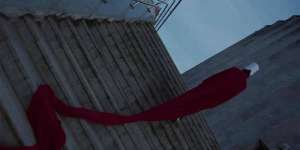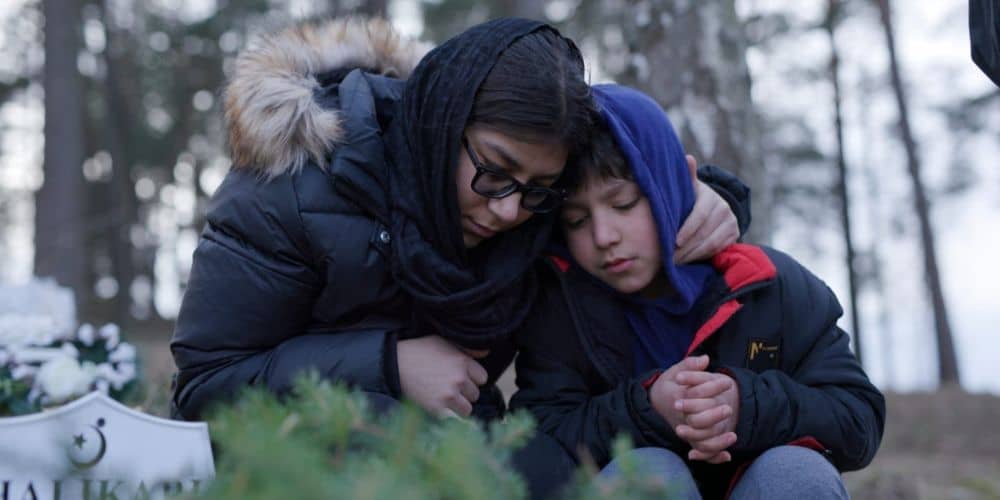
In a slow-moving drone shot, thousands of white-barked birch trees lean canted and stock-still, cinematically emblematic of the stark and perilous Poland–Belarus border. The windswept woods bear witness to violence and despair, with a worn-out panda plushie and a pair of ripped jeans among the only remaining evidence of human passage. «Even now, when I see trees, I hear my mother’s voice,» says 16-year-old Runa of her parent who passed at the border. «I can’t forget it.»
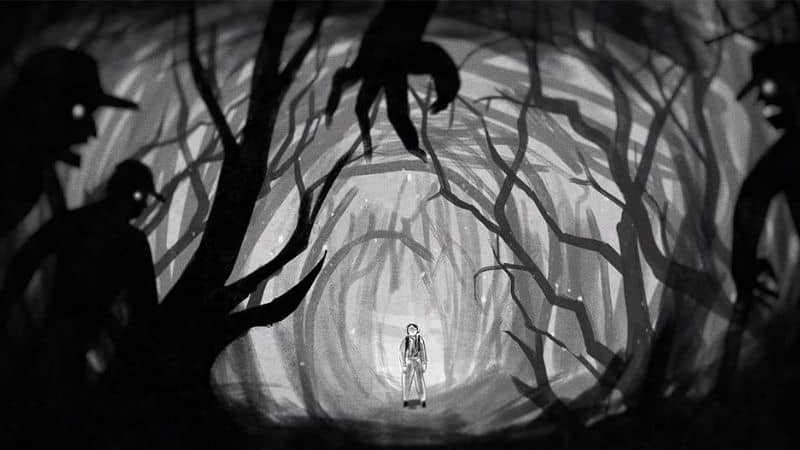
Writer-director Agnieszka Zwiefka centres this arbourous analogy in her latest documentary, Silent Trees, which just enjoyed its world premiere at #CPH:DOX in competition for the inaugural HUMAN:RIGHTS Award. The film follows an Iraqi Kurdish family seeking asylum in Poland: Runa, her four younger brothers (Ayham, Mizgeen, Ghareeb, and Mateen), and their father, Baravan. The filmmaker also brings Runa’s personal sketchbook to life in short black-and-white 2D animation sequences (by Łódź-based studio Yellow Tapir Films) that dramatise her most emotional moments.
Zwiefka’s fourth film is a fitting follow-up to two of her other works, which also feature individuals from stateless nations, including a #Roma girl in The Queen of Silence (2014) and Sri Lankan #Tamil women in Scars (2020).
The EU border, redux
Silent Trees first explains how thousands of refugees became trapped in limbo at Poland (European Union)–Belarus border after the latter’s regime, headed by #Alexander Lukashenko#, used them as pawns in a game of geopolitical chess. The film plays as a documentary counterpoint to Agnieszka Holland’s Green Border, which fictionalises encounters at the eponymous boundary. Lidia Duda’s Forest, which just secured the Silver Alexander at Thessaloniki, shines another light on the fraught crossing through the eyes of a Polish family living at the border.
Beginning in mid-2021, the autocratic president Lukashenko encouraged migrants to use the country as a crossing point to enter the EU, whose authorities perceived this as his attempt to unsettle the union. Poland’s right-wing government hardened its border controls in response to Lukashenko’s move, with up to 15,000 soldiers deployed at checkpoints through late 2021. Clashes between migrants and both state authorities were prevalent, although the mass attempts to cross began to slow in November 2021. In January 2022, Poland began erecting a border wall in response to the crisis. In August 2023, rumblings of further #migration attempts led to Poland announcing 10,000 more soldiers deployed.
Silent Trees joins an oeuvre that confronts the reality—and hypocrisy—behind migrants from the #Global South# seeking to enter the EU. But Zwiefka’s approach is balanced: Just as she captures train station announcements advertising immediate help for Ukrainian refugees, she also shows how Runa’s family amplifies the direness of their situation back in #Kurdistan to strengthen their asylum case. Embedded within the film is a strong pathos appeal to EU viewers, many of whom may side with the state in matters of migration.
Embedded within the film is a strong pathos appeal to EU viewers, many of whom may side with the state in matters of migration.
A story of asylum
The director draws on a panoply of conflict-related cinematic parallels to create Silent Trees. The animated portions evoke Jonas Poher Rasmussen’s Flee (2021), especially a sequence of refugees also traversing a treacherous forest. An ecstatic scene at a playground carousel is reminiscent of a similar moment in Daniel Asadi Faezi and Mila Zhluktenko’s short film Waking Up in Silence (2023), which depicts Ukrainian refugees in Germany.
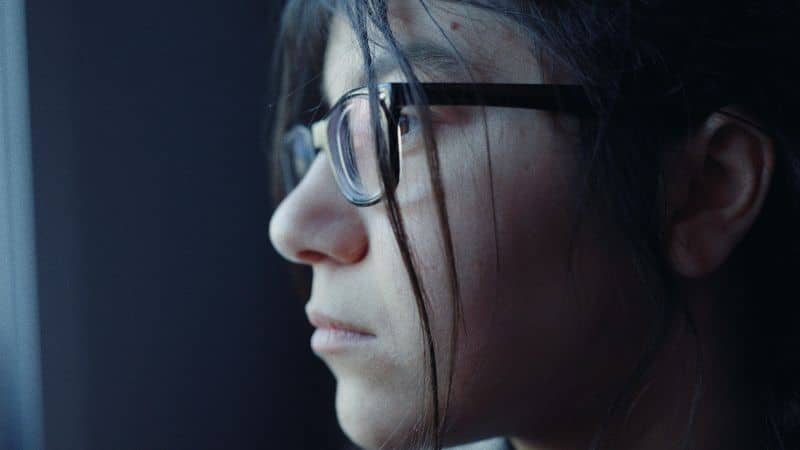
Through an initially clunky exposition, viewers learn that Runa’s mother, Avin, suffered from hypothermia at the border and miscarried, later passing away at a nearby hospital. Runa faces a heavy burden from her father, who turns to her to communicate in Polish and English on his behalf. DoP Kacper Czubak captures the teen lost in thought or inscrutably monitoring her brothers’ hard-earned happiness. Only in small moments of joy with her loved ones do we see the full extent of her exuberance. She aspires to become a lawyer, which is a harsh bit of irony in a sociolegal system that deigns to protect them at all.
A refugee «crisis»?
Sometimes, the film fails to distinguish itself from other so-called refugee documentaries, but Runa’s story also acts as a synecdoche for countless others across the world. This quality does not detract from the film’s careful equilibrium between deep sorrow and fleeting joy, with Zwiefka creating an empathetic bond between the audience and her subjects very early on. Niklas Paschburg’s gentle piano and strings score complements the family’s journey without intrusion or melodrama.
After it finds its footing, Silent Trees reveals itself as an accomplished documentary. In contrast with the confining forest, the most striking are familial moments captured warmly by Czubak at the freeing Polish seaside. Baravan notes that his children have the luxury of playing safely in the ocean while others are stuck on boats. Zwiefka very purposefully suggests that Runa’s family is an exception to the rule; not everyone is so lucky.