In his biographical novel Limonov and the film based on it by Kirill Serebrennikov, Emmanuel Carrère (also a co-scriptwriter of the film) throws out the anecdotal statement that when the Soviet Union collapsed, only two people were unhappy – Eduard Limonov and his mother, Hélène Carrère d’Encausse, the great political historian specialised in Russian history. But Carrère must have missed something, because in Soap Fever, Inka Achté’s bitter-sweet documentary, we learn about thousands of Finland’s citizens who were unhappy too, as many Finns were trading and working with their mighty neighbour. Hence, the infamous «end of the era» inevitably resonated with serious turmoil and recession in the next-door Nordic country as well.
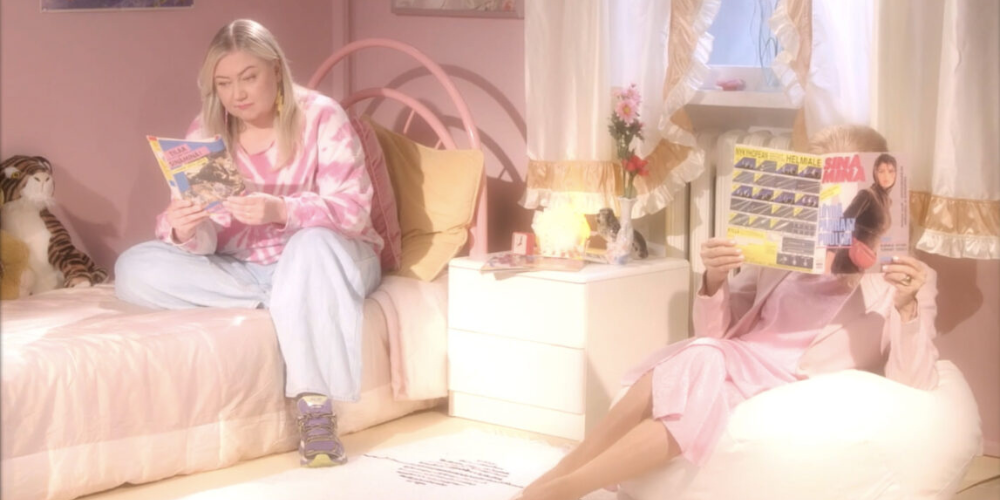
Inka Achté conceives the plot in her very own poignant family memories of that period, but paradoxically, filters it through a pink lens, as she chooses to situate these private and shared traumatic experiences against the dominating media background of the time – the all-encompassing mania surrounding the never-ending US TV soap opera The Bold and the Beautiful. «In the 1990s in Finland, 10 boys were named Ridge or Thorne and over 40 girls were named Brooke, despite the pronunciation challenges,» is the hilarious opening line of the film, hinting at the widespread TV hysteria that had swept through audiences, and further ushering the viewer into a candy-pink boudoir, as if lifted straight from the intimate dreams of some Barbie. Where on Finnish soil do the Soviet Union and The Bold and the Beautiful meet? Well, in the gaping vacuum left by the collapse of one utopia and its rapid-fire replacement by another.
Pink glasses for the masses
The end of the Soviet Union immediately reverberated beyond the taiga: factories closing down, 100 thousand unemployed young people, and a situation so desperate that women were seriously advised by social services to consider job offers at topless bars. However, devoted The Bold and the Beautiful fans, such as the interviewed Ansku, Jussi, and Hanna, who were teenagers at the time, hardly remember any recession. On long, cold Finnish evenings – probably also hungry ones for many – the TV show acts like a life-saving, numbing shot. Between five and six, when the next episode airs, everyone switches off their phones and pulls the blinds, diving headfirst into the glamorous world of the rich as if the bleak grind of their own daily lives ceases to exist for a while. The climax arrives when a clever entrepreneur hatches the brilliant idea of bringing the series’ stars to Finland, not just to reassure Finns that they haven’t been completely forgotten at the end of the world, but also to plant a small, original sprout of the American dream on native soil. Meanwhile, as soap-opera fantasies of luxury and indulgence daily anaesthetise the nation, a referendum on joining the EU is quietly underway, and Finland becomes the 15th member state in 1995, heralding a major shift in its post-Cold War foreign policy and embracing Euro-Atlantic values long before joining NATO in 2023. Yet the clash between the glossy reality promoted on screen and the bleak mundanity of towns like Oulu, for instance, where our characters live, persisted.

Closer to the truth in the fragments
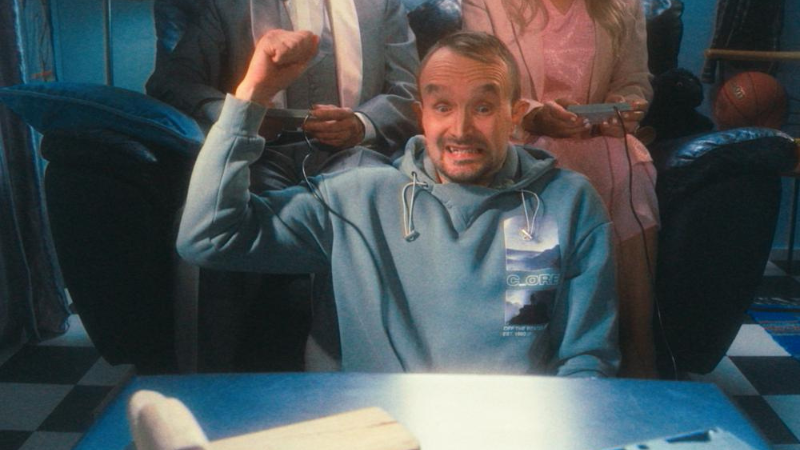
Moving between intimate interviews with the three devoted fans, who recount their emotions and personal experiences; her own memories of a teenage life overshadowed by the mental struggles of her father, disoriented by the crisis; and the wider picture of a grey, crisis-ridden everyday life that cried out for a counterpoint, however illusory, Inka Achté deftly assembles a puzzle of several motifs, whose seemingly disparate pieces gradually click into place within a solid, multi-layered narrative. Moreover, she employs a cinematic language that weaves together collective and personal archives: show excerpts, their reenactments in a contemporary reality program, documentary reportage, stop-motion, and drawn animation. These elements are assembled into a colourful, sharply edited collage whose seemingly disparate fragments gradually coalesce into a cohesive aesthetic – an approach that mirrors the harmoniously patchworked nature of the film’s versatile content.
When viewed in full scope, Soap Fever also reflects the coming-of-age loneliness and confusion, both in private terms, referring to the teenage years, full of hesitations, and in socio-political terms, addressing a country in transition, full of controversies. Beyond her intuitively thorough analysis of how seemingly harmless entertainment seeps into public opinion, private lives, and people’s grasp on reality, Inka Achté also shines a spotlight on a little-known local episode – a small but significant footnote in Europe’s recent history. As if the film quietly reminds us, with wry precision, that the truth, in all its subtleties, lives in the details.