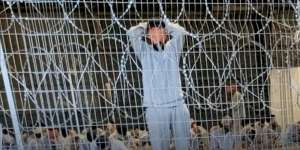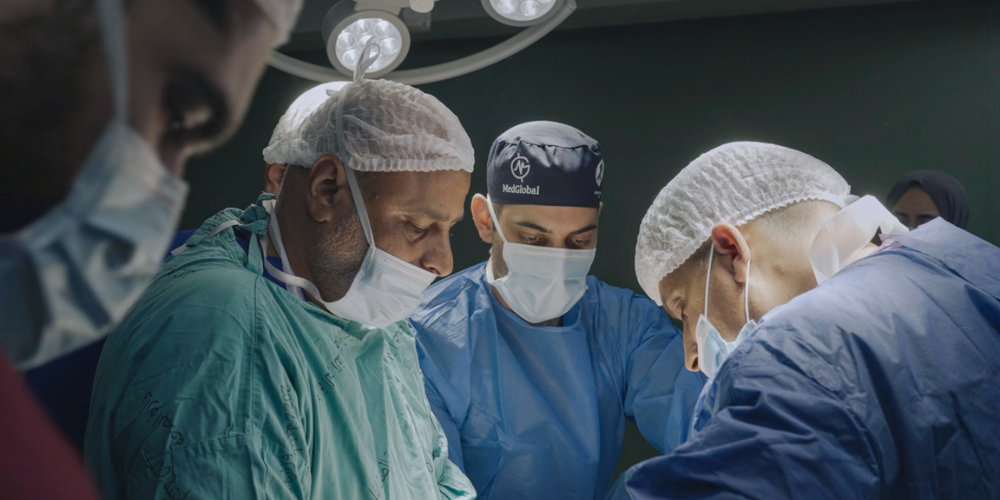
In the expanding field of documentaries about Gaza, the festival circuit has already yielded a number of films that refuse the comfort of forgetfulness. From archival testimonies of a long history of occupation to phone-shot evidentiary footage captured in the midst of annihilation, these works seek to bear witness and to counter a global media rhetoric that withholds full legibility, and therefore empathy, from those whose lives have been rendered precarious. American Doctor, the new documentary that first made an impression at its world premiere at Sundance and is now screening at CPH:DOX and Movies That Matter, offers another unflinching view of the war in Gaza. In her debut feature, Poh Si Teng portrays three American doctors whose courage lies as much in saving lives under inhumane conditions as in carrying what they witnessed into a political sphere unwilling to hear it. American Doctor is a fiercely sobering film, unwavering in its insistence that these truths be neither softened nor obscured.
An American
Within this influx of Gaza documentaries, an American Doctor arrives with a particular urgency, owing as much to the distinctiveness of its perspective as to the identities and bravery of those who embody it. Those three heroic Americans are: Dr Feroze Sidhwa, a trauma surgeon from California whose Zoroastrian family emigrated from Pakistan; Dr Mark Perlmutter, a Jewish orthopaedic surgeon based in North Carolina; and Dr Thaer Ahmad, a Palestinian-American ER specialist from Chicago. Distinct in background and faith, they are united by more than medical commitment or by the almost miraculous preservation of moral clarity amid total desensitisation. What binds them most is their unambiguous Americanness, which directly contradicts the governmental stance.
Armed with firsthand testimony and visceral footage from the epicentre of hell, American Doctor is most powerful in its mediation through an American prism. Fluidly moving between the periods before and after the ceasefire—and underscoring how little the latter has altered—the film unites Gaza’s hospitals and American cities within a single diegetic space of unnerving proximity, exposing the dimensions of U.S. responsibility into unforgiving focus. The film does not miss the chance to foreground the most obvious facts of U.S. implication — the taxes that fund the war and the bombs and missiles supplied by its military — but it also traces another, more nuanced layer: the state’s responsibility toward its own citizens. When the doctors return from a humanitarian mission, not merely traumatised but burdened with witness, they are afforded little space to make it impactful. Visiting Senate offices, they encounter a stark display of selective empathy, crystallised in the poster of Israeli hostages and in the hollow civility of closed-door meetings. Their testimony, however, finds a receptive hearing among pro-Palestinian communities in the United States, where solidarity takes the form of a shared grief closer to what they encountered in Gaza. There, they also find a shared sense of oppressed identity that, as one of the doctors suggests, continues to complicate their place within American life. And this is where American Doctor resonates most broadly, with those who experience a profound estrangement between their own political conscience and the actions of their governments across contemporary wars.
At the very outset, ‘American Doctor’ stages its own ethical manifesto.
Genocide, uncensored
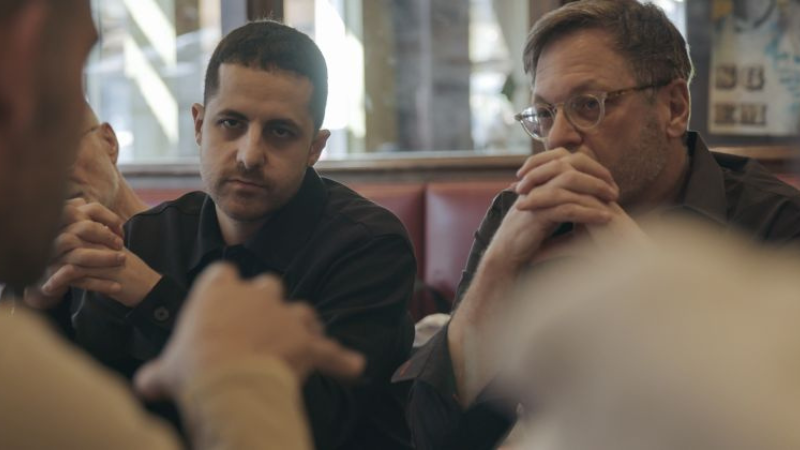
At the very outset, American Doctor stages its own ethical manifesto. Seated at a table, looking through images on his laptop, Dr Perlmutter responds to the director’s suggestion that some of them might be blurred or excluded with an admonition that lands as both a challenge and a creed. Speaking of how Israel has already stripped its victims of dignity, he adds, «You have a responsibility, as I do, to tell the truth. You pixelate this, and that’s journalistic malpractice,» while turning his laptop toward the camera to reveal a photograph of six dead infants lying in a row on the floor.
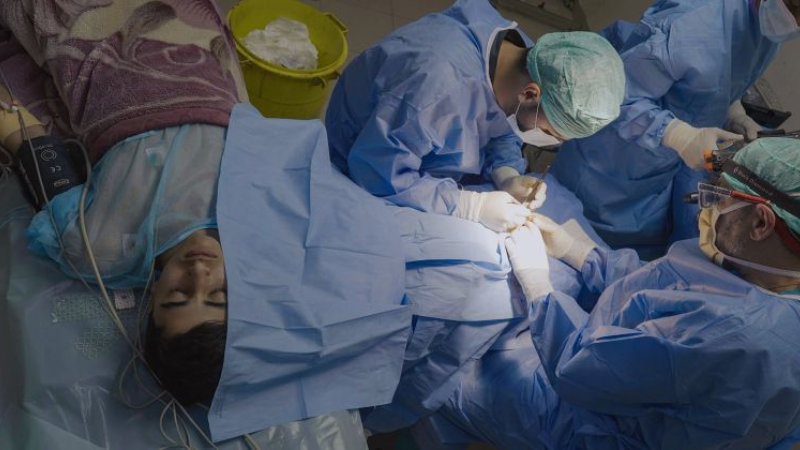
Perlmutter, a Jewish American doctor—whose father treated Holocaust victims—is unsparing in his language about Israeli violence. His refusal of censorship thus acquires something of the force of an ultimatum, addressed not only to the director but perhaps to documentary practice on Gaza as such. For Poh Si Teng, this concern is clearly not abstract. A Malaysian-born American whose career has oscillated between journalism and large-scale nonfiction production—from Al Jazeera English to contributions to The New York Times—she brings and expands that experience to her debut feature-length documentary. By placing this moment at the beginning of the film, she adopts Dr. Mark’s uncensored rhetoric as the essential ground for the film’s own uncompromising visual stance. Portraying the professional activities and activist efforts of the three protagonists, Teng intercuts brutal archival footage with a certain restraint. Such images are not overwhelmingly dominant in the film, yet the ones included are jolting in their unbearability. We see the immediate aftermath of hospital bombings, including the concentration on dead children’s faces, before the film cuts back to emergency rooms, where doctors stitch together the limbs of those still breathing, sometimes returning to work immediately after a second strike. These scenes also expose the conditions in which this medical work unfolds: shortages of antibiotics and medical equipment— both largely smuggled past IDF control—corridors crowded with crying families, and doctors working beside colleagues who have themselves lost loved ones.
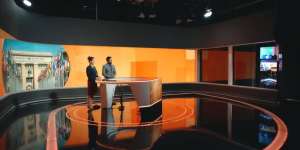
But the doctors’ work in surgery demands equal precision and patience once they speak to the media. Since foreign journalists are barred from entering Gaza, they have no choice but to fight on two fronts at once: for human life, and for that life or even death, to receive the visibility and justice otherwise denied. Through parallel editing, the film interweaves these two struggles, cutting between Zoom interviews with international television and graphic footage whose individual horrors become morally debilitating in their accumulation. Yet for all its loyalty to the uncensored stance of its protagonists, the film does not always match the restraint they bring to public speech. American Doctor carries both the familiar impulse of a debut feature and the tension to transform into a political tool. At times, it overstates what the material could bear on its own, whether in the music that intensifies moments already saturated with grief or in the repeated spoken comparisons with Ukraine, which feel less illuminating than a strained effort to weigh one catastrophe against another. Nevertheless, Teng has made a bold and sobering film, one whose embrace of a radical documentary tactic leaves behind something essentially instructive.
On hospital Shellings
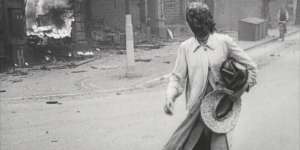
What American Doctor offers, moreover, is an important contribution to a body of films that reflect on hospital bombings. More precisely, on the conditional nature of humanitarian protection under international law. In war zones, hospitals are notoriously recast by belligerents as spaces that may have forfeited their protected status, whether by allegedly sheltering combatants, concealing weapons, or standing in dangerous proximity to military targets. Under such a logic, the hospital ceases to appear as an inviolable medical space and is instead absorbed into the categories of war. Hospitals are legally protected as sites of care, yet that protection remains vulnerable to suspension through the very legal and military arguments meant to regulate warfare. In this sense, American Doctor becomes a radical instance of this structure. Though even as the IDF repeatedly reinterprets Gaza’s hospitals through the language of military «necessity» and strategic value, the humanitarian mission they house endures regardless.