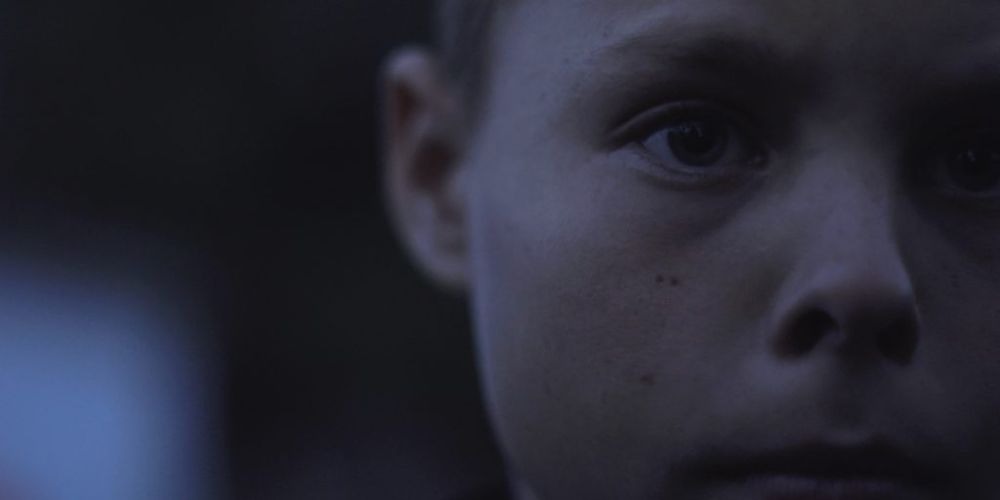
The confusion and alarm are clear as brief excerpts from phone calls to emergency services in Ukraine in the early morning of 24 February 2022, are heard against the placid background of a misty pond.
«I can hear loud explosions, and there are flashes of light in the sky – can you tell me what’s going on?»
«We have no information,» a laconic voice says. «Stay indoors or go to a basement or other shelter.»
«These explosions – what do they mean? Is it war?»
«It looks like that, yes» a resigned voice replies.
This is how wars begin. The explosions, firing, and alarms have not stopped for nearly 1,000 days since.
Ordinary people
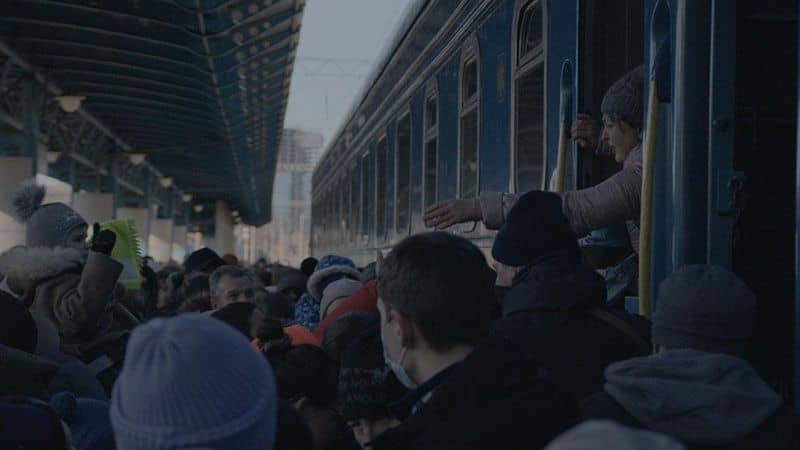
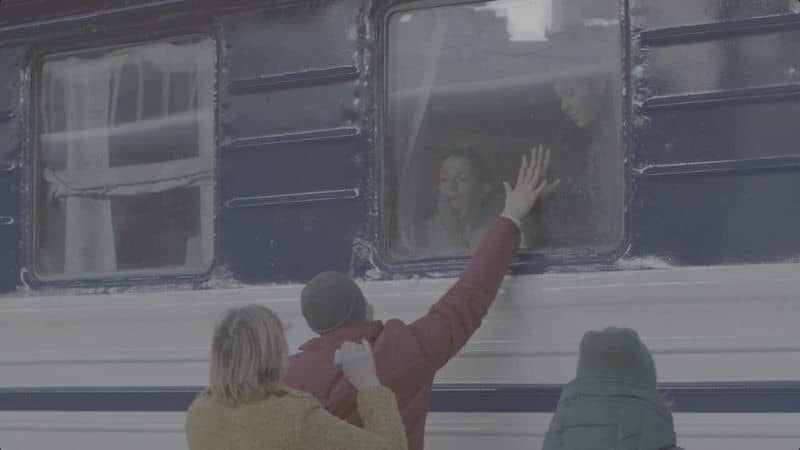
Olha Zhurba seeks to tell the story of the war in Ukraine through the eyes of ordinary people. There is no need for narration here. The scenes of crowds desperately trying to enter evacuation trains from #Kyiv in February 2022 speak for themselves. Titles on the screen must mutely give a date, location, and distance from the front line. That February, it was just a few kilometres away. In other scenes, a couple of dozen drivers go back and forth to #Mariupol to rescue children, women and the elderly.
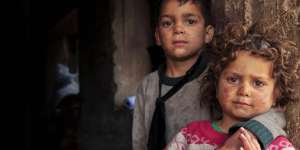
Zhurba’s camera comes close to people, and the tears and strain on their faces are clear. The wreckage of #war is everywhere. In a village that withstood nine months of Russian occupation, young boys talk about the violence and threats that became commonplace.
«They shot my father in the foot and took him away. When he came back, he was still bloodied and bruised. I shouted at the Russians, and the officer said to be thankful he was still alive – he could just as easily killed him.»
The boys play war with homemade rifles, loading their ‘machine guns’ with real ammo clips, a discarded Russian steel helmet serving as a container for bullets.
In another formerly occupied village, the dead are exhumed for a #war crimes# investigation. A group of men struggle to lift the body of a woman wrapped in a carpet from the wet clay. When a Russian tank drove across her garden, churning up her flower beds, she ran outside to protest and was shot down on the spot by automatic fire.
Despite the horror, every scene is filmed with an eye to beauty; the shots are perfectly composed.
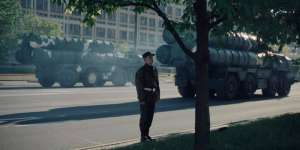
There are more audio clips from calls to the emergency services…. A convoy of Russian military vehicles is approaching. What should be done? There are bodies lying in the fields. Could they be booby-trapped?
Zhurba’s camera comes close to people, and the tears and strain on their faces are clear.
A Dream-like quality
The film unfolds with a dream-like quality, a living nightmare that continues for Ukraine.
A single truck carrying a flag-draped coffin winds through the snowy hills of western Ukraine, far from the war. Villagers kneel as it slowly passes by before reaching its destination, a cemetery where the coffin will join dozens of other war graves. A woman laments the loss of her man.
In #Dnipro, morticians examine decomposing corpses, the camera discretely avoiding the remains. Personal items – a crucifix on a chain, a watch – are taken. They may help identify the dead. In the morgue’s front office, relatives of the dead face the truth. The pathetic detritus of life – a cheap watch, a corporal’s chevrons, some photographs, identify a mother’s son and a young woman’s husband.
This is what war is all about.
Hope
But the director believes in hope: young men at a specialist prosthetics centre learn to walk again, having lost one or both legs. They are still young and have their lives ahead of them.
At a secondary school in western Ukraine, teenagers are asked to imagine the future. They talk of a united country, one with open borders and no corruption. They insist they are allowed to have hope, joy and fun. Even though death has taken up residence in their country.
A final scene, shot at a school in central Russia thousands of kilometres from the frontline, showing the children marching military-style and singing songs that glorify war is superfluous. There’s no need for the contrast.
Other than this, Zhurba’s film is confident and self-contained.