Technologies alter our ways of living, often coming with profound socio-political consequences. They have become the «shaping tools» of society’s ideals and aspirations, transforming nearly all sectors and spheres of life, as noted in the European Commission’s ‘Technological Change and Society’ research and innovation literature review. However, a leap forward in technology may not always advance broader social benefit. This debate is particularly pertinent amid rising ethical issues of new and emerging technologies and the soaring influence of Big Tech over the public discourse and democratic processes, as they control the critical digital infrastructure and information ecosystems worldwide.
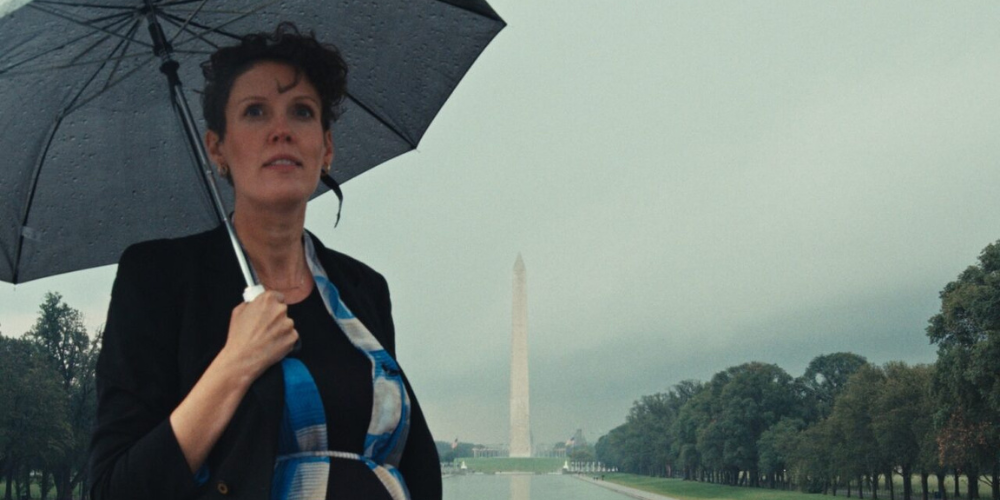
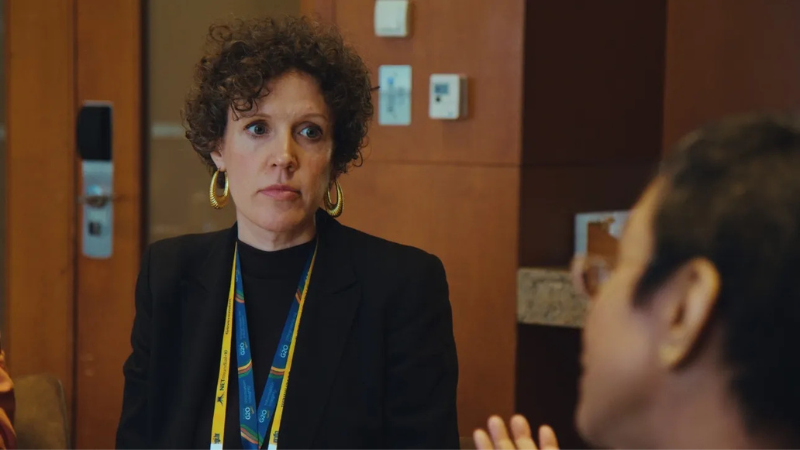
Recognising the significant pressure Big Tech poses on the democratic rule of law and global geopolitics, Denmark launched the pioneering technological diplomacy initiative, or TechPlomacy, in 2017, «elevating technology and digitalisation» to a foreign policy priority, with the team stationed in Copenhagen and Silicon Valley to engage in direct dialogue with the tech companies. Representing the Danish government with a global mandate, Anne Marie Engtoft Meldgaard, the country’s appointed Tech Ambassador, has spearheaded this initiative and is at the centre of Susanne Kovács’ (It Takes a Family) eponymous documentary Techplomacy, which world-premiered in March.
Shot across the world, from Palo Alto to Copenhagen to the UN Office in Geneva to G20 in São Paulo, the film documents the new frontier of diplomacy as nations face challenges emanating from Big Tech. The camera follows the ambassador from her early days in office in 2020, trailing her team for five years as they brainstorm strategies, join negotiations, and meet with Big Tech figures, such as then Meta’s President for Global Affairs Nick Clegg, and head of Government Affairs and Public Policy at Google Karan Bhatia, among others.
Digital Wild West
Deploying tried-and-true documentary techniques, the film relies on the ambassador’s interviews and first-hand accounts to drive the story forward. It also features interviews with Maria Ressa (profiled in Ramona S. Diaz’s A Thousand Cuts) and Dr Imran Rashid, a Danish medical doctor, behind the local citizens’ proposal, which ties in different aspects of this increasingly urgent conversation, such as the weaponisation of social media, and the well-being and safety of children and youths in online environments. Though the film doesn’t delve into Ressa or Rashid’s personal stories, their insights prove useful in this discussion. A crusading journalist, CEO of news site Rappler, and Nobel laureate, Ressa is known for her critical reporting on Philippine President Rodrigo Duterte’s brutal anti-drug campaign and human rights abuses. She has been the target of sustained online violence, fuelled by Duterte’s public condemnation of her, with the torrent of social media attacks creating an «enabling environment» for her persecution and prosecution, and the platforms remaining «the vectors [facilitating] these attacks,» as argued by the International Center for Journalists (ICFJ) following their 2021 forensic study (not mentioned in the film). Meanwhile, Rashid put forward the citizens’ petition, calling for protection of children and youths from the «commercial exploitation» of tech companies that use algorithms, data collection, and manipulative design to their detriment (beyond the bounds of the film, this subject has recently been investigated by the Dutch advocacy group Bits of Freedom, exploring how design on social media and e-commerce platforms influences user choices).
The film tells the story non-chronologically, focusing on the ambassador’s activities over five years. This approach perhaps reflects the nature of this unceasing game of catch-up with rapid tech change. For instance, in 2022, just as the EU was rolling out its first major regulatory package, Big Tech «leapfrogged» it with the public release of Generative AI (particularly, OpenAI’s ChatGPT), Ressa remarks in the film. Among the pieces of legislation adopted in 2022 was the Digital Services Act (DSA), «the new sheriff in town» in the digital Wild West, as the European Parliament’s rapporteur on the DSA, Christel Schaldemose, put it, which aimed to enforce accountability, transparency, and content moderation of online platforms. The DSA was complemented by the Digital Markets Act (DMA), which sought to create a level playing field and establish rules for ‘gatekeepers’ in the digital sector. In 2024, the UN adopted the Global Digital Compact (GDC, negotiated among the 193 member states), offering a global framework for the governance of artificial intelligence and for upholding human rights online.
«These companies decided their growth is more important than unifying societies.»
Technology is political
The film offers a wealth of perspectives on the hopes and dangers of technology, which, while not unfamiliar to those informed on the discourse, propel a stimulating discussion. Positive aspects of technology’s role in sustaining democracy aren’t to be overlooked, as Google and Meta representatives unsurprisingly argue in the film, as they can empower citizens and promote inclusivity; however, polarisation, driven by the social media platform’s incentive structure, which centres on profit, does pose real threats in how public opinion is formed. These platforms typically use the so-called Friends-of-Friends (FoF) algorithm for growth, which creates echo chambers that amplify divisions, systematically eroding our capacity for nuanced thinking and empathy, Ressa explains, «[…] These companies decided their growth is more important than unifying societies,» and that «by design, these platforms divide because it makes them more money.» Elections and other democratic processes, fragile as they already are, are further jeopardised by an increased «pollution» in the information ecosystems, whether it is (AI-generated) disinformation, hate speech, or cyberbullying, as pointed out by Engtoft Meldgaard in a separate scene. Thus, safeguarding information integrity is vital and a pressing present concern.
The documentary also touches on another critical aspect: the challenges policymakers face in regulating these technologies. The legislative process is often outpaced by rapid tech developments. As in the case of social media players, especially those operating in the US, the regulatory efforts have also been hampered by the difficulty of subjecting the platforms to liability due to the freedom of speech arguments, which have raised concerns about the balance between protecting free speech as a cornerstone of democracy and preventing the spread of harmful content and disinformation, which can manipulate public opinion and ultimately impact democratic outcomes. There is also a debate of Big Tech’s tactics used to curb the regulation and legislation through the use of lobbying, economic power, and the weaponisation of their own platforms (the latter isn’t elaborated in the film but can be further read, for example, in a European Democracy Hub article or the ‘Big Tech Lobby Playbook’ series by the Centre for Research on Multinational Corporations, SOMO).
As the film draws to a close, Engtoft Meldgaard recalls Danish physicist Niels Bohr’s (who was part of the Manhattan Project) 1950 open letter to the UN, which warned of the «formidable means of destruction in the hands of man.» Today, humanity is facing another formidable force: new and emerging technologies, whose ramifications are particularly eerie in the face of AI or its hypothetical future form, Artificial General Intelligence (AGI), the «godlike,» inscrutable technology, which, as one says in the film, may have only existed in 2001: A Space Odyssey. Technology isn’t neutral, the tech ambassador reminds us, and its makers are political people whose beliefs and ambitions are baked into their creations, who «will have a say once it’s omnipresent in our lives and societies.» «That’s why tech diplomacy is vital,» she insists, as is the understanding of the inherent risks of technology, how it is developed and the values it holds. In doing so, it is crucial to move away from reactive measures and patchy rules, implemented only after technology causes harm and data is harvested and exploited for political or economic gain, toward Europe’s/one’s active role in the accountable creation of said technology, in alignment with democratic principles that place human beings and human rights as the focal point of our society and governance.