This, too, shall pass. Everything is ephemeral, and nothing lives forever. And yet, we humans are driven to strive to remember to record, to memorialise and to aspire to eternalise our lives and those of others.
Like Mesopotamian kings
It is all hopeless. Our civilisation will wither and die. Our monuments will disappear. Names from history, names from today, will become obscure like Mesopotamian kings. Who cares? No one, really. The Earth couldn’t care less, though it keeps a record in geological time, and nature lays down the tracks of the years in tree rings and sedimentary rocks. Even bat faeces retain biological and chemical records that can be read.
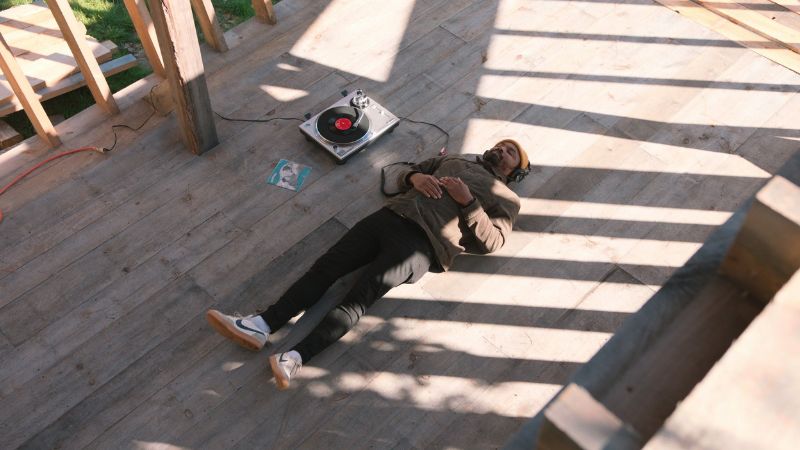
For those of us old enough, we have photograph albums and handwritten diaries from our teens—physical records that will last a century or so, perhaps. What of the digital records of the past few decades? They will disappear like the cloud they are stored on, degrade within the ageing circuitry of hard drives, or become inaccessible due to technological advances, like LPs without a record player.
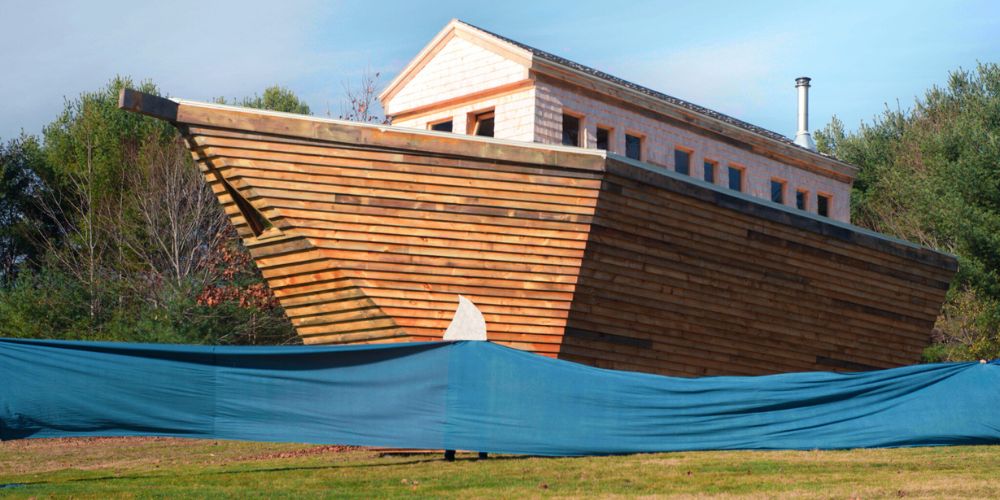
Ian Cheney’s fabulous The Arc of Oblivion looks at what it means to be alive and mortal and how we obsessively wish to record, leave our mark, and cry out to the world that we lived, breathed, loved, laughed, and cried…before we died.
It is a charming film, full of quirky New England idiosyncrasies from his native Maine, USA, where many of the cast of characters are drawn from. Something of a family project—Mom, Dad, brother and sister are all drawn in—it revolves around building an Ark in the family ‘backyard’ (a large tree-ringed meadow) as the director explores memory and records through animation, humour, ceramics, scientific endeavour and psychology to mention but a handful of his subjects.
Entertaining and profound, it speaks to our sometimes-uneasy relationship with the passing of the years. Who will remember us?
Everything is ephemeral, and nothing lives forever.
No headstones
My paternal grandfather lies in an unmarked pauper’s grave, and I have no idea where my great-grandfather lies. On my mother’s side, I have a leatherbound set of family photos from the 1880s. One of them is her great-grandfather. The little girl is «Great Aunt Bea.» I know nothing more.
From my more immediate family, what is there? A box of papers. A letter my mother’s father was sent by his father on his 21st birthday in 1910, the ten-shilling postal order it says it contains, long since cashed and spent. There are the letters my mother received as an evacuee during World War II. From my father, some diaries, photos, and a small figure of an Irishman, carved from dark oak and dating to the 19th century, he regarded as a talisman.
Those who have mainly passed have no headstones, and their created remains have been scattered to the winds and waters.
In my own life I have photo albums, diaries, an archive of newspaper stories, a couple of books published.
For tomorrow we may die…
When I met the great Soviet war photographer #Yevgeny Khaldei# in Moscow in 1996, he showed me the 35mm black-and-white negative of his most famous photo—the Red Flag flying over the #Reichstag in Berlin on 2 May 1945. Yes, and there is the frame where the Soviet censor scratched out the looted watches from the #Red Army# officer’s forearm. I have no photographic record of that meeting, which is now historic in its own way. But does it matter?
What will become of us? Who will remember us in 50 or 100 years’ time? Does any of it really matter?
Live your life. East, drink and be merry, for tomorrow we may die.