«You can have the rich life; I prefer the cheap one,» laughs a fisherman, clearly in no thrall to the allure of city ways as he sorts a net’s thrashing, a mound-high haul of octopi, fish, and crustaceans. He is a member of one of the few surviving communities of #Caiçara, traditional inhabitants of the southeastern coast of #Brazil’s Atlantic Forest, which stands only in remnants after massive deforestation for timber, cattle ranching, and the construction of cities over five centuries of colonisation.
Descended from #indigenous Tupinambá Indians, colonisers from Portugal, and escaped slaves from Africa, the Caiçara live on trapping animals, fishing, and sustainable agriculture, and face ever-greater pressure from real estate speculation and violent intervention at the hands of the government. A lack of access to education and the criminalisation of practices based on traditional knowledge (hunting is now illegal, and fishing is regulated by environmental agencies) is compounding the push to move into the cities. Beyond roads, they lived in relative isolation until recently, though Rio de Janeiro is only fifteen miles away. Brazilian director Emilia Mello sets out most of this factual information only at the end of her debut feature documentary No Kings, just before the credits roll. For most of the film, which has its world premiere at #CPH:DOX# in #Copenhagen, she prefers to simply immerse us in the rhythms of the life of the community.

Poetic drifts
No Kings is a dynamic and poetic drift of a portrait, that feels guided by the romance of the idea that there are free enclaves that still exist, holding on, in a planet of aggressive capitalist encroachment teetering on the verge of #environmental collapse#. There is no air of inevitable doom, as Mello gently alights on sparks of vitality and the innocence of simply being — a vision in which it is no coincidence that children, with their unfiltered sense of nowness, are prominent. This refusal to let the machinations of Brazil’s authorities determine any sense of narrative feels like a pointed act of resistance — the idea of «no kings» more insistently prescriptive and celebratory than it is an admonition of powerlessness.
«Come on Emilia, film us over here!» shouts one child, boisterously. As director, Mello is often in the frame, participating in work or play with her protagonists, or rushing to keep up with whatever activity is the day’s focus. It’s a formal decision that seems designed to emphasise the collaboratory nature of the film, the locals’ agency in the shape of the project, and the repudiation of any #colonialist mindset that might define – with patronising authority – the experience of the Caiçara without deference to their own voices.
No Kings is a dynamic and poetic drift of a portrait, that feels guided by the romance of the idea that there are free enclaves that still exist.
The blonde tomboy, vocal and headstrong, bosses Mello and her fellow children about with verve. A tiny powerhouse of alpha energy, she carries aloft her wooden rod to the sea’s rocks, where she’ll fish for creatures, as if it’s a sceptre or sword, seeming to thrive on the attention that the camera brings. She chides Mello for being «weak» in helping her hold a stick tight as she ties rope to it; the physical work that is part of daily life on the coast. The value of various skillsets and lifestyles as non-hierarchical and relative is a loose theme that reverberates through a film that is infused with a life-and-let-live philosophy. «In my blood, I am a fisherman,» a sea captain declares, not without adding, « but I think there are many ways to live. »
Incidental beauty
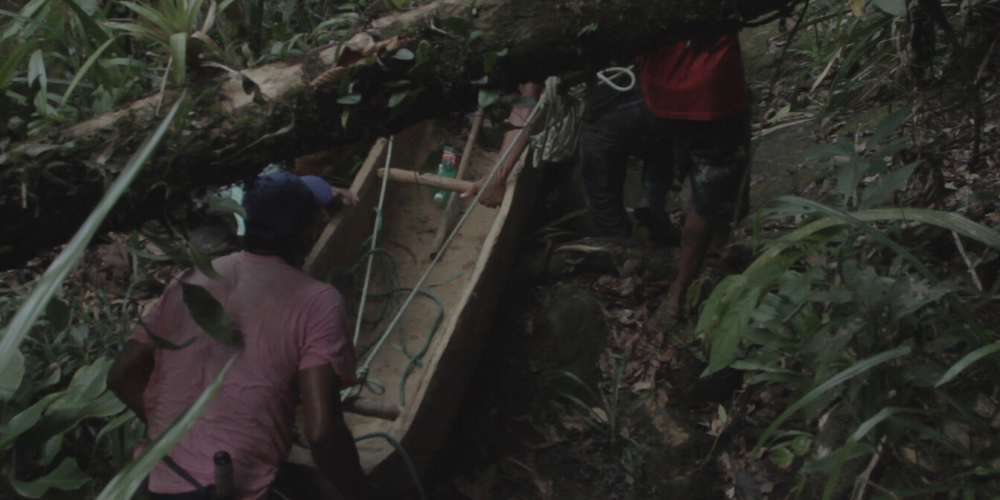
Day and night; pouring rain, wind, and blazing sun: the cycles of time and weather are loops through which day-to-day life plays out, and are a focus of rich, incidental beauty for the camera (underwater photography even plunges us into turquoise depths with the fish). The moon glows above, its phases providing a natural calendar. Alcohol and cocaine also figure in one fishing expedition, in a film that does not sink into being too worthy or fetishistic of life outside urban capitalism, but rather tries to mirror the air of easygoing liberty Mello finds. We follow in ragged, lively procession as a canoe hollowed out from a tree, a traditional craft that persists despite bureaucratic obstacles to sourcing the wood, is dragged through the forest. «I live without God or demons, I’m neutral, that’s it,» says a local who had dreamt of becoming a preacher, before altering his beliefs upon acquaintance with scientific theories. It suggests a kind of open, flexible adaptability, accepting of what comes and owning action around it, that may go some way to explaining the remarkable resilience of the Caiçara. How long it will last, under a Brazilian ruling class intent on making the rules for them, remains to be seen.