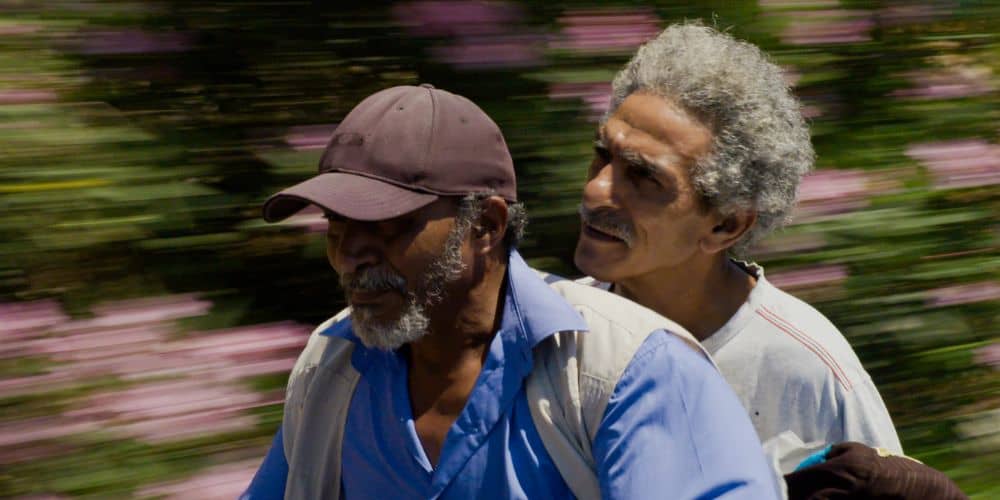
For a film that is essentially about the deep, generational #trauma that Palestinians have suffered – and continue to endure – since the #Nakba of 1948 when #Israel expelled so many of them from their ancestral land, Mathjis Poppe’s documentary The Jacket is surprisingly gentle.
The play
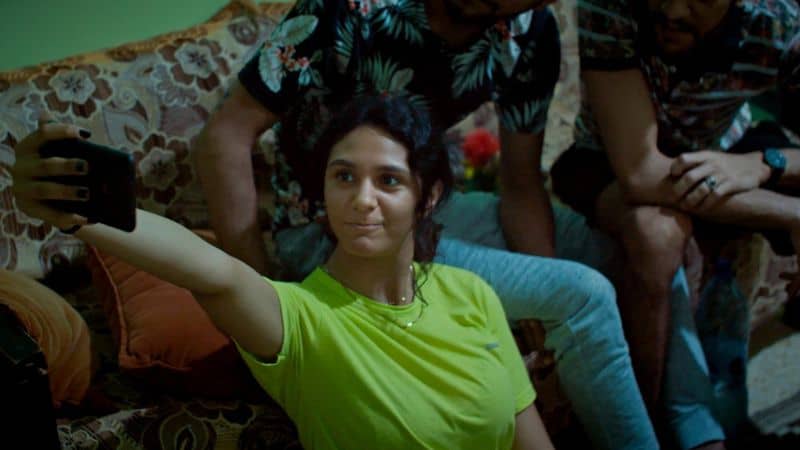
The film, majority funded by Belgium’s Flanders Audiovisual Fund, centres on the production of a play Palestinian #refugee Jamal Hindawi and his friends from the #Shatila refugee camp in #Beirut are staging.
The play – in which the eponymous piece of clothing is the central prop – uses a second-hand jacket that Jamal has decorated with multi-coloured patches to symbolise the influence of an array of different countries and movements on the Palestinians.
«Every shape and every colour shows everyone who interfered with the jacket,» Jamal tells his fellow members of his agitprop theatre group. «Everyone put their fingerprint on it.»
«Everyone put their fingerprint on it.»
Jamal and co.
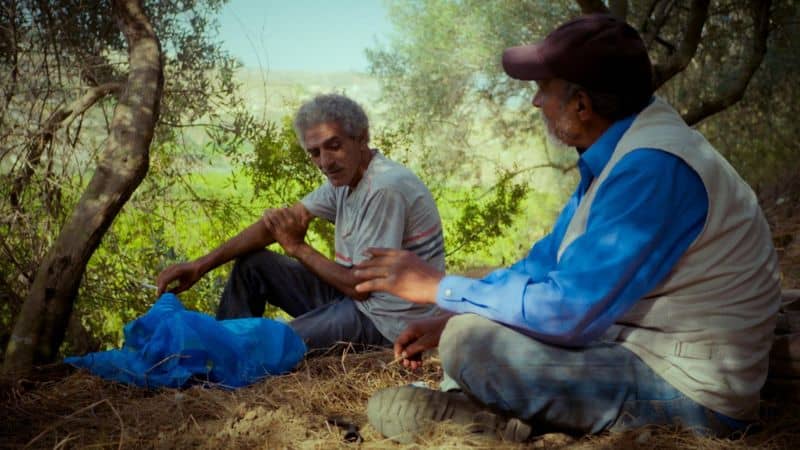
We move from the play to insights into Jamal’s life; the wiry, chain-smoking fifty-something father banters with his wife and children, talks to his eldest daughter by phone in far-away Britain, where she is studying at Bristol University and goes off into the hills around Beirut with his friend Zreik by motorbike to pick fragrant herbs and spices.
It is here that the jacket inadvertently goes missing – left by accident in the back of a minibus when the pair buy some scarce petrol from a van driver after running out and finding none at a local filling station.
Distraught that the loss of the jacket threatens the entire theatre project, Jamal immediately leaves in search of it. And thus, a wider picture of the #displacement not just of Palestinians in #Lebanon but also of other refugees is revealed: the taxi driver is Syrian, as are the workers Jamal encounters as he searches for the home of the van driver. The old lady who lives upstairs and speaks with a Syrian accent she never lost even after decades of marriage to a Lebanese man – they are all from somewhere else.
Even Jamal, who dreams of walking through Palestine, visiting every village and town, meeting all his fellow Palestinians, was not born there: he was born in Shatila to parents who fled the Nakba.
As a picture of the much-patched lives of refugees – the construction workers who dream of saving enough to leave for Iraq where wages are higher, or the widow who only stays in Beirut because her children are there – emerges, the hunt for the jacket remains elusive.
The van driver no longer lives in one place, and at his cousin’s, there is no answer. Perhaps his van is parked nearby, the old lady helpfully suggests. After pausing to talk to his absent daughter, Jamal sees a minibus. Peering through the window, he glimpses the plastic carrier bag in which he had left it when buying the gasoline. It, like the return to Palestine he had dreamt of, remains out of reach, behind a locked door, its image through the glass a taunting reminder of the reality of lives lived in limbo.
A statement film
The film’s release, at a time when the prospect of the return of Palestinians more recently driven out of the #West Bank# and #Gaza by war, grows more remote by the day, makes The Jacket an even more powerful statement on a tragedy to which so many governments in the West seem indifferent.