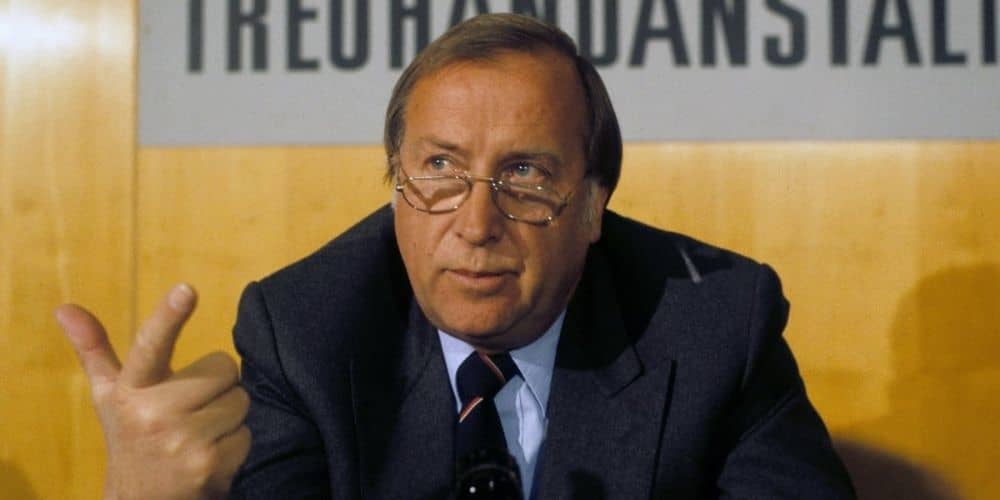
«Capitalism was to blame, but you can’t shoot #capitalism — otherwise someone would have done it a long time ago.» Lutz Taufer, a former member of the far-left militant group the Red Army Faction, gives his two-cents worth on the 1991 murder of controversial public figure Detlev Rohwedder. The killing is still shrouded in mystery three decades on and is the subject of new Netflix Original Documentary Series A Perfect Crime, the first for Germany. Nothing inflames the public imagination with conspiracy theories as much as an unsolved assassination, and numerous figures with a stake in the case and the socio-political turmoil surrounding it offer a range of explanations of what motivated it — and who pulled the trigger.
https://youtu.be/73kMqCPEr6c
Thrill, hope, disorientation, misery
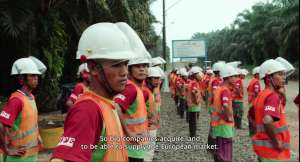
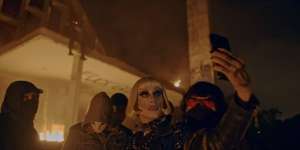
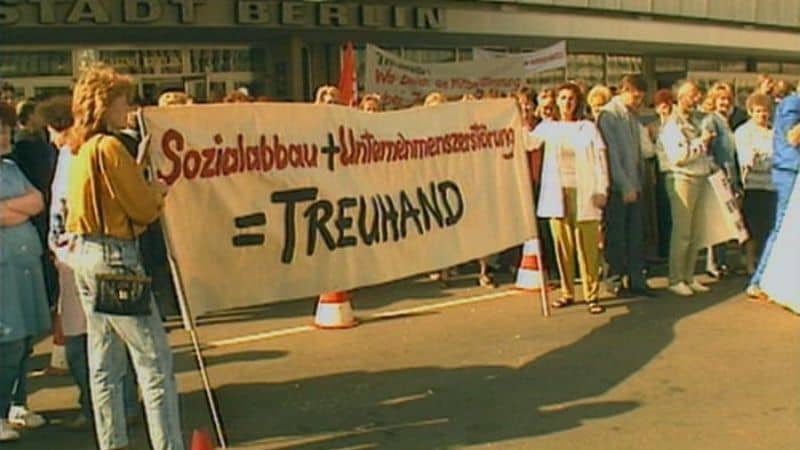
The slickly produced, four-part show (with episodes focused on different angles on Rohwedder as, variously, a «Martyr», «Capitalist», «Occupier,» and «Victim»), plays out like a mystery thriller, setting out its clues with murky, noir-tinged re-enactment and an eye for suspense to create a kind of whodunnit of conjecture. It’s an effective approach — but even more gripping is the astutely elaborated context. How did Rohwedder come to be the most hated «Wessi,» or West German, by «Ossis» in the East? Archival news clips and other footage from the start of the ‘90s give us a view into the strained socio-political fabric of this turbulent time of change to the structures and power dynamics of Germany; a time when the thrill and hope of reunification preached by the West manifested for a sizeable number of citizens as profound disorientation and jobless misery. The combustible polarisation carries a warning, should one wish to look for one, about the air of impending violence hanging over global politics and its vocal divisions today.
Nothing inflames the public imagination with conspiracy theories as much as an unsolved assassination
Rohwedder had been tasked by the Treuhand — an agency established by the government of the GDR — with privatising the East’s formerly state-owned companies. After forty years of division, some in the #GDR had hoped for a third way between #socialism and western capitalism, but it wasn’t the plan of those now wielding the authority. Advocates of swift privatisation noted that the economy of the GDR was on the brink of collapse, with oversized companies, intransigent staff, and products that were difficult to sell. But the lay-offs of millions of employees in state-owned enterprises, and the fact that no less than 94% of companies were eventually taken over by West German or international investors, plunged citizens of the East into a sense of desperation and disenfranchisement it was difficult to justify as anything above strategic corporate brutality. That was, at any rate, the view of the Red Army Faction, who claimed responsibility after Rohwedder was shot by a sniper through the second-floor window of his home. Despite escalating threats toward him and concerns raised by his wife about insufficient security measures, the window had not been bulletproofed. Along with three cartridge cases, a plastic chair, and a towel, a typewritten letter citing grievances, and bearing the RAF’s logo of a submachine-gun against a red star was found at the scene. A shooter was never identified. Was it a set-up?
Grudges
Doubts a third-generation RAF ever even existed, let alone carried out the killing, have persisted, with some believing it was used as a scapegoat and cover for other interests. The sniper operation was, after all, military-style rather than a crude attack, and lacked the hallmarks of the far-left group. Many suspect, instead, the #Stasi, the secret police of East Germany’s far-reaching surveillance state — and here the show delves into the continued influence of discredited power networks in German society. Nazis had crowded into the West as Germany was divided, not wanting to be caught by the Russians, and cloaked their past as they infiltrated institutions. Then, along with the next deep transformation, the old Stasi networks felt their relevance evaporate. Former Stasi commanders were working lowly jobs, or were unemployed, at the bottom of the social hierarchy. Many reinvented and adapted their skills of terrorisation, finding work as private security guards. With so many grudges in the air, among people trained at and skilled at keeping the upper hand through forceful intimidation, it wasn’t far-fetched to think that one could have gone as far as violent revenge. What’s more, several hundred millions of marks had disappeared into Stasi coffers, and with the GDR’s dissolution, the fear that Rohwedder might point to its whereabouts is assumed to have fuelled some sleepless nights. A middle way between ideologies; between those on power’s ascendant and those holding history’s losing hands, is a mere spectre in the background of the zealous struggles between this series’ acting forces. But a gentler politics must be possible, we’re implicitly reminded, in which our final lament is not that there just wasn’t enough bullet-proof glass to keep our detractors at bay.