Norwegian filmmaker Ellen Ugelstad’s ability to combine genres and challenge traditional production structures to explore the subtle interweaving between mental ‘illness’ and ‘health’, ‘sanity’ and ‘insanity’, care and treatment and the charged power dynamics underpinning these often threateningly vague words is complemented by her personal connection to the subject matter, given her experience as a caregiver for over 25 years.
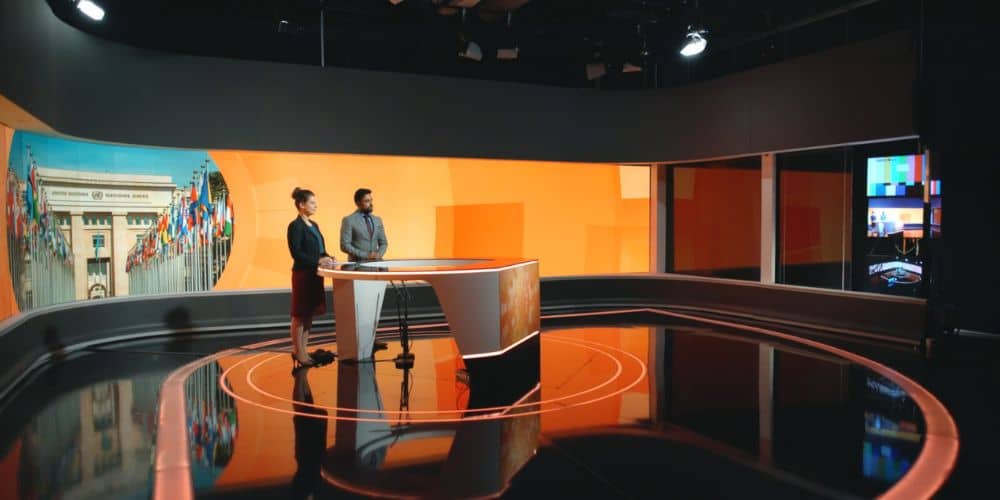
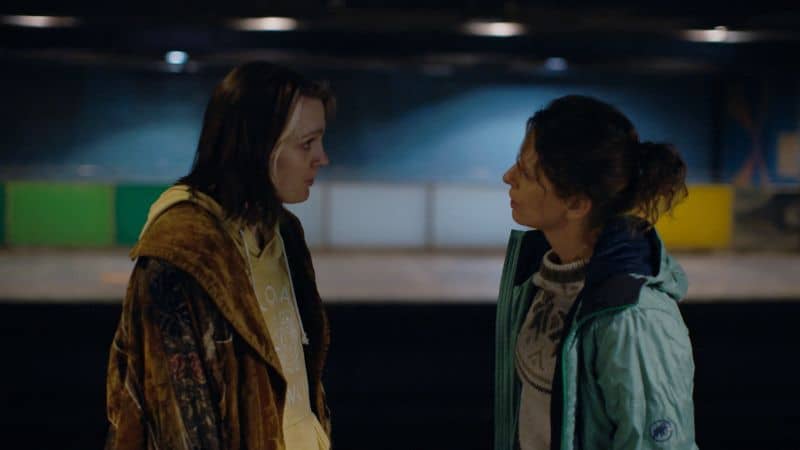
This finely tuned equilibrium is at the core of her latest effort, The Recovery Channel, titled after a fictionally constructed news channel for #mental health# aiming to shed light on the challenges related to modern psychiatric treatment in Norway. This central narrative is further intertwined with a multiplicity of factual perspectives and fictionalised stories, from the channel’s editorial team meetings to educational and historical sections to news anchor Randi’s life off-air, where she struggles to keep in contact with her sister Ylva, who will not accept help from the #healthcare system.
Between realism and fiction, truth and truthfulness
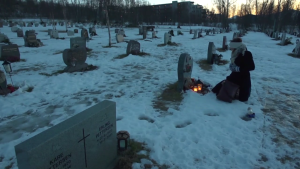
«This is a film, the images are from reality»: the multifacetedly blurred approach the film employs is immediately revealed by the director, who sets the scene by declaring her intentions of making a film about a made-up news channel sharing the truth on the coercive measures that both healthcare professionals and the state are allowed to use against patients with mental health issues. These include forced hospitalisation, forced medication and restraints, such as straps and physical violence, which are often used as preventive measures rather than «last resort» solutions. This «seamless and poetic transition between documentary and fiction» also helps situate the audience in this viewing deception whilst disclosing a painfully hidden reality, where fiction and fact commingle in a slow-burn, uncomfortable reveal.
By exploring specific cases, official reports, and the country’s history of mistreatment and conceal, Ugelstad subverts the traditional documentary structure, constantly challenging (and sometimes even joking about) the ethically tricky question of mental ‘balance’ in patients as well as the asymmetry in the power balance of the Norwegian healthcare system. By employing the Recovery as a channel solely aiming at presenting news about mental health, the film takes an extreme, wholistic and unflinching look at the subject matter, a human right constantly violated by lack of resources and training, outdated medical regulations and policies, and a general misconception, in a country where opting out of compulsory medication and the radical practices it entails is impossible. Testimonies from lawyers, experts, doctors, relatives and former patients reveal a backward system of coercive mechanisms that creates fear and terror among an already vulnerable group. These intimate and honest portraits provide us with a nuanced insight into a normally closed-off and taboo topic, taking us even closer to the people who have been deprived of their freedom and let their authentic yet ‘mediated’ voices and experiences emerge.
These include forced hospitalisation, forced medication and restraints, such as straps and physical violence, which are often used as preventive measures rather than «last resort» solutions.
Media-tic injustice
Part drama, part documentary and part participatory video experiment, The Recovery Channel is a hybrid meditation on the contradictions inherent to this unstable system and the attitude to justify its questionable actions. But it is also a reflection on the contested picture of the #media, playing with the often naive and nuanced approach of news aesthetics, commenting on their role, power and relevance in defining how we receive information about mental health, on its format, whose brevity hinders any possible in-depth examination of the topic, and on a view deemed «loud and prejudicial,» not driven by journalistic interest but dramatic reaction. In this way, the film functions as an allegory of how people can experience being dehumanised in the face of institutionalised and mediatic systems, depicting what it is like to be deprived not only of one’s own freedom but also of voice, self-image and credibility.
The Recovery Channel is a hybrid meditation on the contradictions inherent to this unstable system and the attitude to justify its questionable actions.
Calling out for a new future
Through its unique, personally rooted perspective and innovative approaches, Ugelstad’s filmmaking challenges current practices and aims to set the agenda and break boundaries, both thematically and cinematically. Blending the personal and the political while calling for a more all-encompassing view on mental health, the film uncovers the most painful truths about the outmoded use of coercion in Norwegian psychiatry as well as paving the way for a more humane version and truthful awareness of what mental health really is.
In the end, we are left facing a roaring cry for hope, a wake-up call, a very ‘unbalancedly’ clear statement asking for a change: «There is no health without mental health, and there is no mental health without human rights.» Are we ready to stand up for this?