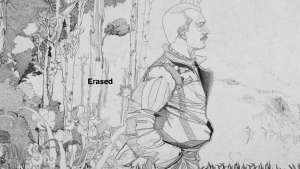

Around 3:20 on the afternoon of September 17, 2024, Mohammad Halawi’s young son asked his father to be taken to the bathroom. As he guided his son to the toilet, Halawi’s pager went off, and he pressed the screen and looked at it. «I could hear the sound of blood dripping on the floor from my eyes,» he tells the camera. Halawi fought on Lebanon’s national Thai boxing team. He was also a fighter in Hezbollah’s elite Radwan Force, ready, as he puts it, to defend his land, but now, he says, looking at the camera with sad eyes, he would have to spend the war in a hospital bed. More than 4,000 pagers exploded across Lebanon that afternoon, 346 days after 7 October, and some 800 walkie-talkies the next day.

The next morning’s New York Post front page read «BEEP BEEP, BOOM!»
The Trap, Al Jazeera’s two-part investigation, sets the blasts inside a forty-year war. Hezbollah grew out of Israel’s 1982 invasion and fought the eighteen-year occupation of the south that followed. Lebanese journalist Radwan Mortada, the film’s on-screen investigator, says Hezbollah settled the 2006 war «in its favor.» Israel’s Winograd Commission, as the film tells it, blamed intelligence: Israel could not get inside Hezbollah’s communications. Hezbollah opened fire on northern Israel on 8 October, 2023, in support of Gaza. By Israeli accounts, the cabinet heard the pager proposal three days later.
Behind the Curtain
Part One explains how a guerrilla army came to carry the bomb in its own pockets. A Hezbollah security investigator, himself wounded in the attack, describes Israel’s long campaign of recruitment, technical infiltration, surveillance and assassination. Hezbollah answered by walling itself off. Israeli security journalist Yossi Melman explains that it built its own telephone network, separate from Lebanon’s, with Iranian engineers. The investigator says it also «expanded its internal network and increased its use of pagers,» and in February 2024 Hassan Nasrallah ordered members to turn off their cell phones. A communications specialist says an enemy won’t think to monitor a pager «because it is so old. … It’s just like if you were to use carrier pigeons today.” Once the enemy learns your method, he adds, it can attack it.
Israel went in at the factory. By Israeli accounts, each of 5,000 rigged pagers carried six grams of PETN. A message arrived flagged as encrypted, and it took two buttons to read, so owners held their pagers in both hands. John Kiriakou, the former CIA officer who first publicly confirmed the agency’s waterboarding and later served prison time for a leak, believes the Israelis used a plastic explosive. Pagers beat bulkier walkie-talkies, he explains, because more people carried them, and the planners «wanted to kill as many people as possible.»
Accountability is harder to trace than the pagers.
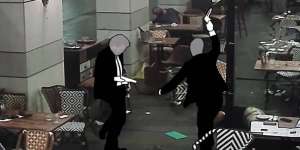
The film’s cast runs from Halawi to Mortada, Kiriakou, Melman, and Hungarian investigative journalist András Dezső, across Arabic, Hebrew, English, Hungarian, and Turkish, with steady subtitles. The closing credits note that the named Israeli officials were offered a chance to respond but did not return calls. The investigative work is solid; the packaging is weaker. AI-generated reconstructions of Hezbollah inspectors checking pagers and a distribution warehouse show what any viewer could picture unaided. Heavy drums and wailing amplify the emotion the scarred faces already carry and push the film toward sensation. Two nearly hour-long parts would have made one tighter film.
The toll over two days was at least 37 dead, two children among them, and more than 3,000 wounded, many in the eyes and hands. The Trap insists the plan was far bloodier: the pagers were meant to go off at the outbreak of full war, with Hezbollah mobilized, when «a single push of a button would kill 20,000 fighters.» But an elderly Hezbollah engineer named Jabril grew suspicious of the devices, and Netanyahu recounts learning that three had been sent to Iran for scanning. Mortada says Netanyahu «gave the order to detonate them before the opportunity was lost.» The film calls the result a showcase hiding «the failure of a larger operation.» Israel’s version, the documentary Paging Hezbollah, opens October 30 with Netanyahu and then-Mossad chief David Barnea on camera, and tells it as a triumph.
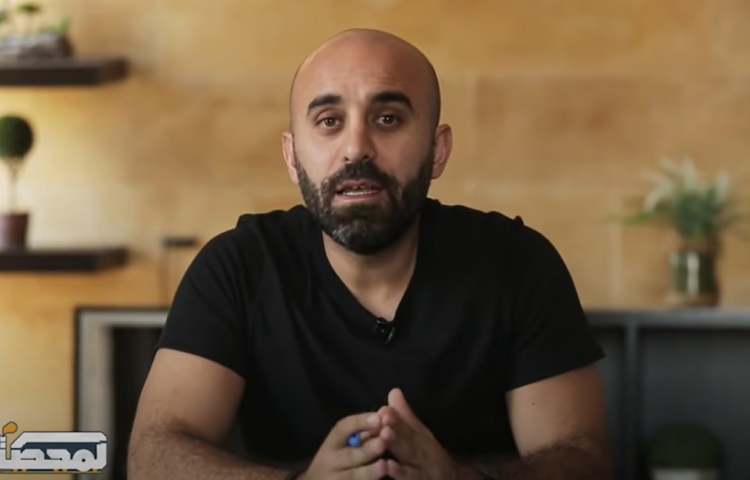
The Intelligence Race
Part Two follows the pagers backward. «On the surface, the pager explosion was … just the detonation of a small device,” Mortada says. «But beneath the surface, it showed how deeply Hezbollah had been compromised.» The trail starts at Gold Apollo in Taiwan, which licensed its brand to Budapest-based BAC Consulting. BAC’s chief executive, the Hungarian-Italian Cristiana Bársony-Arcidiacono, is the film’s most elusive figure. An old acquaintance calls her «an easy, very easy prey for anybody to be convinced to put a signature on something.» Mortada goes to Hungary to find her, but doesn’t. Dezső thinks Israel chose Hungary «because they preferred to do this in a friendly allied country.» From Budapest the trail runs through Bulgaria and Hong Kong, past people who vanished and identities invented for the job. Kiriakou notes that the explosives flew as air cargo: «There was a potential for thousands of … innocent people to be [accidentally] killed before these things ever made their way to Lebanon.»
Accountability is harder to trace than the pagers. Netanyahu confirmed Israel’s responsibility in November 2024. Families of the wounded sued Gold Apollo, the only company in the chain with a fixed address, and Taiwan’s prosecutors concluded that no Taiwanese firm or citizen was involved. UN officials tell the film that customary law and treaties Israel has signed prohibit booby traps that can harm civilians, and that any state complicit in the attack shares the responsibility. «Unless there are consequences when actors violate the law,» one official says, «we see that they will continue to do so.»
Kiriakou spends most of the film as a technician. Late in Part Two, he makes his one moral judgment, and he makes it from inside the trade. «There are rules in international espionage … that you have to abide by,» he says. «Even in the old days with the Soviet KGB … we always had a gentlemen’s agreement that you never, ever kill each other. And you never involve a family member, a wife, a child. Never.» Halawi’s son was at his side when the pager went off.
The film also reports that in 2007 the CIA tried to recruit Hezbollah’s procurement agent in Taiwan. He reported the approach, and his superior took that as proof of his loyalty. The episode shows the Taiwan channel was watched seventeen years before the attack. It proves nothing about 2024, and Washington denied any role, but an American president still ended up holding the trophy. In February 2025, Netanyahu gave Donald Trump a gold-plated pager inscribed «Press with both hands.» Trump reportedly answered, «That was a great operation.» A thriller starring two actors from Fauda is on its way, and its director says he was «in awe.» The Trap ends on Netanyahu’s boast to anyone carrying a cell phone: «You’re holding a piece of Israel right there.» The operation’s signature was a gift that goes off in the recipient’s hands. If I were Trump, I’d press with one.
The Trap, two parts, 2026, dir. directed by Lebanese investigative journalist Radwan Mortada streams free on Al Jazeera 360.