As a metaphor for life, the upheavals of the 20th century, and our own journey—inner and outer—Maciej Drygas’ majestic and beautiful Trains is hard to beat. The deserving best film winner of #IDFA, Trains is a compilation of black-and-white moving images from 45 films chosen after more than a hundred were viewed during the director’s extensive research. (His large team of researchers gets a well-deserved mention in the credits.)
This is a film that begs its viewers to let it all wash over, around, and through them. There is no dialogue—aside from the odd snatched conversation heard in the background—but the sound design, by Saulius Urbanavičius, with extracts from Pawel Szymański’s «Compartment 2, Car 7,» is simply spellbinding.
For the romantic
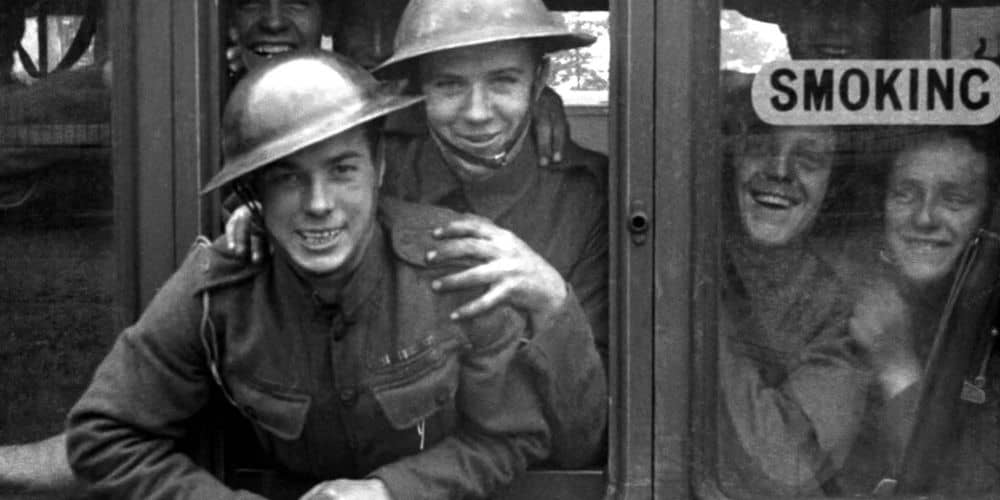
This is a journey for the true romantic, beginning with images of pre-First #World War# locomotive construction workshops before smoothly departing on time to capture the sheer joy of the age of steam and innocence. Rattling along through the unspoilt landscapes of early 20th century #Europe, accompanying day trippers to the seaside, the pace is seductively sedate. But we all know where trains at this time are eventually headed, and soon #war curses the continent with its ugly scars, and the coal-powered engines pull compartments full of smiling troops, or wagons laden with shells and heavy guns.
The speed with which trains enabled mobilisation during the Great War is well-known; such was the threat of the iron clads to rush troops to the front that imperial #Russia deliberately used a different railway gauge to slow down any potential attack by #Germany. (That gauge remains in use in Russia to this day, necessitating a change of bogies at Brest railway station in Belarus for trains going to and from Europe.) The pleasure of rail travel soon came to reflect the pain of war, as one of the few sequences that steps away from railways shows – with disfigured and maimed war veterans being measured up for early versions of plastic surgical masks, giving them back the noses, chins and ears lost to the bullets and mortars brought to the front by rail.
Still, the journey continues and one can hope that things get better – although an obscure quotation from #Franz Kafka# that opens the film – «There is plenty of hope. An infinite amount of hope. But not for us,» – suggests they may not. Again, for those with even a passing knowledge of history, we know what is coming.
This is a film that begs its viewers to let it all wash over, around, and through them.
Dark days coming
But before the dark days of the Nazis’ «Final Solution» and the ubiquitous use of train transports for Europe’s wretched Jews, queers, Roma, Red Army PoW’s and other so-called «undesirables,» we are treated to more scenes of peacetime wagons and carriages.
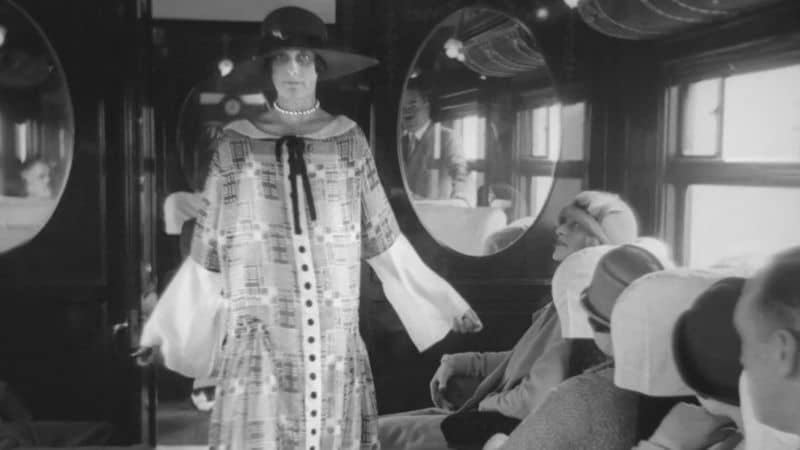
One of the true joys of Trains – where the director’s skills at matching disparate images from scores of films is seen at its best – is the intimacy with which we can join our long-dead ancestors as they go about their everyday lives a century or so ago. They mill about stations and platforms, tugging children by the hand, dressed in clothes rarely seen, even in charity shops – you’d probably need to go to a museum to see such fashions now. They chatter, drink, smoke, laugh and fool around – just like we do, only they are now nothing but passing shadows, flickering images of light and darkness on our screen. There is both a sadness and a comfort about this sense of communion with our forebears.
World War Two brings us the destructive terminus of railways; smiling #Wehrmacht officers settle into their comfortable compartments; a few scenes later and, we witness #SS soldiers, the ugly runes of their collar insignia visible, as they push people at gunpoint into cattle trucks. Trains become legitimate targets for bombing and strafing from the air; massive destruction is wrought throughout Europe’s rail termini. And then, as the Allied forces advance into Germany, the horrific and pathetic scenes of wagons filled with the corpses of #concentration camp# victims, literally reduced to rag and bone, greet horrified American troops.
Life goes on, and peace returns. There is work for Europe’s DPs (Displaced Persons), prisoners of war, and other survivors. The world turns, and nothing remains static. Cleaning up the damage and getting Europe moving again means rebuilding the railways.
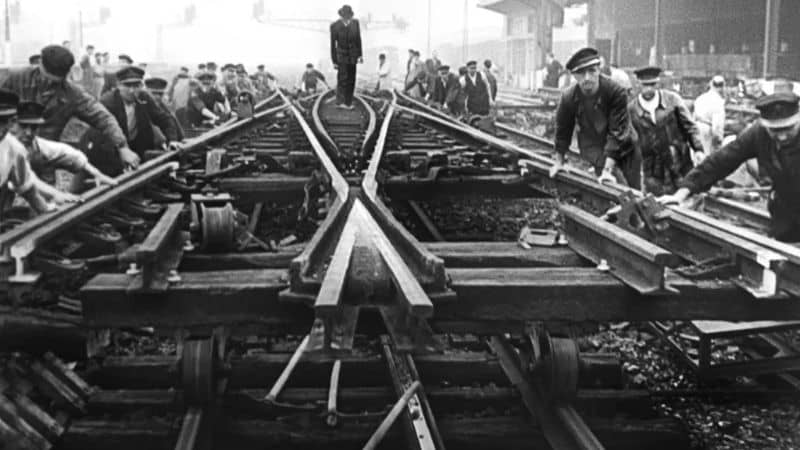
Post-war
The film shunts on at its pleasantly soporific pace; the post-war world of London’s Waterloo Station is, again, a great place to be a virtual people watcher. By now, it is the mid-to-late 1950s, perhaps the early ’60s. Older men still wear hats, as do older women – I sit up with a jolt, I’ve not seen a woman in a feather hat with such glasses since I was a child, and my grandmother dressed that way!
Again, the comfort of the familiar and the continuity of life shines through in this most humane film, despite the inhumanity it also shows.
There is no real end point; such a film could continue – though perhaps not beyond the age of steam for very long. Modern train travel has none of the romance of those times. And when Drygas does wrap up this gem of a film, he does so in a way that is so beautifully abstract that words simply cannot do it justice.
Go see the film yourself – you’ll see why.