War and #art have long been close partners, with victorious leaders often commissioning paintings, sculptures, and buildings to commemorate battle successes.
War was an early adopter of photography – with images from the #Crimean War# in the 1850s, and a decade later the American Civil War, bringing the first haunting images of corpse-strewn battlefields.
But it was not until the advent of moving images that the dreadful reality of combat could be shown in all its horror. And almost simultaneously, just as #photography had already been employed for #propaganda purposes, #cinema became both a witness, advocate, warning, and manipulator when it joined war on the battlefield.

Public hanging
In War and Peace, Massimo D’Anolfi and Martina Parenti take a thorough, almost investigative approach to exposing the role of cinema in warfare from the early 20th to the early 21st century.
Although not as long as Tolstoy’s classic of Napoleon’s campaign against 3Russia of 1812, at 2 hours and 8 minutes, this skilfully crafted documentary feels a little long, and this reviewer watched it in four chunks, corresponding to its four chapters. Seen in a cinema, a darkened screening room with a hushed audience, it would be impressive and perhaps not feel quite so long.
The directors are at pains to paint the full picture of cinema and #war – from researchers picking out rolls of nitrate film from stacks in a chilly shed, to restorers painstakingly copying, repairing and colour correcting (or at least tone – from sepia to black and white) some of the earliest documentary evidence of war in the raw, shot by Italian cameramen in #Libya during the now forgotten Italian-Turkish War of 1911.
For those accustomed to the more professional and slick moving images of trench warfare on the #Western Front# shot by British and French news professionals during the First World War of 1914-18 (particularly since the release of Peter Jackson’s extraordinary colourised Great War images They Shall Not Grow Old), there is something quaint about the jerky figures of Italian marines wading ashore in #Tripoli, unopposed by anything more threatening than a gentle wave.
Most of the 1911 footage is of exercises, behind the lines trench digging and after-the-bombardment scenes of ruins – basic propaganda for a war that divided opinion in Italy and was opposed by the then #Socialist, #Benito Mussolini#. But shocking images of the «Public hanging of 14 men during the Italian-Turkish War» taken from an British Pathé newsreel of 1911, shows in gruesome detail the deaths of those who opposed the imperial ambitions of even such a minor player in colonial intrigues as the Italians.
The notion that detailed footage and close ups of 14 gently swaying bodies, suspended on a long pole, could be aired today in primetime TV news would shock most people. One has to perform some mental acrobatics to put oneself in the world of 1911 and understand that a newsreel was the news medium par excellence of its day. Perhaps audiences then felt a similar physical distance from those dead rebels as we feel today the distance of time and visual aesthetic.
it was not until the advent of moving images that the dreadful reality of combat could be shown in all its horror
White bombs, black bodies
It is a concern with aesthetics, technology and image management or manipulation that drives War and Peace. Shifting focus from a century or more ago, the film’s second chapter explores the «recent past», with more familiar images of black and brown faces, broken bodies, and terrorist attacks exposing the repeated narrative that power employs to convey that might is right on our evening news bulletins. Even the shocking images that #Julian Assange# released in the first major #Wikileaks exposure a decade ago – the killing of innocent civilians in Iraq by a U.S helicopter crew whose conversation could have been lifted from a gaming room chat screen – were shocking precisely because they exposed the brutality of that power imbalance.
From the images the directors chose to show, it seems one has to dig quite far back to find stark images of dead and dying white people – the most recent are the infamous scenes filmed at liberated #Nazi concentration camps in the spring of 1945. The overwhelming sense from the more modern footage of the sort of asymmetrical warfare of today is that the power imbalance – white bombs, black bodies – remains the narrative that western cinematography and news footage still delivers.

Crafted by the military
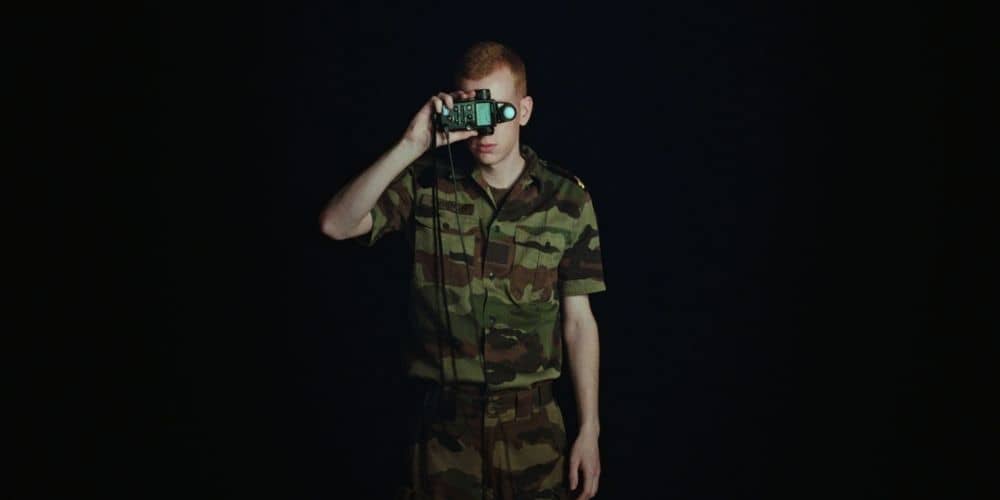
Perhaps the most revealing section, chapter 3, looks at how images of war are crafted by the military itself. Although this section would benefit from less B roll footage of Foreign Legionnaires working out in the grounds of an old French military fort, the focus – on a military photography and videography school – reveals importance Western governments now put on ensuring that images of combat expeditions are carefully managed. If the Americans in #Iraq used «embedding» news correspondents to control the narrative, using combat-trained professional photographers to provide ready to air footage, is a step further in massaging the message.
The vast photo and film archives – and technological superiority of the labs and restoration facilities – available to the military, offers a clear advantage in analysing past images to perfect present ones for propaganda purposes.
Although the final chapter entitled: «Future, when everything has been written», strives to argue that once eye-witness survivors have passed away, film and photos are the essential «incriminating evidence» of the horrors of war, it is the uneasy sense that remains with one, that photographic images are as easily manipulated as the grand public monuments or paintings of the past in the service of the powerful over the poor, maimed and dead collateral damage of war.