Anyone who has seen Franny Armstrong’s seminal docu-fiction The Age of Stupid can never forget the late Pete Postlethwaite’s gravelly voice as the Archivist showing the world the error of its ways. Looking back from a hypothetical post-climate collapse 2055, the film celebrated all that the planet had lost by then, due to man’s inability to tackle global warming and climate change.

Stilted houses
Tomáš Krupa’s new film does not have quite the same global reach – it films in four locations, versus the seven Armstrong used, but he strives to show how man can adapt and work to ameliorate climate change.
From the vulnerable sandbank communities of North Carolina to Greenlanders lamenting the loss of ice cover and the joy of dog-sledging, to the dust storms of Mongolia and the impossible heat of Coober Pedy in the Australian Outback, We Have to Survive has a message of hope.
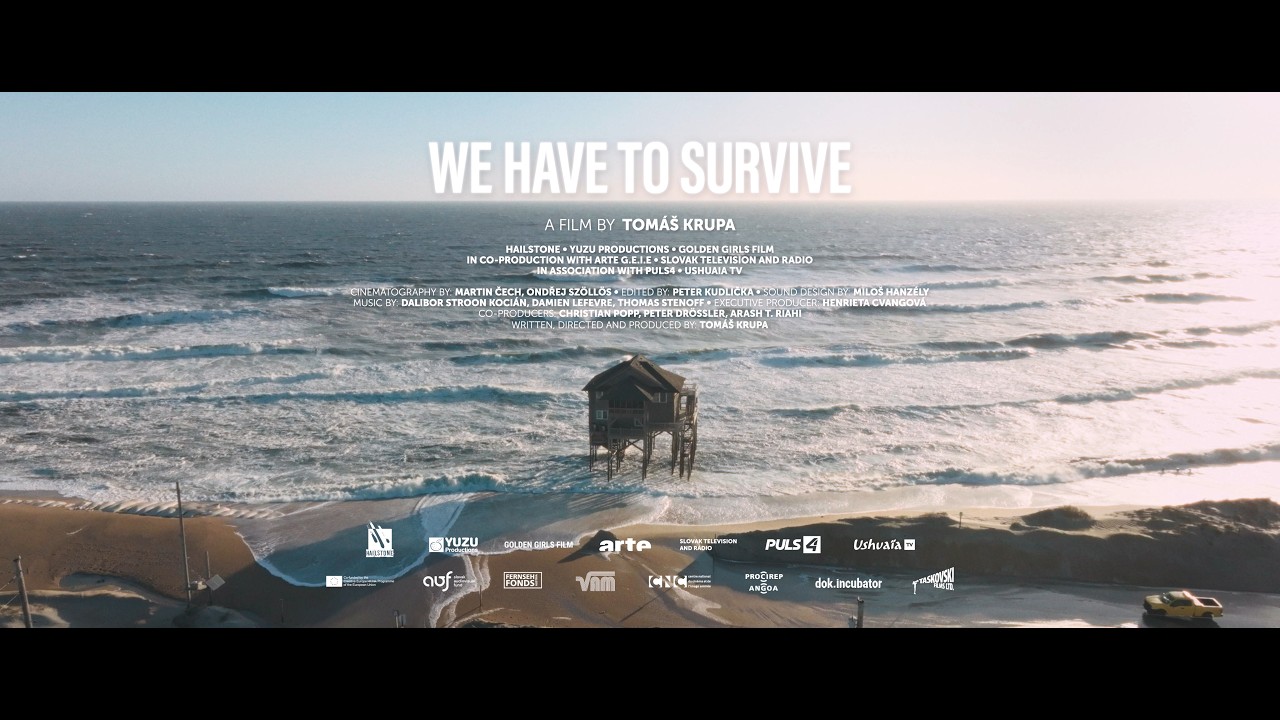
The Outer Bank communities of the Atlantic coast of North Carolina have already built their sought-after sea view homes on stilts. But the relentless ocean is eroding the beaches faster than ever before. Methodically lifting and moving a multi-million-dollar home back 30 metres may only stave off its collapse into the waves for a few years more. Scores of homes have already been swept away by the sea – during normal high tides, as well as the increasingly violent storms that hit the beach-front communities.
Houses collapse within seconds and disappear within minutes when the waves decide to take them.
Local politicians can only do so much – accessing federal funds to dredge millions of tonnes of sand from submerged banks to shore up the beaches. The sensible thing to do would be to retreat entirely to the mainland, but with so much money and livelihoods tied up in the iconic houses, communities are resistant.
The understanding and reality of climate change is finally hitting home. Locals say they believe it is real, but remain unsure if it is exacerbated by industrial activity and pollution or is simply a natural climatic shift.
In Greenland, we meet a father and his daughter as they fish for cod among the ice floes in a fjord. The fish are not as abundant as they once were, and around a fire above their home in an entirely ice-free area strewn with massive, newly exposed rocks, they lament the gradual loss of traditional ways of life.
«I’ve been dog-sledging only four times this year,» the father says, his wife adding, «And then only in the winter.»
The understanding and reality of climate change is finally hitting home.
The climate picture
As the viewer is brought back and forth between the different locations – sandstorms blanketing a rural community in Mongolia, hardy Australians hewing underground homes out of the rock to retreat from the blazing sun – a picture of the climate challenges facing people around the world emerges.
Krupa wants to show the challenges before revealing some more positive news. The warming of Greenland gives a Danish farmer who has successfully grown vegetables in Iceland the chance to show through an experimental garden that this is also possible in Greenland. Even strawberries can flourish under cover, and if the climate warms just a little more, they could grow outside. Greenland normally imports vegetables such as cauliflower and celery; soon, it could grow its own on a larger scale.
In Coober Pedy, the splendid dwellings carved from sandstone 30 feet beneath the surface offer a retreat into creative caverns where the temperature remains a steady 22 degrees centigrade year-round. So much better than living above ground when the thermometer hits 51. Clever engineering allows natural light and cooling breezes in. One couple runs a guest house where Australian and international visitors come to experience life underground for themselves.
«I don’t know why we all don’t live underground,» the guesthouse owner remarks, adding that he does not believe in man-made climate change: it is all part of a natural cycle, he reckons.
In Mongolia, a revered grandfather teaches younger people that planting trees can prevent desertification, support ecosystem development, and even affect weather patterns. Twenty years after he first began planting trees on the edge of a desert, thick leaf cover provides a home for insects, rodents and birds. The trees encourage rainfall, and from afar, his spot of green is a symbol of hope. Celebrated as a national hero, his project outlives him – proving hope for future generations just as his grandson’s wife gives birth.
Message of hope
With a soundtrack provided by nature, aside from brief orchestral sections, We Have to Survive sends a message of hope at a time of desperate weariness across the globe. Whether it is a little too positive is something audiences will have to decide for themselves.