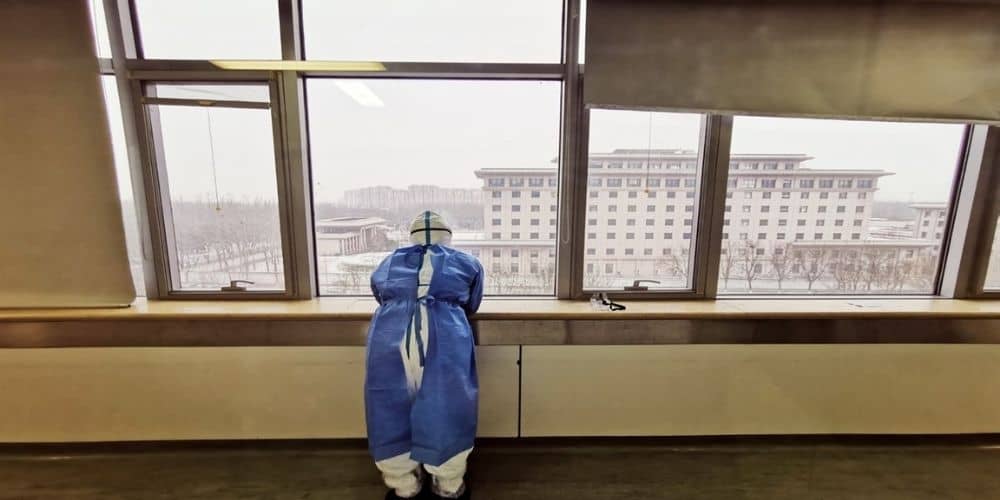
As restrictions are eased in parts of the world, with ramped up vaccination campaigns and falling infections, it may be easy to succumb to the #pandemic ‘fatigue’ at last, entertaining an idea that the virus is losing steam. However, with the new variants gaining traction, concerns persist over COVID’s grip on the world and whether the end of the pandemic is anywhere in sight. 1.5 years and several lockdowns later, the virus continues to wreak havoc on economies and lives, more so in some countries than others, with the question looming: How much do we know now, and do we know better?

The first months
Yung Chang’s latest documentary Wuhan Wuhan (2021) zeroes in on the first months of the initial lockdown after the novel coronavirus outbreak hit the city in early 2020. Images of Wuhan’s desolate streets, devoid of traffic but not of life, set the scene for the film, with the drone floating over the #Yangtze River# bridges – the images that have become all too familiar in 2020.
Rather than delving into possible origins of the virus, Wuhan Wuhan chooses to center on the dramas of people’s lives at the onset of the public health emergency. When #COVID-19 became a reality in 2020, Wuhan residents were the first ones to learn how it would transform their daily lives. For frontline workers ER Chief Zheng and nurse Susu in the Wuhan N. 5 Hospital, designated to treat severe COVID-19 cases, the days were marked by long taxing hours in ICU and the evenings – by lonesome boxed meals at a quarantine hotel and video calls with their loved ones. «When are you coming back? I want my mom», we hear a young girl, a preschooler, ask adamantly after nurse Susu dials up her daughter, from whom she is forced to quarantine as the medical staff. «I’ll be back as soon as I am done here, ok?» – nurse Susu responds with anguish, «I’ll be back when you are ready for school».
Wuhan Wuhan chooses to center on the dramas of people’s lives at the onset of the public health emergency.
Remoulding
Wuhan Wuhan paints a grim picture of how the coronavirus remoulded the lives of people in a multitude of small ways, where even the simple routines had to be revamped or tossed away altogether. Medics started to pick their hairstyles for PPE comfort – the shorter the better – and making a chicken soup with some boiled yams turned into an exercise to preserve a semblance of normalcy during the lockdown. «The virus hasn’t killed me, but these boxed meals will!» – the medic utters with a chuckle en route to a quarantine hotel.
For young families like Yin and his pregnant wife Xu, worries over being first-time parents were aggravated by concerns of giving birth during a pandemic. Should Xu go to her planned check-ups at the risk of contracting COVID-19 at a hospital? Is a baby crib a lockdown essential, and how can they get hold of it amidst the virus outbreak? As Yin listens to the baby’s heart thumping, Xu – who is at 37 weeks pregnant at the time of filming – shares her fears of bringing a new life into the world where one day it might «get sick with no guarantee of a hospital bed».
The documentary largely avoids the many controversies of China’s response to the first outbreak of the virus in #Wuhan, only fleetingly showing a makeshift memorial in front of the city’s Central Hospital to late ophthalmologist Li Wenliang who raised the alarm about the early COVID-19 infections. However, the film does drive home the dire state of the healthcare system in early 2020, echoing the same battles fought later across the world – the overwhelmed hospitals with patients having to queue up for 6-7 hours for a CT scan or sleep in the hallway, the overstrained medics facing a PPE shortage and the panicked patients navigating (makeshift) hospitals when little is known. The distress is palpable when the crew films inside the ICU ward where the density of the virus is highest. «Please film me for the next four days», a middle-aged patient cries out, «in four days, I’ll be dead!»

Tinges of hope
The film draws to a close with the protagonists returning to their families and pre-lockdown jobs in spring 2020. «On April 2, 2020, Wuhan lifted the lockdown», with the official report stating «50,008 confirmed cases and 2,547 deaths», the title card reads. Many more cases and deaths were suspected in Wuhan’s first wave. That was not the end of the public health emergency, in fact, it was the beginning of the global pandemic.
1.5 years later, after the deadly virus escaped into almost every corner of our planet, local governments and the World Health Organisation still fear that many «hard-won gains» may still be lost if individuals «let down their guard» and health measures are eased too quickly. However, as the camera retires from the virus-stricken city, the viewer is left with a tinge of hope. After all, despite the loss and the calamities, babies will still be born despite no guarantees of hospital beds, patients will still recognise the faces of those who saved their lives, albeit through photos pinned to their PPE, and perhaps, dances will still be danced even if medics don hazmat suits.