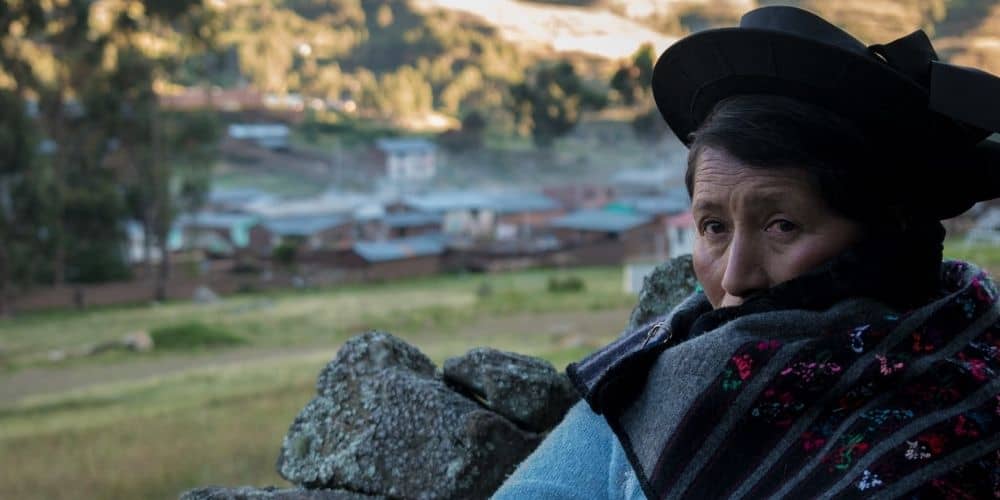
Magda Surichaqui Cóndor was just a teenager when soldiers arrived in her village in the Peruvian province of Huancavelica. They’d been sent to root out #terrorists in the area, as the Shining Path leftist revolutionary organisation were waging a highlands guerrilla war against the government, and it soon became clear that they had no qualms in using their sweeping powers of identity checks, interrogation, and detainment as a pretext to rape and humiliate local women, and force them into sexual relationships. A period of constant fear and sustained abuse started for Magda after a lieutenant summoned her to the military base and raped her nearby, then regularly sought her out in the fields or wherever else she happened to be. Nature being indifferent to her desire to be free from her tormentor, her belly grew, and she became one of the numerous women to give birth in the «year of the soldiers’ babies,» as the local civil registrar calls 1986. Three decades later, she is stoically fighting with a lawsuit for acknowledgment of her violation, and for public recognition of her dignity — a struggle filmmaker Patricia Wiesse Risso charts in Soldier’s Woman, screening at #IDFA.
The film achieves close personal access to Magda and three female friends who have been through equivalent experiences at the hands of the army, and who come to visit her. As they peel potatoes and chew coca leaves together, they reminisce over their youth, the #trauma and hardships they have endured. A moving picture of deep female solidarity emerges.
Pariahs
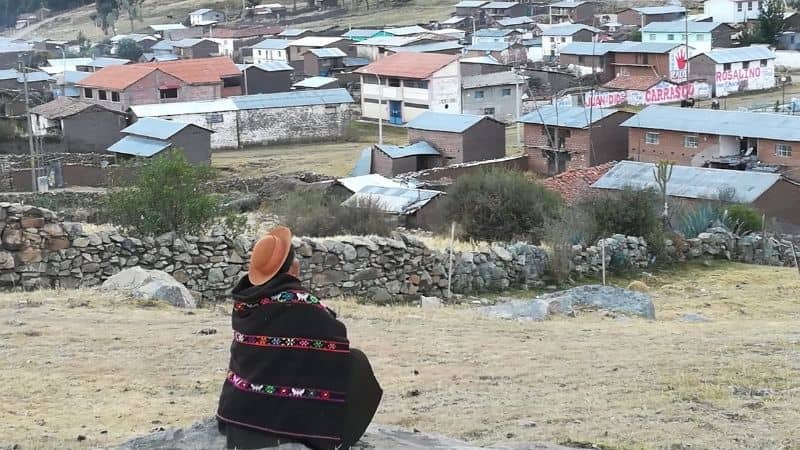
Beyond the level of individual suffering, the film is particularly effective in conveying how #sexual violence# as a tool of #conflict tears apart the cohesion of entire communities. The women subjected to abuse have been harmed not only by the military but by the pariah status others in their community have imposed upon them. Names such as «soldier’s whore» and «military skin» are hurled at them, amid accusations they wilfully agreed to the liaisons, while their children — unrecognised by fathers who have given false names — must bear the stigma of being known as «little recruits» or «children of dogs». Shining Path members also frequented the village, pressuring locals to join their ranks and in a climate where brute force and guns defined regional activity alongside the daily subsistent farming tasks of the villagers caught in between. One rape survivor recalls getting up at three in the morning to do the household chores before going to work in the fields, just to avoid being a target for her family’s hostile words of blame and rejection.
Beyond the level of individual suffering, the film is particularly effective in conveying how sexual violence as a tool of #conflict tears apart the cohesion of entire communities.
The accused claims his relationship with Magda was wholly consensual («She was my girlfriend,» he insists), but the power differential and fact the troops from the hundred-strong base strolled about in uniform with firearms, let alone the convincing testimonies of threats, assault, and #torture we hear, tell a different story. And, in blaming the victims, the villagers certainly do not use any notion of fine military character as an argument. Rather, some are put out that the raped women stand to receive government compensation through the lawsuits, none of which will extend to others who suffered extensively through the family disappearances and murders, burnt property, and stolen livestock that were other facets of army-inflicted terrorisation.
Enablers
Some local men do stand by the women, though. «As long as I’m alive, I’ll support you. It also hurts me,» says the registrar to his abused niece. By testifying in court, he shows himself to be among the bearers of the community’ss moral backbone, as well as its physical records. Residual issues of trust in men strain the rape survivors’ current marriages, another seed of division the community has been left to heal. One woman says she has difficulties connecting with her son, who she fears will also, as a grown man, rape.
Only nine women are now left fighting the lawsuit, the others having been pushed to abandon the action through family shame and pressure. One survivor says she dreams of a time beyond the case when she can simply go back to planting and cultivating potatoes — a basic lifestyle free of the eyes of judgment, and others’ cynical machinations of control. Rape, we’re reminded, is a crime committed by individuals but enabled by power structures, and its aftermath must be contended with by entire communities, who will grow or disintegrate depending on how they choose to name and meet the burden.