While #Tel Aviv# is the wealthiest city in Israel, the southern parts of the metropolis are utterly poor. The effects of a thriving #economy are not felt here, and the booming high-tech sector seems to belong to another world. Here people try to get along with their daily chores among #crime and #drugs, and in the streets, you meet African #asylum seekers# and #refugees trying to create a new life.
For some years, the #Shapira neighbourhood has drawn a lot of attention. It is not rock-bottom poor, but still, it is certainly confronting a lot of problems. And on top of this, the local working-class population has been protesting for a long time. They see the refugees – typically from #Sudan or #Eritrea – as a threat and want them out of the neighbourhood.
«The Sudanese are a cancer in our body! They infected our neighbourhood», says Sheffi Paz. She is undoubtedly the most prominent activist of Shapira, having close connections to Benyamin Netanyahu’s rightwing #Likud party.
A delicate balance
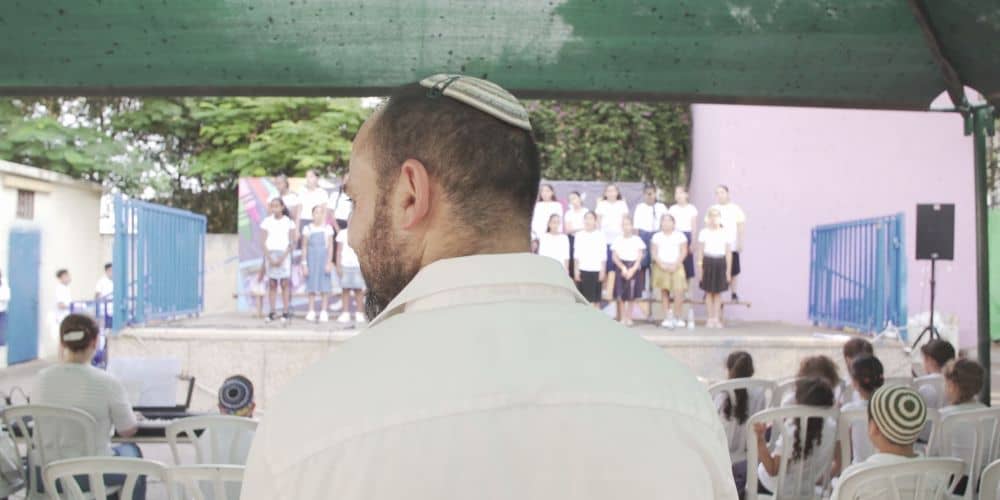
Therefore, it comes as no surprise that she is one of the voices in Gad Aisen’s new documentary, 40 Steps, about a school that opened a few years ago in an attempt to mend fences in Shapira and lift the refugees out of poverty. To address the needs of the neighbourhood’s changing population, the municipality established a new elementary school for the children of secular residents and foreigners lacking legal status. Furthermore, the new school was opened in a building next to an existing religious school!
This step is like digging right into the ongoing #conflict. The religious institute is home to the conservative feelings of the neighbourhood. This is where you find the antagonism of Sheffi Paz, from a children’s perspective, and the two schools have a shared schoolyard with no separation fence in between. It is no wonder that Shahar, the new school’s principal, feels like an intruder, an occupier. He measures the physical distance between the two buildings – 40 steps.
The Shapira neighbourhood was founded in 1924. The first inhabitants were Jews who moved out of #Jaffa because of conflicts with the local Palestinians. They found a refuge, and over the years, they were joined by other Jewish immigrant groups from places like #Bukhara, #Afghanistan, and #Turkey. All came with their traditions and culture and built their own synagogues and daily life. It was a hard existence, close to the bottom of society, and it has survived over the years by sticking to tradition and upholding a delicate balance between different lifestyles.

No easy solutions
The film follows daily life and challenges in and between the two schools. Elior, the religious principal, says that in order to protect the Jewish people, one of the pillars is to prevent assimilation. If children study and play together, they will also marry each other.
Elior is sitting with a mother. She is poor and angry, feeling sidelined and neglected because of the immigrants. She says she is not a #racist but feels angry with the outsiders in her neighbourhood. Shahar is sitting with another mother, having a hard time in Israel. She has not been granted citizenship, feeling very unhappy, but she stays because her country is unsafe for her children.
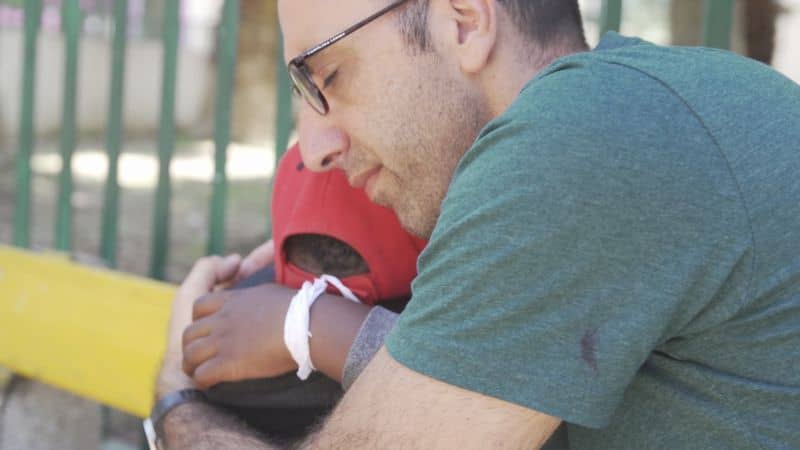
On the surface, the core of the conflict dominates daily life at the two schools. But little by little, the film gives an insight into the many sub-conflicts that are just as important, and it shows us that nothing is black and white – and nothing is simple. Shahar is dealing with Junior, a wonderful African boy. His father is working all the time in order to support his family and has no time to build up a loving relationship with Junior. The boy lacks the ability to share, and being a keen football player, he does not have much respect for scoring a goal unless he is the one scoring it.
On the surface, the core of the conflict dominates daily life at the two schools.
Gad Aisen has created a clever film that says a lot of general things about conflict. This is not only about Shapira, but in broader terms, about how to read a conflict and having the ability to understand the tiny parts and the nuances in order to solve the conflict. Shahar stands out as a wonderful person when we follow his work to turn Junior into a more complete person. But at the same time, we get to understand the dilemmas and problems of Elior. He is not a racist but simply a person with a different worldview. Even the devilish Sheffi Paz is pictured as a person with feelings and her own frustrations stemming from a problematic childhood and youth and two terrible rape cases in the neighbourhood – even though the things she says are horrible.
At some stage, Elior talks to his elderly father, who obviously has his roots in #North Africa#. The father explains that it is a religious duty to welcome foreigners. They are our guests, he says, and you should treat them well.
The director deserves full credit for not handing out easy solutions and false hope. It seems obvious that the Shapira neighbourhood will stay in its pitiful shape for a long time, and the internal conflicts are far from over. But when you know that once upon a time, the two neighbouring buildings were a school where religious and non-religious kids studied together, there might be hope for a better future. Especially when this film shows us that despite the deep problems, you find human feelings and a will to find a better common future.