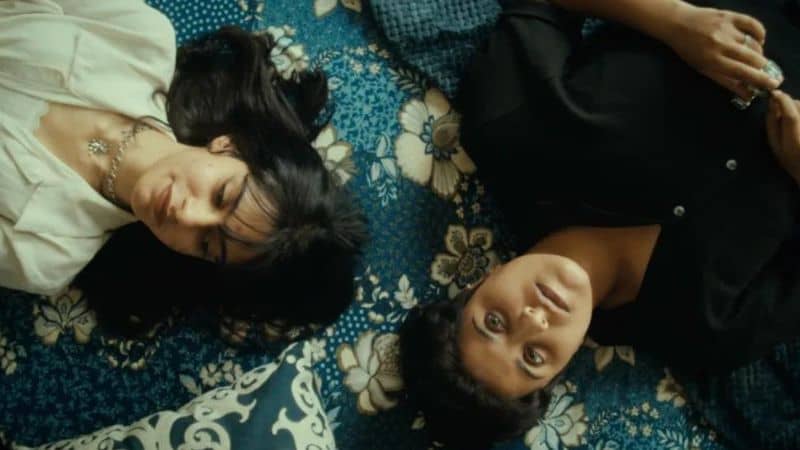
In Immortals, the feature documentary by Swiss director Maja Tschumi, a young woman and a young man who hadn’t lived a day of their life in peace get to tell their intimate story. All they know is conflict, violence, and death. Melak Mahdi (Milo) and Mohammed Al Khalili live in #Baghdad. Their experience is told through a carefully structured cinematic narration that enables them to express their own voice. As war, conflict, hate, and fear gradually overtake the world, their stories are relevant globally.

October Revolution
«The skies over Baghdad have been illuminated . . .» Milo and Khalili were not even born when, with these words, the CNN anchor Bernard Shaw announced the advancement of the Persian #Gulf War#, waged by coalition forces from 34 nations led by the #United States# against Iraq in response to Iraq’s invasion of #Kuwait in 1990. Shaw’s words were full of pride as CNN stayed on the location and became the first TV network to live broadcast a war. Another war happened since then in Iraq, #Saddam Hussein#, #ISIS, and another invasion. Even the end of the foreign invasion brought no peace, and the voices from the ground remained rare, although not at all optimistic. MTR reports about the youth demanding a change in their country, protesting against «chaos, corruption, and conflicts that have followed in the aftermath of the American invasion to this day. The largest youth demonstrations started on 1 October, 2019. The ruling elite responded with a violent crackdown; 787 people died, and more than 25 thousand were injured. Immortals follows two protesters in the aftermath of the #October Revolution#. In contemporary Iraq, 60% of the population is younger than 25. Milo and Khalili are two of these 60%.
As war, conflict, hate, and fear gradually overtake the world, their stories are relevant globally.
The Fear
How does one live in constant danger? «No matter how much I try to sleep, I can’t. The more I try, the worse the insomnia gets. Do I have insomnia because I don’t feel safe? The only time I ever felt safe was when I entered #Tahrir Square#,» says Milo. Khalil admits that he used to be afraid and sometimes unable to do the simplest things, such as putting on his clothes or communicating. The camera changed it, he remembers. His advertisement for socks was a big success. In the precious footage, he filmed during the October Revolution and entrusted to director Tschumi, we see people playing sports under the setting sun on the Tahrir Square beach. In the plastic tents nearby, people make food, take legal advice, and watch films. And protest. «We don’t just want jobs. We want all of you to step down, you thieves!» cries one. «Iraq exports 5 million barrels of oil a day, and the people are hungry,» enraged another. Khalili shot the peaceful celebrations following the resignation of the government in November of 2019, as well as the brutal response of the police.
The most outstanding piece of this rare footage is the moment the viewer faces death. That is, when Khalil, through his camera, captured the look of the armed person shooting at him the moment before he was shot. Real bullets have long replaced the plastic ones.
Milo
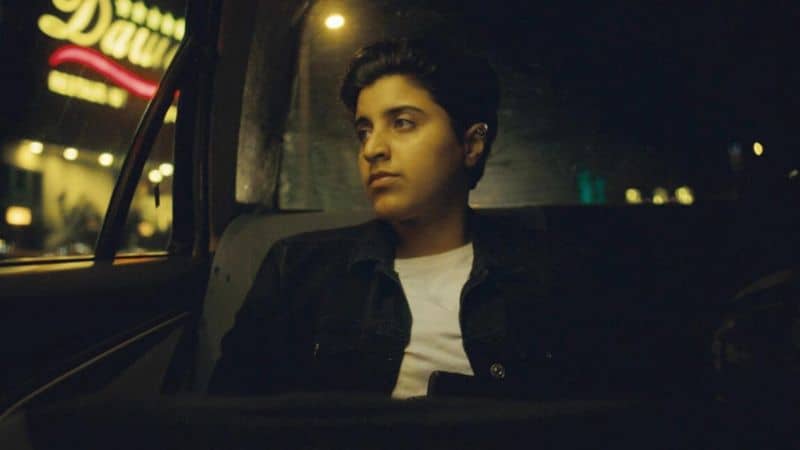
To avoid the patronizing view typical of #Orientalism, the way the West, through centuries, perceived the East, Tschumi involved both of her protagonists in the creative process and ensured that they remained in control over how the film depicts them. True to the different spaces they are assigned in Iraqi society, their voices, too, are articulated in different ways. Khalili contributes footage of what happened on the streets and in public. Milo, as a woman, is banned from the public in more than one way and has no images to show; her voice is her narration. To secure the safety of her protagonists, Tschumi avoided clandestine filming and decided on re-enactment instead. In re-constructed conversations, we learn Milo, a fervent #feminist, often sneaks out from home; she even has a job and friends. But first of all, we learn that her family wants to keep her locked down. They burned all of her clothes (so she has to wear her brothers), all her things and even her passport. Other testimonies prove that even this is not the worst. Young women are held at home by force and have no one to turn to as all family members protect each other. They are victims of #domestic violence# and are in danger of their lives.
Real bullets have long replaced the plastic ones.
No Way Out
The film is composed of three chapters and Tschumi smartly chose the structure of a tragedy. The story of Milo comes first, so we know in advance that Khalili, too, has no choice. The option offered to him after he has been wounded while filming, to get married and «stop with this nonsense» (as his brother tries to persuade him) will not work. Contrary to what people all over the world would like to believe when facing systemic violence or decay of the public and social structures, family ceased to be a safe shelter long ago (if it ever was). It is just another conflict zone, another hell. Thus, the third chapter of Immortals, Decisions, can bring no relief. But, exactly, for this reason, it is worth watching. There might be a solution after all.