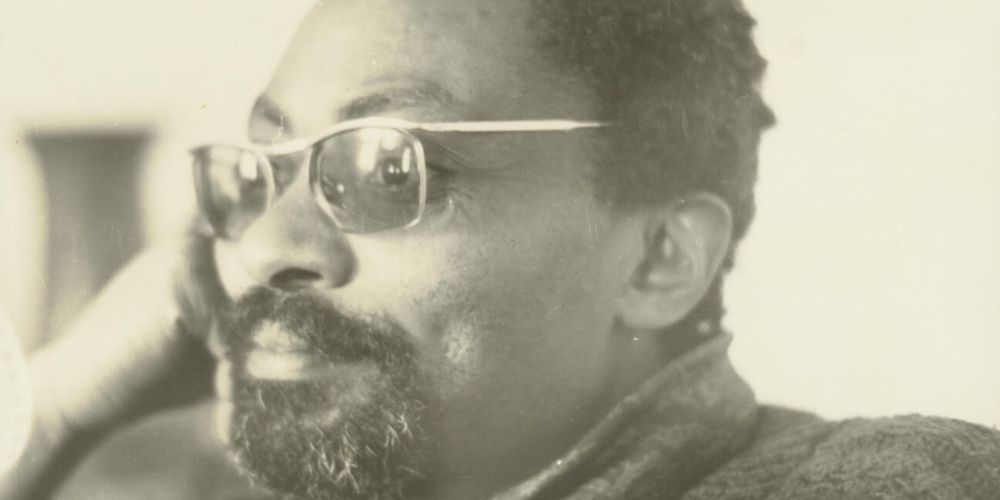
L.A. Rebellion master Billy Woodberry returns with a documentary about the life and legacy of Mário Pinto de Andrade, a pan-African thinker, activist, and a canonical figure of the Movimento Popular de Libertação de Angola (MPLA). Mário is a serious history lesson, told through archives and personal testimonies, that offers a solid intellectual stimulation and something distinctly engaging.
The comeback
It hasn’t even been a decade since Billy Woodberry returned with a new feature-length film. For him, as a great name in the Black independent film movement, also known as a leading figure of the L.A. Rebellion, this is a fast working rhythm. After many years of studying and teaching film, he made only three features and four short films in his long life. His feature-length debut, Bless Their Little Hearts, exploring the struggles of a working-class family in Los Angeles, was awarded at #Berlinale in 1983. It was only nearly four decades later that his second feature followed: And When I Die, I Won’t Stay Dead – a documentary about the Beat poet Bob Kaufman.
Woodberry’s work is always the product of meticulous research, from which intellectually rigorous and exceptionally attentive films that focus on invisible histories, with decolonial thought at their core, emerge. Blending unique archival material and interviews, his work serves as a testament to classic voice-over documentary filmmaking, deeply enriched by his intellect and curiosity, which resonate throughout the images. His archival research is striking, as he deliberately avoids familiar themes and steers clear of images that might feel so. This is also evident in his latest work, Mário, which has brought him renewed recognition amid a surge of festival interest in Black culture and a broader decolonial focus across both festivals and streaming platforms. Premiered in the «Harbour» program of the International Film Festival Rotterdam in 2024, Mário was received with acclaim and complemented by a panel dedicated to Woodberry’s work, marking the beginning of a long festival run, with a notable stop at #Ethnocineca as a case of precisely targeted programming.
its global narrative can serve as an applicable metaphor for contemporary struggles for visionary national freedom and a wounded past.
Mário Coelho Pinto de Andrade
Despite a difficult childhood, Mário managed to access higher education, particularly in Portugal and France, where he studied social sciences and #philosophy before returning to where he was most needed, to apply his knowledge with a revolutionary spirit. Co-founding the #MPLA, he became the group’s first president in 1960. He later founded the #CONCP (Conference of Nationalist Organisations of the Portuguese Colonies), a body uniting all liberation movements of Portugal’s colonies in a collective effort for independence. Thus, through his political work, he helped his country gain statehood, and through his writing, he supported decolonial ideas, helping Angolans in their search for psychological and cultural identity.
As always, Woodberry approaches this important subject with discipline, enriching the film with an impressive amount of lesser-known information and visual material that might seem uninviting to the casual viewer out of context. Yet its global narrative can serve as an applicable metaphor for contemporary struggles for visionary national freedom and a wounded past. To this day, #Angola, though an independent country, is still haunted by Portuguese influence. This haunting effect is reflected cinematically in the seamless transitions between archival and contemporary footage, where the same landscapes gradually take on colour within a single shot. In these landscapes, Woodberry is not simply interested in Mário’s personal story or history as seen solely through his experience. On the contrary, his character serves as an entry point into the many lives that have crossed his path, united by the idea of liberation from colonial rule.
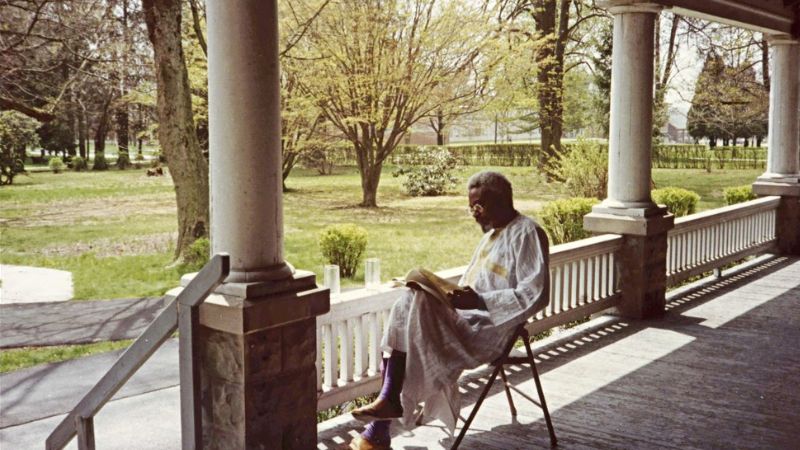
Using details from Mário’s personal life as an exposition, the film unfolds into a detailed exploration of mid-20th-century Angolan political history, enriched by multilayered testimonies drawn from newly uncovered archives and firsthand testimonies from those involved. For instance, we hear a story from Manuel Santos Lima, the first Black Angolan officer in the Portuguese army, who wished to serve under Mario and was appointed First Commander of the MPLA guerrilla army. From scratch, he designed the army, from uniforms to conduct, and created copies of the rules for all liberation movements from Portuguese colonies – one of these copies also ended up in Mandela’s hands. The elderly veteran recounts all of this on camera in a pleasant summer garden, where the past seems incredibly distant, yet is immediately supported by an archival photograph.
Even without blaming oneself for not knowing the names and events of Angola’s struggle for independence, this film can easily fascinate with incredible life stories told from today’s perspective. Moreover, Mário can entertain through the multitude of photographs of all the political giants of the time, from Khrushchev to Mao, which is fascinating to examine. But most importantly, Woodberry devotes every effort to letting Mário speak for himself. One of the most vital archival pieces steadily integrated into the narrative is his detailed biographical interview given to Portuguese television four years before his death, while interviews with witnesses of his life and work remain valuable yet secondary. And despite all of the above, Mário did not die a hero in Angola.
Saving a marginalised legacy
After such an extensive journey through Mário’s work, marked by unbroken ideals and admiration from the sidelines, the film ends on a somewhat disheartening note. His disillusionment with the MPLA’s trajectory in the mid-1970s led to his marginalisation and eventual exile, which cast a shadow over his final years. When Mário died in 1990, public sentiment was ambivalent, and while there were no restrictions placed on his funeral, there was also no state support. In the film, this comes across as an absurd antithesis to all he had accomplished, though such posthumous reevaluations are not uncommon under post-independence governments.
In a way, Woodberry succeeds in restoring Mário’s marginalised legacy through this film. By bringing together his scattered ideas and experiences, spread across countries and revolutionary missions, the cinematic form lends a sense of cohesion and calm to his life.