
Cece Mlay and Agnes Lisa Wegner’s The Empty Grave emerges as one amongst a larger set of films about decolonial repatriation and historical restitution: most famously, last year’s Berlinale Golden Bear winner Dahomey by Mati Diop. But uniquely, the filmmakers here focus not on so-called «cultural artefacts» but instead on human remains taken under the colonial rule of Germany, a country with a lesser-known but just as violent history in #Africa. The Empty Grave presents a compelling case study of just one example of #restitution, including but not limited to struggles around simply being heard and listened to while in the search for truth. The film premiered last year in the #Berlinale Special section and now plays in #ethnocineca – International Documentary Film Festival Vienna.

A history of colonialism
Tanzania was part of a colony known as German East Africa (Deutsch-Ostafrika) from 1885 to 1918. Germany was made to surrender the colony after World War I, after which it became a League of Nations mandate for several decades after. Under German rule, horrors were already committed against the indigenous population as part of the Maji Maji Rebellion against their oppressors. The Empty Grave centres around the interconnected struggles of several individuals, both in Tanzania and Germany, as part of a larger unravelling of colonial history. The key figure bridging this gap in the film, #Songea Mbano#, was a #Ngoni leader beheaded by the German colonial army during the aforementioned rebellion in a viciously cruel symbol of dominance.
The Empty Grave presents a compelling case study of just one example of restitution
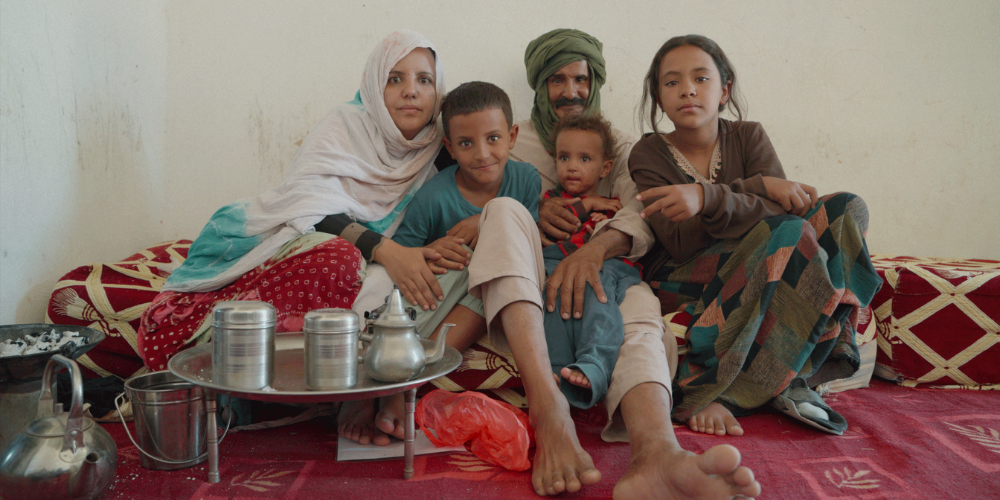
The film leads us into a search by a Tanzanian lawyer named John Makarius Mbano for the remains of Songea, his great-grandfather. John Makarius and his wife, Cesilia, exhaust every pathway imaginable, but even when they go to the local authorities to escalate their plea, the authorities want to engage through «official channels,» seemingly to avoid any political #conflict. At the same time, we meet Mnyaka Sururu Mboro, who is engaged in decolonial talks for the public in Germany, where he has lived for over 40 years. The legacy of colonialism can be seen even walking around #Berlin, such as street names and institutions that bear the names of German colonial violence and of military leaders who committed atrocities. Traces remain engrained in the spaces in which we live, and we pass by ignorantly, every day.
Restitution, please
Mlay and Wegner make this story digestible for a broad audience while highlighting the interlocking struggle on both continents. Viewers will undoubtedly grow frustrated alongside John Makarius and gaze in shock at the sheer size of the German colonial archive of nearly anonymous human remains, where seemingly almost no effort has been taken to restore them back to families. The question of restitution is highlighted as a process initiated by the wronged parties, and even then, the initiatives must be backed by some authority in order to be taken seriously. A system of power and dominance remains in play.
We visit a classroom, where teens discuss learning about German colonial history and the confrontation of these narratives. While certainly an overly didactic moment, it further cements a social insistence on impunity when it comes to the nation’s history in Africa versus, for instance, in Europe in World War II. A bizarre interaction with a German bureaucrat further illustrates the preposterousness of history as acknowledged with a hand-wave but never further acted upon. Later scenes in the film feel somewhat performative as John Makarius reaches Berlin—some feel clearly reenacted, while the filmmakers reach for a way to wrap up what is clearly an unfinished story. But nevertheless, just as European #museum institutions grapple with mounting pressure to return stolen art and heritage, The Empty Grave successfully highlights a conversation that has needed to be had in the public sphere, particularly in Germany, for a long, long time.