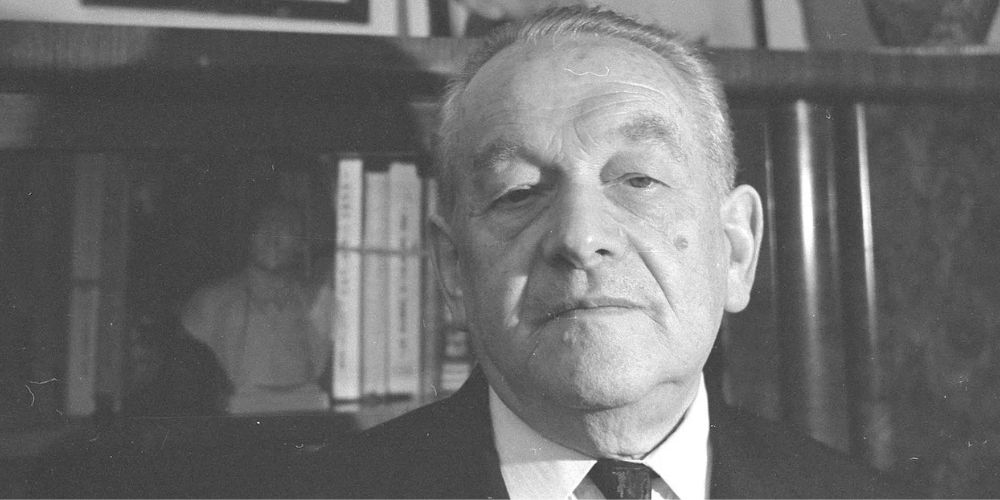
Few films can boast such tension between title and content as Tomasz Wolski’s The Big Chief. The protagonist, #Leopold Trepper#, was called the big chief by his contemporaries, but most of the time in the film, Trepper is not in control of his life. In one of the interviews towards the end, he confirms this himself: with his wife Luba, they were from 1925 to 1940 communist activists, which was illegal, and that tore apart their family life for the first time. Next came #Hitler, who destroyed their family. #Stalin broke them again. The fourth time their family was crushed was in Poland in 1968.
Under surveillance
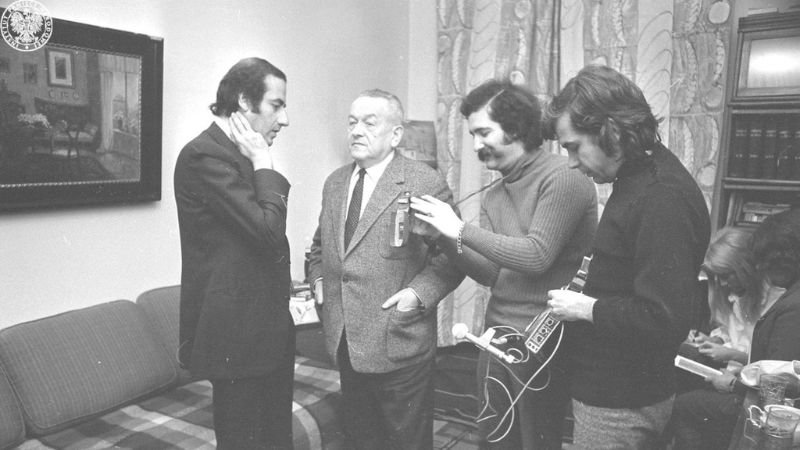
Tomasz Wolski discovered Trepper through this historical moment. Searching the archives for another film, he came across reels with the label «Leopold Trepper.» They contained recordings and interviews with Trepper that a French reporter, Jean-Pierre Elkabbach, shot in Poland in the early 1970s but never published, as they had been confiscated at the airport. The film starts in this period, too, when students at the University of Warsaw protested against #censorship and excessive costs of living. Despite the brutal repression, the number of protesters grew. And then the conservative government that took power used #antisemitism to curb the dissent. They accused Jewish communities of fuelling the protests and creating an antisemitic atmosphere that caused, as we read in the introductory titles, around 20.000 people to leave the country. The three Trepper sons were among them. But not Leopold Trepper himself and his wife. They were denied permission to leave and were put under persistent surveillance.
An intelligence guru
In 1938, Leopold Trepper, a Polish Jew, moved to Brussels with his wife to establish a network of Soviet spies across Western Europe. He ran a small import-export business with umbrellas and raincoats as a cover. At the same time, with his intelligence network, he obtained important intelligence material, such as information about Hitler’s plans to attack #Stalingrad. The Germans named his network The #Red Orchestra#, and historians of this period described Trepper as an intelligence guru. In 1942, he was captured by the #Gestapo but eventually managed to escape. When he returned to #Moscow after the war, he was imprisoned for 10 years but was later rehabilitated. He moved with his family to Poland, where he led the country’s Jewish community until the climate following the student protests again put him out of favour.
Life for ideas
Wolski, an acclaimed expert in archival storytelling and historical documentary filmmaking, masterfully assembled footage from such diverse sources as Eva Braun’s archive and Loznitsa’s State Funeral (2019). In one of the scenes from Elkabbach’s footage, we watch the journalist and his team trying in vain to deliver the birthday cake to Trepper’s Warsaw apartment. This sets the tone of the whole film. The plainclothes agents who, in any possible way, block access to Trepper demonstrate the senseless cruelty of the power. One can feel the helplessness of the victim as well. Showing that this was the destiny of a person who, in a key historical moment, decided not to go on with their own life but to participate, risking all, in fighting the #Nazism and ending the war is one of The Big Chief‘s most memorable achievements. Later, when even Luba is allowed to leave Poland and journalists enquire about Leopold, she repeats this in her plea: «We’ve given our lives to a struggle for ideas, human rights, and society. Don’t we deserve some peace in our lives?»
Unreachable truth
The campaign to let Trepper leave Poland, led by the journalist Gilles Perrault, the author of the book L’Orchestre Rouge (1967), was eventually successful. During the campaign, controversies regarding Trepper’s intelligence activities were brought up. These controversies are the other key themes of The Big Chief. We learn that when the Germans dismantled the Red Orchestra in 1942, Trepper managed to convince them to keep it secret, continue, and broadcast lies. At the same time, he informed Moscow and persuaded his bosses there to engage in a double game. So he was acting as a German consultant, but he was giving them «such consultations that were helpful to Moscow.» When this conspiracy was uncovered, the Gestapo arrested him, yet eventually he managed to escape and was never tortured. During the campaign in the early 1970s to free him from the persecution in Poland, the idea that he was collaborating with the Gestapo surfaced again. His friends sued the messenger for defamation and won. Trepper himself refused the word «spy» because the scope of his work was preventing/ending the war. Yet he also openly stressed that creating false information was part of his intelligence activities. For example, he had to build the reputation of a legendary communist spy to sell his services to the Gestapo.
Considering all this, can we ever expect to know the truth? The peculiar way Wolski uses the archival footage supports this doubt as much as Trepper’s testimony does. From the first shots, the recordings are shown, including the sound signal for the start of the recording: reporters taping the microphone or assistants clapping their hands in front of the camera. Diverse techniques are used to ensure the synchronicity of the image with the sound. Such methods guarantee that there is no additional manipulation. But still, we learn through the film that they can’t guarantee the truth. The Big Chief is a very peculiar meta-documentary – the master of archival storytelling, Tomasz Wolski, meets the master of intelligence, Leopold Trepper, and together, they reveal that we can never be sure of what happened in the past.