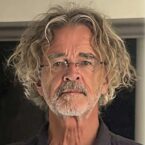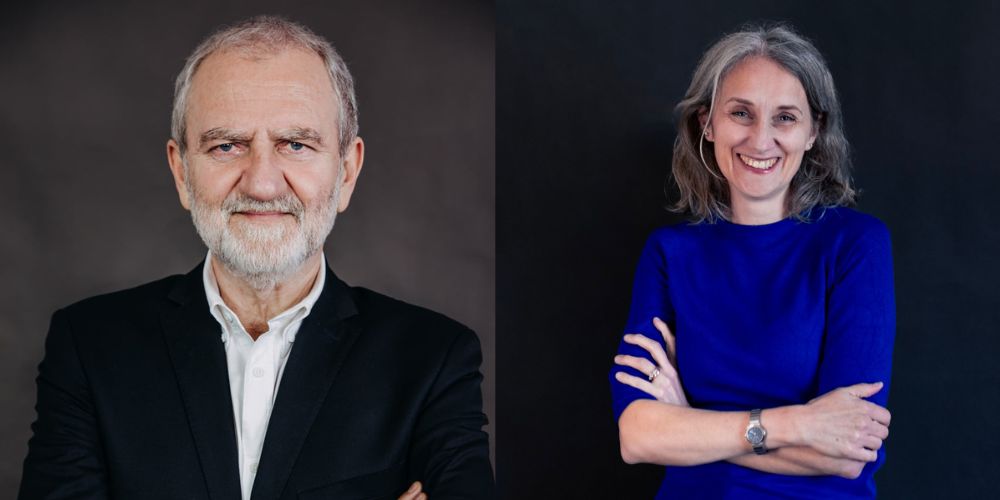
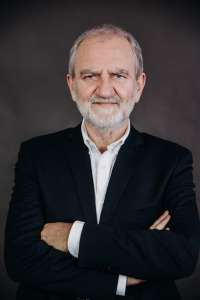
Modern Times sat down with Krakow Film Festival director Krzysztof Gierat and Barbara Orlicz-Szczypuła, who follows him as the new director. We would like to hear some thoughts from the past 25 years before letting the new director speak. What motivated him back then?
«It was a little bit by accident, in what was first the Apollo Theatre. This institution was the producer of the festival. As their director, I became this festival’s director. But the thing was, I was the guy who was taken from the street … But after some years, I changed many things. In the 1990s, the festival was a small event with significant financial difficulties. It was a very difficult time in Poland, with the new political situation.»
«We started to organise more competitions, with feature-length documentaries, which became very popular. Before, it was more like short competitions of films less than 30 minutes.»
If Krzysztof looks back on the 25 years, does he see some key events, directors, or films that were important to him? He has mentioned Return to Homs (2013), for example, a Syrian film.
«Yes, we wanted to show films about the main problems of the world. But with human beings as the main topic.» And in the Syrian film you mentioned, there is also a doubt about the war, about Syria, about the situation. These kinds of films we wanted to show. It is also important not to compare films to TV shows and news-like content. We wanted films with very well-made photography. Artistically ones. Also, we see many Polish cinematographers direct documentaries.»
Change from father to …?
In Poland, the father and son, Marcel and Pawel Łoziński [PS. Marcel, who directed 22 films, died in August at the age of 85, after this interview was conducted. He has been important for Polish film awareness. Their film Father and Son (2013) may mark Pawel as the next generation. It filmed a father and son on a journey from Poland to Paris, to see the place where the ashes of the father’s mother are buried. What accompanies them on the way are resentments, quarrels and sincere confessions. Does Krzysztof think this film, which they screened years ago, demonstrates a change in the documentary genre? Marcel as the old-fashioned and Pawel as the new?
«Yeah, about Father and Son – this film is good. Because it is about family, specifically the relationships between fathers and sons. I love these kinds of films. Also, because in the family you can find many of the biggest problems of the world.»
If we examine the history of the festival, we find many prominent names, such as American director Albert Maysles (see our filmed 2013 interview). Krzysztof remembers:
«I was in Amsterdam once and watched all his films and said, ‘Oh, my God, it would be great to have him in Krakow’. When I invited him, he came to Krakow the next year. It was great; he was with us the whole festival, from morning to night, with the students and us. Suddenly, he brought a 35mm film copy, but we had to find a projector in a basement …»
And other prominent ones, like Mike Lee, Werner Herzog, and Pier-Paolo Pasolini. Does he remember?
«You know, it was many, many years ago. There were many new directors. Also, Ken Loach.»
In these 25 years, as Krzysztof underlines, documentary filmmaking has changed radically – but also his own perception has changed:
«I remember from my studies that the documentaries were more just to cover or document something. A film had to be honest with the protagonists and with the audience. The message had to be clear and important. But now this is not as important. I remember Marcel’s classic documentaries from the 70s – but today, films are so much more diversified.»
The new festival director
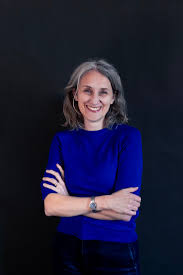
After 25 years at the helm, Krzysztof has stepped down as festival director. During a meeting of the Programme Council of the Krakow Film Foundation, a vote was held to select a successor. Barbara Orlicz-Szczypuła was unanimously elected the new festival director.
In her new role as director, she will be responsible for managing the entirety of the festival – from strategic, organisational, and programming aspects to financial oversight. She will ensure all activities align with the festival’s mission, maintain its international prestige, and represent the festival within the film community.
Orlicz-Szczypuła holds a degree in Ethnology and Cultural Anthropology. She has been with the Krakow Film Foundation since its inception, serving as vice-president for many years before taking the helm as president in 2021. Her journey with the festival began in the 1990s, when she volunteered. Since then, she has handled virtually every organisational aspect, gaining an in-depth understanding of the event. She served as the director of the Programme Department and also on juries at numerous international festivals.
On her recommendation, Anita Piotrowska will take up the position of artistic director. As artistic director, she will shape the festival’s artistic vision while ensuring it aligns with its mission and objectives. Her responsibilities will include selecting films and ensuring artistic coherence throughout the festival.
Orlicz-Szczypuła has spent over 20 years at the festival now. How does that feel?
«Definitely. Long time, but at the same time, I was involved in these other activities of the foundation, as the promotion of Polish films internationally.»
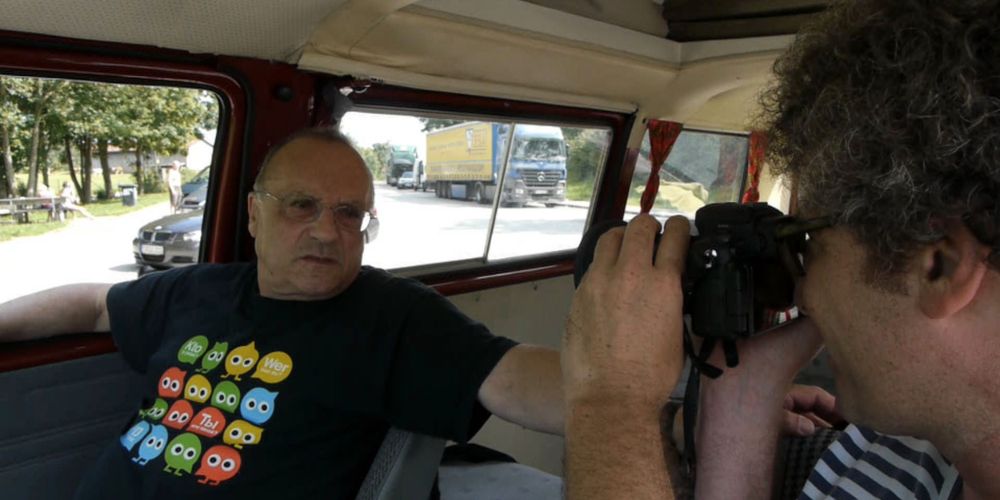
As with the generational shift between father and son (the mentioned Łoziński). Does she see a shift here, as analogous to her as the next, the ‘daughter’ of Krzysztof?
«Yeah. However, I think Pawel is also part of the old generation of filmmakers. He and others are already masters. What Krzysztof and I have observed during our time at the festival is a new generation of young people entering the industry with new films, a fresh approach, and innovative ideas. That’s very good.»
Generations
Then Krzysztof intervenes and tells us:
«Back to Marcel Lozinsky, the father. I would like to add that he is the big authority on documentaries. Also, because he said, that every time you make a film, you must be very honest to the protagonist. You cannot hurt the person. And this was the problem. For example, when Marcin Koszałka premiered his first film, Takiego pięknego syna urodziłam (‘what a beautiful son I gave birth to’) at my first edition in 2000, he made a film about his father’s family. There, Marcel was at the festival, and he was disappointed, so he protested. As he said, ‘How can he make this kind of film against his father and family?’. But after some years, Marcel understood that it was not against the father, but it was like therapy for them.»
Krzysztof continues: «This is interesting because I think maybe it was some of the reasons for the conflict between Marcel and Pawel with their project. Their editing style differed in this film from previous ones, where Marcel was unable to accept Pawel’s additions. I was very disappointed because they received an award for this film, and I thought they could come together on stage. But the conflict lasted for many years. Although today it is okay. Maybe because the old father had many problems with his health, and Pawel, as a child, had to support him.»
«today, films are so much more diversified.»
Reality and Social Media
Today’s filmmakers may be engaging in more creative interventions in documentaries than before. And the audience lives in a world that is increasingly mediated, where they are accustomed to new inventions on screens, phones, and texts.
«Yes, that’s maybe a big change. Yeah. As you say, if there were an intervention or creative intervention that you had directed back in time for today. That’s okay.»
When we talk about reality, living in a world that’s very mediated, reality can somehow lose its touch on you. As in the film, nature, or being with friends, talking, or hanging out in the rain. Are festival directors like them, concerned about the tendency to sit in a chair and look at a screen, or walk with your head looking at the phone, more than the reality around you?
The festival screened the film Can’t Feel Nothing, directed by David Borenstein, from Denmark. It explores AI startups boasting the ability to kindle desire, as well as Russian TikTok influencers committed to fostering pride and patriotism, among other topics. As the synopsis also tells: «An emotional epidemic is sweeping the globe, leaving clinics filled with young people trapped in a mysterious state of numbness and emptiness, as if their inner life has withered away. Why does endless scrolling make us feel so numb?»
Another aspect of social media is that it is now ubiquitous, available to everyone. We communicate nearly in real-time. However, screening at documentary festivals often occurs a year later, as filmmakers must edit and apply – so perhaps it’s too late sometimes? Compelling stories that can shape or change the world – too late?
The online audience was, according to Barbara, very big in the pandemic years 2021 and 2022: «Now we have around 10,000 viewers online. We have two weeks for the online part of the festival. So not a very long time. I think it is stable and it’s okay.»
We wonder about the future – would it be better to have 10,000 in the physical festival and 30,000 online?
«I don’t think so. During the pandemic years of 2020 and 2021, we had approximately 80,000 people watching films online. And then there was a collapse. However, over the last two years, we have returned to 10,000.
What about artificial intelligence (AI)? As we explain, films can be made without a real director. And not real from reality. You just feed in some text – no shooting is done. How can a festival be sure it is not reality?
Krzysztof answers first: «There are many dangers for us living in a mediated world because of AI, because of fake news, people filming by their phones, but also how films are made from hidden phone-shooting without consent.»
Then Barbara: «If we know that a film was made by artificial intelligence, we have a question the festival must discuss. How should we treat such films? Perhaps consider creating a special section, as we can’t deny what is happening. But I don’t like this situation, where a guy makes the film in his head. And we cannot check strictly what it is … Yeah. This is a problem.»
In CPH:DOX, the remarkable film The Helsinki Effect used AI-generated voices of Kissinger and Brezhnev in an interesting way.
«We are open to air projects. Maybe it is impossible to stop it. But for me, with this fake news and AI, it is hard to recognise if it is honest or the reality.»
Short matters
People’s attention span is also very short, so short films are popular. Would the short format that is easier to make find other mediums than festivals – we ask Barbara:
«I think it’s not a danger. We all use social media, our phones, and watch short movies or other media. However, people still want to go to the cinema. We observe this at the festival, because we have a big audience. Additionally, following the pandemic and the surge in online viewing, people returned to the festival. I don’t know how it is with regular cinemas, as there are a lot of possibilities and platforms. But we observe that people want to meet in the cinema, with filmmakers and talk about topics and ‘meet’ the stories from different parts of the world.»
«The documentary form is still interesting, because most people don’t choose documentaries on #Netflix; they are looking at different things there. We prepare a special selection of films, personal or general stories, and also meet the filmmakers. That is different from just watching series on a platform.»
«I’m not very optimistic about the future of the festivals, but for now, I think it’s okay.»
What about five years ahead for Krakow Film Festival, as the new director, Barbara, sees it:
«I have to be open because you want to be attractive for the viewers. You must follow what’s going on. The trends in both technical issues, but also in the form changes in the approach to films and storytelling. Maybe in the future, there will be requirements that you should mention if you use AI, etc.»
And will short films take over for feature films? Krakow started as a short film festival …
«It’s difficult to say, because the part of the festival of short films is very strong. And it has a big audience – short matters. Yes, short matters. I think what you just said is easier for people to watch. But we will continue to present the long story as it’s a different way of telling a story.»