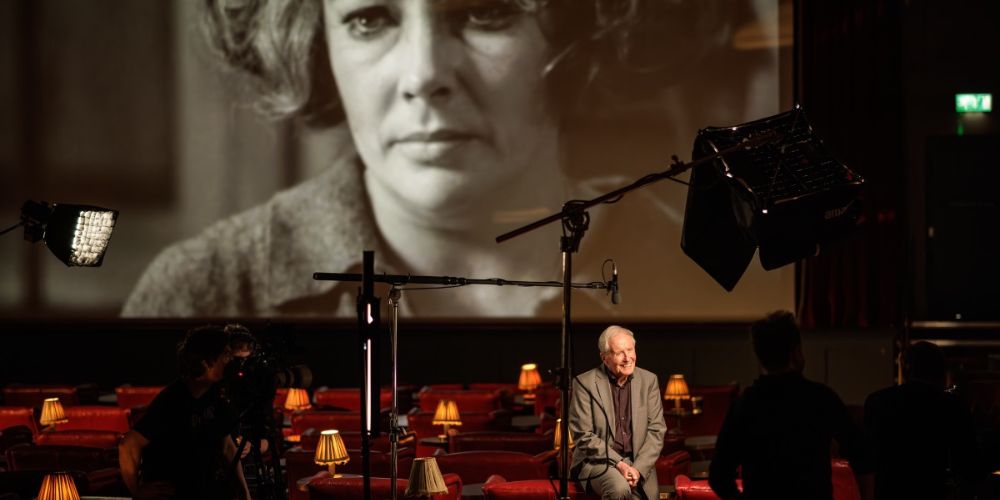
This is the stuff of every director and cinephile’s nightmare: a country that introduces not a #cinema classification system, but a #censorship system — and proudly names it as such.
That is precisely what Ireland did in 1923, introducing one of the very first laws of the newly minted, post-revolution and civil war, Irish Free State: «The Censorship of Films Act.»
Ireland was now «free» of British rule, and thus free to run its own affairs. But in a new republic, still grappling with its identity on an unstable, post–World War One global stage, the relatively new medium of film was seen as a threat.
Male, Conservative, Catholic
The republic’s founders were predominantly male, conservative, and #Catholic. They held deep fears of female sexuality, free thinking, and liberal attitudes to religion.
There had already been controversy in 1912 around the release of the first film depicting Jesus Christ — US director Sidney Olcott’s From the Manger to the Cross. Although the film prompted little concern in Britain, where it ran for eight months, it did lead to the voluntary founding of the British Board of Film Censors.
Barely a decade later, the outrage that film met in Ireland was still a recent memory (Mary was played by a divorced woman! Sacrilege!). The patriarchal leadership of the new state viewed the population as children to be protected — particularly the God-fearing folk of the vast rural areas. And thus began seven decades of stringent censorship, guided by a law that stated the final decision on banning or cutting a film lay «in the opinion of the censor.»
Although no film has been banned in Ireland for 30 years, and the name of the censor’s office was changed to the Irish Film Classification Office in 2008, the law’s wording still refers to the «opinion of the Director of Film Classification.» Of the 65,000 films submitted to officials since 1923, 11,000 were cut and 2,500 banned.
The patriarchal leadership of the new state viewed the population as children to be protected — particularly the God-fearing folk of the vast rural areas.
Banned films
The list of films cut or banned (and in some cases, mid-century, even renamed on the whim of the censor) reads like a roll call of cinema’s greatest works:
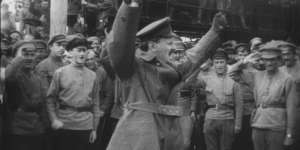
- Sergei Eisenstein’s 1925 Battleship Potemkin – not even submitted by the producers, who knew the Free State’s view on «Bolshevik propaganda.»
- Alfred Hitchcock’s 1929 thriller Blackmail – BANNED, but later passed with cuts on appeal.
- Mervyn LeRoy’s 1933 Depression-era musical Gold Diggers of 1933 – BANNED.
- Victor Fleming’s 1939 American Civil War drama Gone with the Wind – passed with cuts. Vivien Leigh may have been the perfect Southern belle, but references to rape and pregnancy, among others, were removed. Complaints by the US Ambassador in Dublin somewhat limited the damage.
- Wartime films suffered under a strict interpretation of Irish neutrality.
- Michael Curtiz’s 1942 wartime spy thriller and romance Casablanca – BANNED. Resubmitted in 1945, but cuts neutered the romance between Humphrey Bogart and Ingrid Bergman’s characters.
- David Lean’s enduringly poignant 1945 wartime romance, Brief Encounter – this reviewer can barely think of it without tears – was BANNED, and the ban was upheld on appeal.
- Provocative dancing by Elvis in Michael Curtiz’s 1958 musical King Creole suffered multiple cuts.
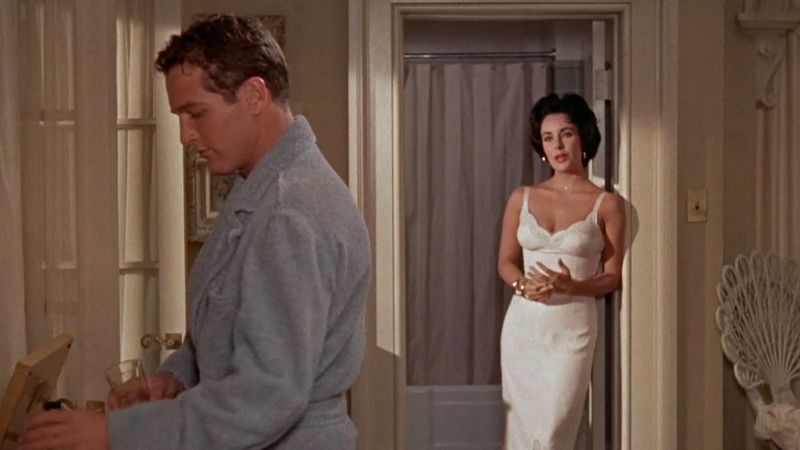
- Richard Brooks’ Cat on a Hot Tin Roof (1958) suffered so many cuts that the strained homosexual/heterosexual tension between Paul Newman and Elizabeth Taylor lost all coherence.
- Mike Nichols’ 1966 Who’s Afraid of Virginia Woolf? – BANNED, but later passed with cuts and a 21 certificate, as Ireland finally introduced age-related classification. A couple of years later, his iconic The Graduate was also banned before being allowed to screen on appeal — again, with cuts.
- Joseph Strick’s 1967 adaptation of Ulysses – BANNED. Resubmitted after the statutory seven years, it was again banned. It was finally given a certificate (15A) in 2000.
- Michelangelo Antonioni’s 1970 Zabriskie Point – BANNED.
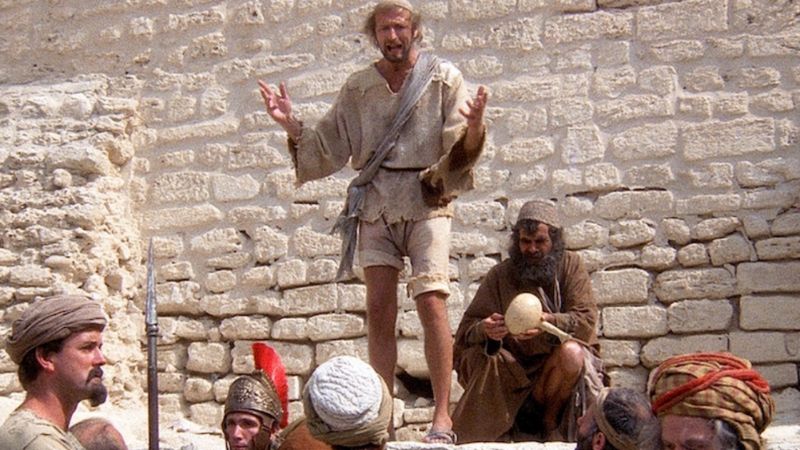
- Terry Jones’ 1979 Bible spoof Monty Python’s Life of Brian didn’t encourage the censor to «always look on the bright side of life» — BANNED.
- By 1988, in a sign of changing times, Martin Scorsese’s The Last Temptation of Christ was released uncut with an 18 certificate — with the stipulation that no one could enter after it started, to prevent audiences from dropping in just for the final, controversial scenes.
- In 1994, Oliver Stone’s Natural Born Killers became the last major film to be banned, due to its gratuitous violence.
- By 2004, the times had certainly changed: Michael Winterbottom’s 9 Songs prompted a scandal in the Irish media for its explicit, real sex scenes. And yet, censor John Kelleher — who presents and produces In the Opinion of the Censor — passed it uncut with an 18 certificate.
Cinema history at its best
«It was time,» he explains, «that Ireland understood people should be able to make up their own minds about what they see.» An age certification system helped, and after nearly a century of close control, Ireland was finally confident enough to join the majority of Western, industrialised countries in adopting a liberal attitude toward the arts.
Guided by Kelleher, and with contributions from film critics, historians, media veterans, and film festival leaders, In the Opinion of the Censor is cinema social history at its best.