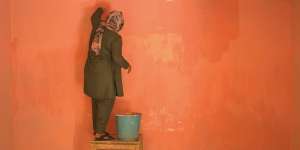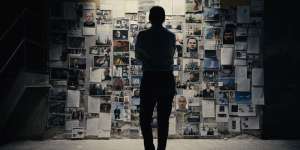
In Songs of Slow Burning Earth, Olha Zhurba does not depict #war through dramatic or sensational images. There are no explosions, no graphic footage of the battlefield. Instead, she turns her lens and her careful ear to the quieter, almost imperceptible ways conflict reshapes life – cutting deep into daily routines and into the hearts of those who live through it.
Through the interplay of sound, silence, and scattered impressions, the film captures how the Russian invasion in Ukraine seeps into ordinary existence, subtly altering the rhythms of everyday life. The focus is less on events than on experiential truth: how war feels, how its presence lingers in still moments and in the slow, unspoken transformation of what once felt normal.
«Less is more»
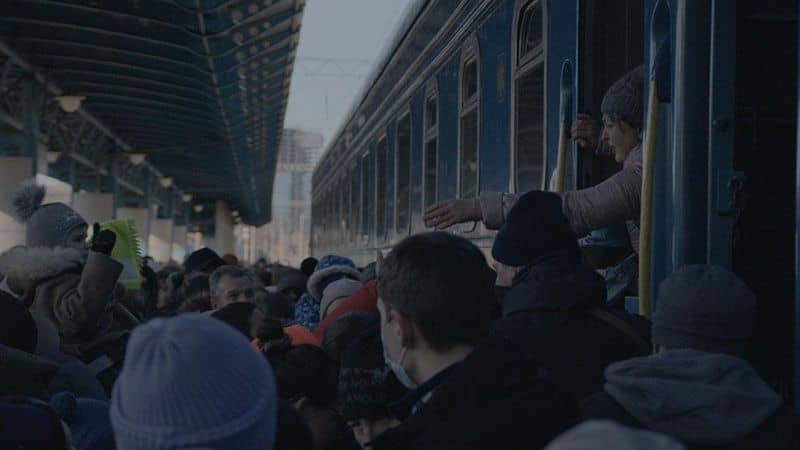
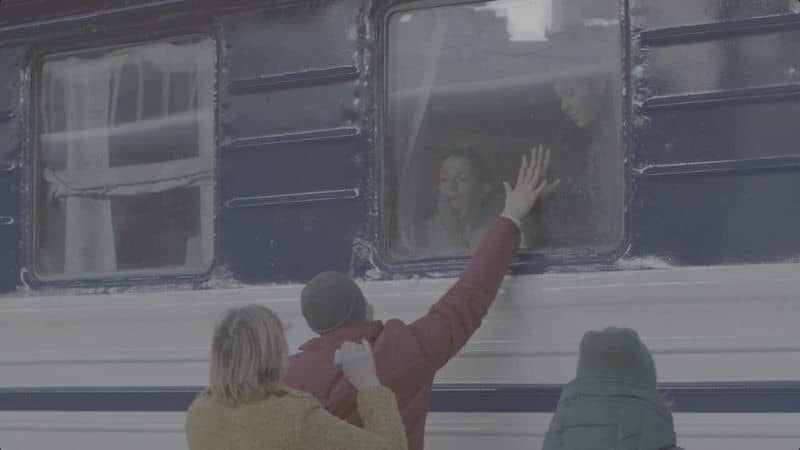
Zhurba’s approach is minimalistic yet devastatingly effective. «Less is more» becomes the guiding principle of the film, and through it, she translates images into deep emotion. Children live under the constant threat of bombardment alarms, and Zhurba captures the disruption of innocence without ever narrating it. The camera quietly observes. It lingers on a crowded train station where women wait with children, eyes vacant, time suspended. It follows the painstaking process of identifying a son’s body, collecting the few possessions left behind. Morgue workers move through their daily routines, dictating evaluations of what they see, but the camera doesn’t show the bodies. It doesn’t have to. The report of all the wounds speaks for itself.
The cinematography is exquisite in its restraint. Each frame is carefully composed, each movement deliberate, yet the film transcends visual beauty. There is a depth and scale to it, a weight that lingers long after the images fade. The devastation of war, the raw impact on both country and people, is rendered in almost existential terms. Rather than telling stories directly, Zhurba translates them into feeling: grief, tension, exhaustion, and the courage and perseverance in the everyday.
Many sequences follow people fleeing, with the heartbreak and stress of displacement. Other scenes capture acts of care under duress: a man in tears rescuing children from the front line. Another is navigating how to extract his mother from a combat zone. The observational camera becomes a silent witness to these fibrillating moments, the humming anxiety, the unspoken negotiations between life and survival.
Zhurba’s approach is minimalistic yet devastatingly effective.
Carrying the dead
At the heart of the film is an eight-minute sequence filmed entirely from inside a car. At first, the car’s purpose is unclear as it moves through the winter landscapes of rural Ukraine. Slowly, it becomes horrifyingly evident: it is carrying the dead from the front lines. Every person the car passes kneels in respect. The scene is almost unbearable in its simplicity.
Stories emerge throughout the film, too, here and there. A young boy recounts his father being taken by Russian forces and later returned. He describes seeing a Ukrainian soldier who was run over by a tank, and the months during which Russian troops occupied his village. The camera bears witness to these moments, allowing the experiences themselves to resonate.
Simple shots in the film linger: a ravaged home where a writing board bears a Russian «thank you» note for hospitality, claiming Ukrainians and Russians are «one people.» The absurdity and pain of such a gesture, juxtaposed with the lived reality of war, exemplify the power of Zhurba’s storytelling.
To understand war
Songs of Slow Burning Earth proves that to understand war, one does not need a spectacle. That is one brutal part. But through attention, patience and listening, one gets to witness the profound weight of it, the kind that remains in deep echoes even after peace is restored.
The film stays with you – a film that is both intimate and universal: a portrait of a nation and of resilience, and the enduring impact of conflict, rendered with profound humanity and depth.